24,000-Year-Old Creature Revived and Reproduced
Scientists successfully revived a microscopic animal frozen in Arctic ice for 24,000 years, and it immediately began reproducing. This breakthrough reveals new possibilities for understanding how life endures extreme conditions across vast stretches of time.
A tiny creature frozen since the Ice Age just woke up after 24,000 years and started making babies, proving that life can survive far longer than scientists ever imagined.
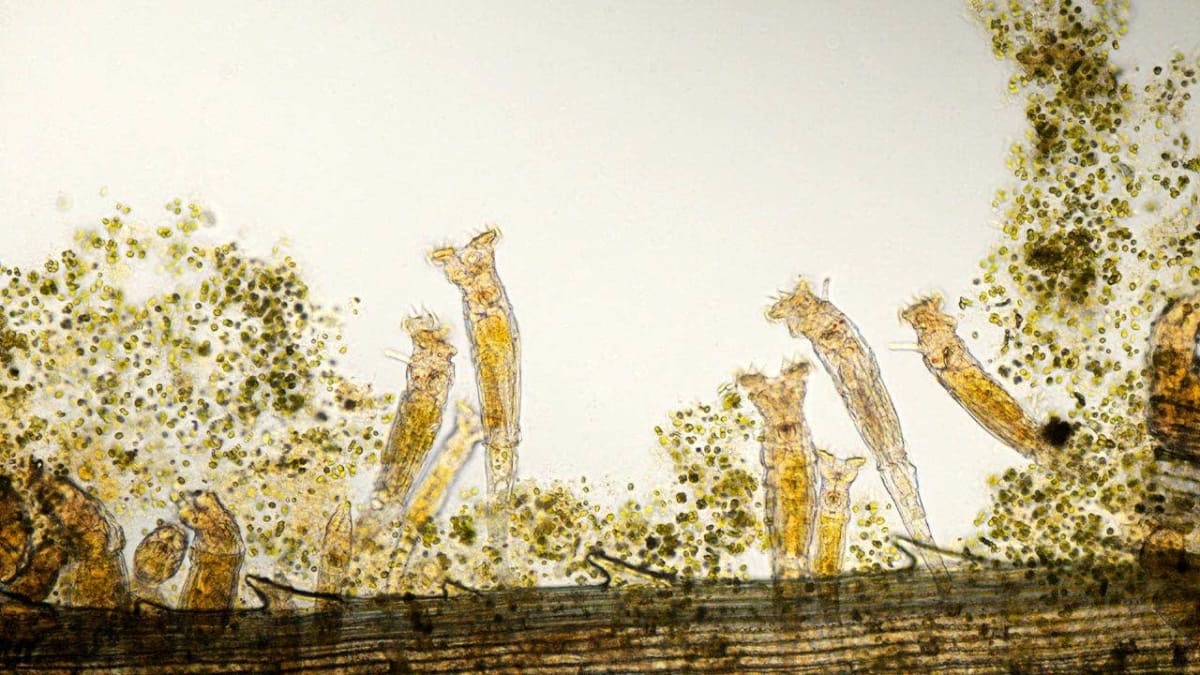
Researchers discovered the microscopic rotifer buried deep in Siberian permafrost, preserved in ice-rich soil since the Late Pleistocene era. When they carefully thawed it under controlled laboratory conditions, the organism didn't just survive. It resumed normal activity and reproduced asexually, showing that its cellular structures remained perfectly intact despite tens of thousands of years on ice.
This marks the first time scientists have successfully revived a multicellular organism from such an ancient freeze. Previous revivals involved only single-celled life forms or simpler structures, making this achievement particularly remarkable.
The secret to the rotifer's survival lies in cryptobiosis, a biological state where metabolism slows to nearly zero. This allows certain organisms to withstand freezing temperatures, complete dehydration, and lack of oxygen for extraordinary periods.
"Our report is the hardest proof as of today that multicellular animals could withstand tens of thousands of years in cryptobiosis," said lead researcher Stas Malavin. Despite their microscopic size, rotifers possess specialized digestive tracts and basic nervous structures, making their long-term survival especially impressive.
Why This Inspires
This discovery opens exciting doors for multiple scientific fields. Researchers can now study how cells resist damage from ice crystals and radiation over vast timescales, potentially revolutionizing biotechnology and medicine.
The findings also fuel astrobiology research, helping scientists understand how life might persist in extreme or extraterrestrial environments. If a complex organism can survive frozen for 24,000 years on Earth, what might be possible on other planets with similar conditions?
While experts caution that larger organisms like mammals couldn't survive similar freezing periods due to their complexity, this breakthrough expands our understanding of life's remarkable resilience. The rotifer's revival proves that under the right conditions, life finds a way to endure far beyond what we thought possible.
This tiny survivor is rewriting the limits of what we know about life on Earth.
More Images


Based on reporting by Fox News Latest Headlines (all sections)
This story was written by BrightWire based on verified news reports.
Spread the positivity!
Share this good news with someone who needs it