700 Ancient Fossils Rewrite Early Life Timeline
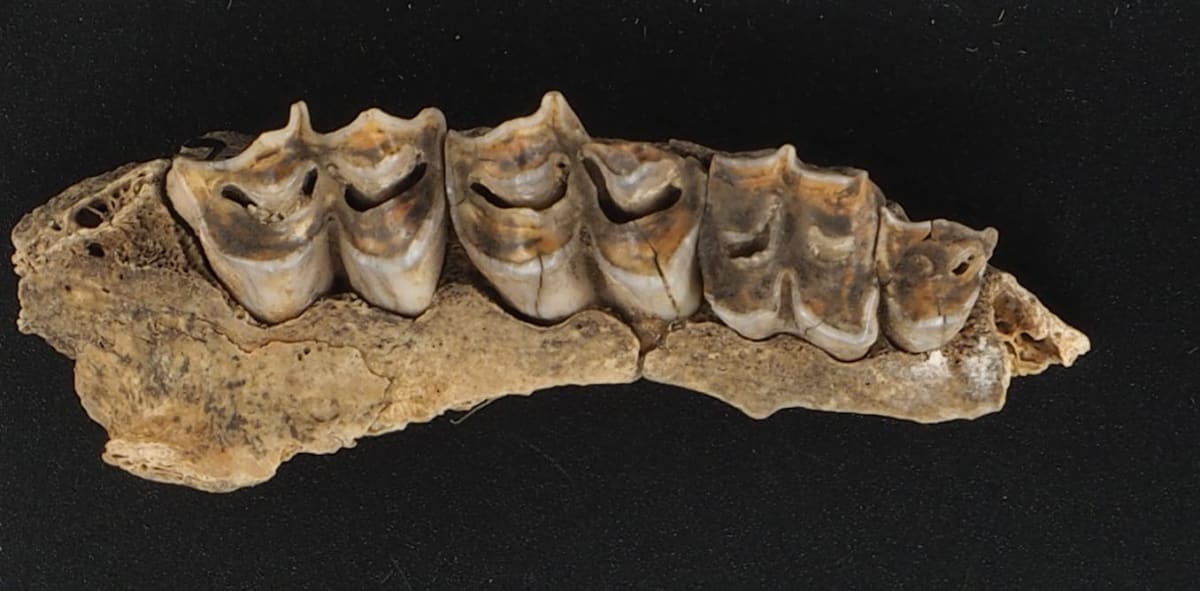
Scientists in China discovered 700 fossils that push back the origin of complex life by millions of years, revealing our ancient ancestors existed far earlier than we thought. The find bridges a massive gap in our understanding of how life evolved from simple microbes to the incredible diversity we see today.
Deep in southwest China, researchers uncovered something remarkable: 700 fossils that are rewriting the story of life on Earth.
The fossils, known as the Jiangchuan Biota, date back 539 to 554 million years ago and fill a crucial missing chapter in our planet's history. Scientists have long puzzled over what happened between the Precambrian period, when mostly simple microbes existed, and the Cambrian Explosion, when complex life seemed to suddenly appear everywhere.
This discovery suggests the "explosion" might be a bit of a misnomer. Many complex animals scientists thought only existed during the Cambrian period were actually living millions of years earlier in the Ediacaran period.
Among the fossils are some truly special finds. Researchers discovered bilaterians, ancient worm-like creatures whose bodies could be divided into two mirror-image halves. These humble organisms are the ancestors of every vertebrate on Earth, including us.
The team also found early versions of starfish ancestors and other invertebrates. Most exciting was the discovery of ambulacrarians, ancient acorn worms that provide direct evidence that animals with backbones must have also existed during this period, even though we haven't found their fossils yet.
Lead researcher Gaorong Li from Oxford University called it a game changer. "For the first time, we demonstrate that many complex animals, normally only found in the Cambrian, were present in the Ediacaran period, meaning that they evolved much earlier than previously demonstrated by fossil evidence," he explained.
The discovery raises an intriguing question: why are we only finding these fossils now? The research team believes it comes down to preservation. The carbonaceous compressions found at this site are rare among rocks from this period, so similar creatures might have been common but simply didn't fossilize elsewhere.
Why This Inspires
This discovery reminds us how much we still have to learn about our own origins. Every new fossil site opens windows into worlds we never knew existed, revealing that life's story is richer and more complex than we imagined.
The find also shows how patient, careful scientific work continues to push back the boundaries of human knowledge. What seemed like a sudden explosion of life now appears to be a more gradual, beautiful unfolding that connects us to ancestors far more ancient than we realized.
Our evolutionary story just got millions of years longer, and that's something worth celebrating.
More Images



Based on reporting by Google: scientific discovery
This story was written by BrightWire based on verified news reports.
Spread the positivity!
Share this good news with someone who needs it