NASA's Roman Telescope Launching 8 Months Early This Fall
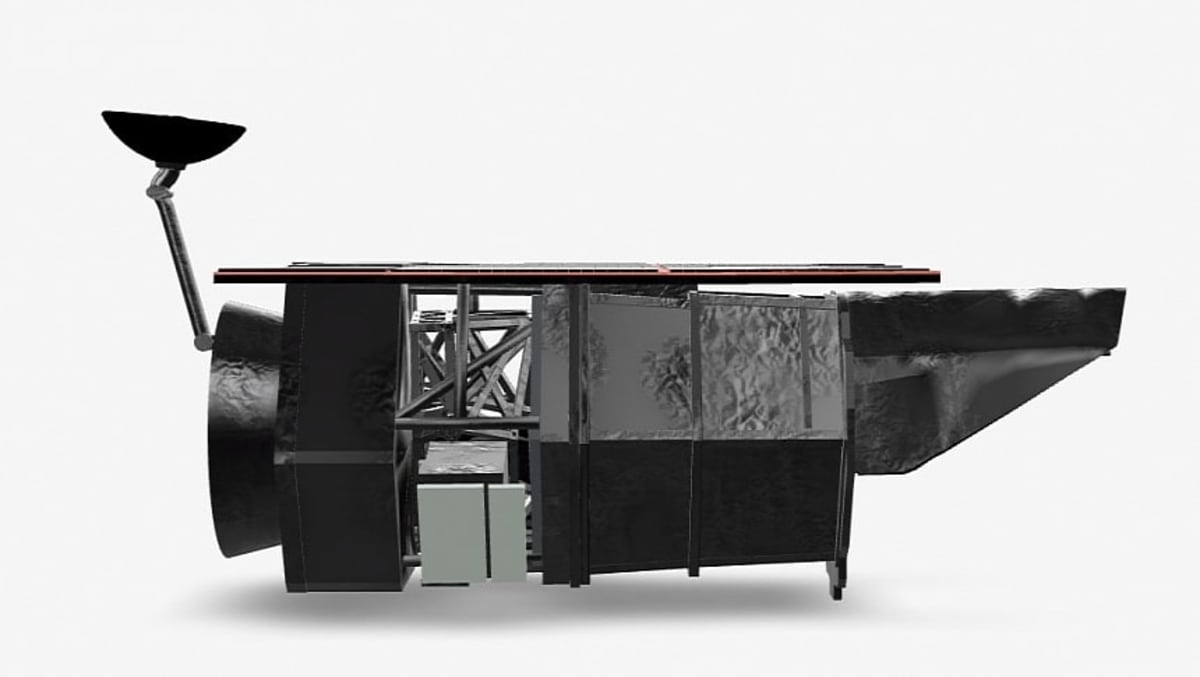
NASA just announced its most powerful telescope since the James Webb will launch in early September 2026, eight months ahead of schedule and under budget. The Roman Telescope will reveal hundreds of millions of galaxies and 100,000 exoplanets during its five-year mission.
NASA's newest space telescope is ready to change our view of the universe, and it's heading to space much sooner than anyone expected.
The Nancy Grace Roman Telescope will blast off from Kennedy Space Center in Florida as early as September 2026, NASA Administrator Jared Isaacman announced this week. That's eight months ahead of the original 2027 timeline, and the project came in under budget.
Named after NASA's first chief astronomer who helped create the Hubble Telescope, the Roman represents the biggest leap in astronomy since the James Webb launched. The massive observatory will sit one million miles from Earth at the same viewing point as Webb.
During its five-year primary mission, the Roman Telescope will uncover hundreds of millions of galaxies, billions of stars, and around 100,000 planets beyond our solar system. It will capture the deepest views ever of the Milky Way's heart and track how cosmic objects change over time.
Three major survey missions will occupy 75 percent of the telescope's time. The High-Latitude Wide-Area Survey will map more than a billion distant galaxies. The Time-Domain Survey will repeatedly photograph the same space regions to watch the universe evolve in real time.
The Galactic Bulge Survey will peer into the dense center of our galaxy like never before. The remaining 25 percent of observing time goes to scientists worldwide for breakthrough discoveries.
Why This Inspires
This telescope arriving early and under budget shows what focused scientific collaboration can achieve. In an era when major projects often face delays, the Roman team delivered ahead of schedule.
The telescope will help answer fundamental questions about dark matter, black holes, alien worlds, and how galaxies form. Scientists expect to spot stellar nurseries where new stars are born and witness violent cosmic events like supernovae and tidal disruptions.
Every discovery the Roman makes will belong to humanity, shared freely with researchers across the globe. The data will fuel scientific breakthroughs for decades and inspire the next generation of astronomers.
September can't come soon enough for the thousands of scientists already planning their first observations.
More Images


Based on reporting by Google: James Webb telescope
This story was written by BrightWire based on verified news reports.
Spread the positivity!
Share this good news with someone who needs it