NASA's Roman Telescope Ready to Map the Entire Universe
After more than a decade and millions of hours of work, NASA engineers in Greenbelt, Maryland have completed a revolutionary space telescope that will scan the cosmos 100 times faster than Hubble. The Nancy Grace Roman Space Telescope launches this September to unlock mysteries of dark energy and discover thousands of new planets.
Scientists just finished building a telescope so powerful it will accomplish in one month what took Hubble a century.
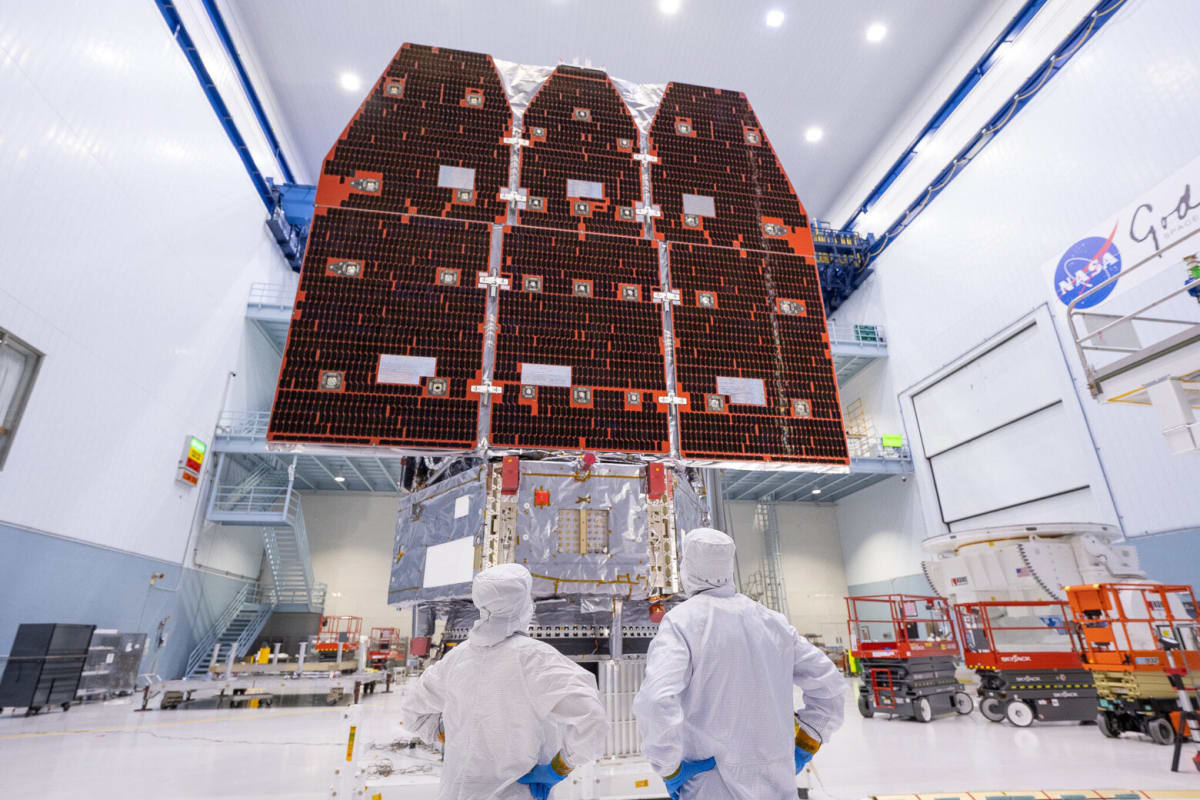
The Nancy Grace Roman Space Telescope, assembled at NASA's Goddard Space Flight Center in Greenbelt, Maryland, represents the culmination of over a decade of painstaking work. Named after NASA's first chief astronomer, the 40-foot-tall observatory is now ready to revolutionize how we understand the universe.
"It is a lot of work, millions of hours is no exaggeration," said Jamie Dunn, the telescope's project manager. That actual math translates to countless engineers meticulously connecting every segment in sterile clean rooms, ensuring perfection for a mission that could rewrite our cosmic story.
Unlike Hubble, which studies individual stars and galaxies like examining trees one at a time, Roman will photograph entire forests at once. Its unusually wide field of view means scientists can survey vast portions of the sky in single observations, hunting for patterns and discoveries impossible to spot when looking at isolated targets.
The telescope tackles one of science's biggest puzzles: 95% of our universe remains invisible to us. Dark energy and dark matter make up this cosmic mystery, and current observations hint our understanding might be fundamentally wrong. Roman's sweeping surveys could finally reveal what's really happening out there.
Beyond mapping the unknown, Roman will discover tens of thousands of planets beyond our solar system. Its special coronagraph instrument blocks out starlight with unprecedented precision, allowing scientists to directly see distant worlds orbiting other stars. Previous telescopes could only infer planets existed; Roman will actually photograph them.
The Ripple Effect
The telescope's impact reaches far beyond astronomy textbooks. NASA Administrator Jared Isaacman calls it "Earth's new atlas of the universe," a reference guide that will inform decades of future exploration and technology development.
Associate Administrator Nicola Fox emphasized how each NASA mission builds on previous successes, opening doors to pursuits we haven't even imagined yet. The coronagraph technology developed for Roman could someday help us search distant planets for signs of life.
Before Roman begins its science mission, teams will spend months after launch practicing commissioning procedures. Jeremy Perkins, the science commissioning lead, said crews rehearse launch day and the critical first 40 days over and over until every step becomes second nature.
Program executive Lucas Paganini framed the mission in deeply human terms: we're trying to understand where we come from and how our universe evolves. These aren't just academic questions but fundamental explorations of our place in existence.
The telescope ships soon to Kennedy Space Center in Florida for its September launch window. As Carl Sagan once said, "Somewhere, something incredible is about to be discovered." Roman is ready to find it.
More Images



Based on reporting by Google News - Science
This story was written by BrightWire based on verified news reports.
Spread the positivity!
Share this good news with someone who needs it