Mars Rover Finds Vast Honeycomb Landscape on Red Planet
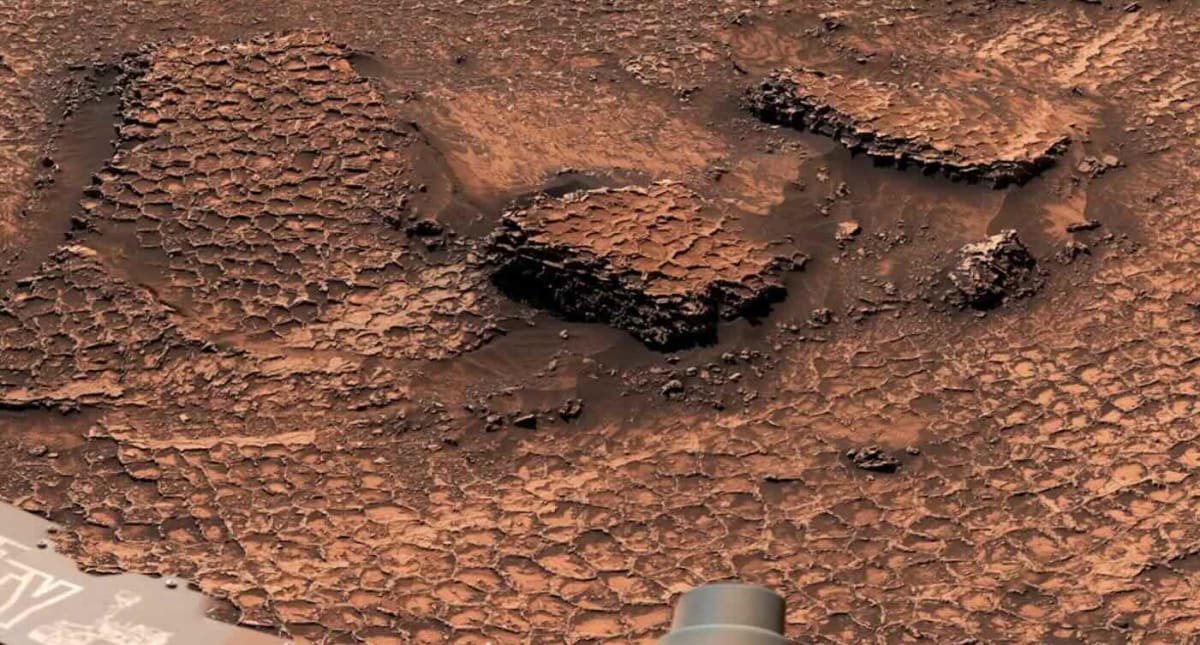
NASA's Curiosity rover has discovered an unprecedented field of honeycomb-like patterns stretching across an entire Martian valley. The breathtaking geometric landscape is the largest formation of its kind ever spotted on Mars.
NASA scientists stood amazed when Curiosity rover's June images revealed an entire valley covered in geometric honeycomb patterns unlike anything they'd seen in 14 years of Mars exploration.
The rover captured the stunning landscape while climbing through Valle Grande, a valley on the slopes of Mount Sharp. In a 360-degree panorama taken on June 19-20, the polygonal shapes extend in every direction as far as the camera can see.
"We've seen a lot of fascinating landscapes through Curiosity's eyes, but this sea of polygons took our breath away," said Ashwin Vasavada, the mission's project scientist at NASA's Jet Propulsion Laboratory in California. The formations even wrap around a nearby 20-foot butte nicknamed "Miraflores," creating an otherworldly scene.
While small patches of these polygonal fractures have appeared before, nothing approaches the scale of this discovery. The team is carefully measuring the shapes and analyzing their chemistry to understand how they formed.
Several natural processes could explain these honeycomb textures. Some polygons form from ancient mud cracks, while others result from temperature cycles or compression squeezing water from buried sediment. Each possibility offers clues about Mars' distant past.
The discovery adds to Curiosity's growing list of surprises since landing in 2012. The rover has photographed sulfur crystals, shiny meteorites, and countless fascinating geological features during its journey up the 3-mile-tall Mount Sharp.
Why This Inspires
This finding reminds us that Mars still holds countless secrets waiting to be uncovered. Billions of years ago, the region where Curiosity now roams was dotted with lakes and streams flowing through the mountain's foothills.
The rover's previous discoveries proved ancient Mars had water, the right chemistry, and nutrients to support microbial life. It has even found carbon-based molecules that could be precursors to RNA and DNA, the building blocks of life as we know it.
Each new image Curiosity sends home helps scientists piece together the story of a world that once looked very different from the dusty red planet we see today. The honeycomb valley is one more chapter in understanding whether Mars could have harbored life.
After more than a decade exploring the Red Planet, Curiosity continues proving that patience and persistence unlock mysteries beyond our imagination.
Based on reporting by Google News - Science
This story was written by BrightWire based on verified news reports.
Spread the positivity!
Share this good news with someone who needs it

%3Amax_bytes(150000)%3Astrip_icc()%3Afocal(999x0%3A1001x2)%2Fmars-rover-field-073126-1e9056218dc842cdb53565a4df6cf847.jpg)