Mars Spins Faster Each Year, Scientists Say They Know Why
Scientists discovered Mars is spinning faster every year, making its days slightly shorter. A massive plume of hot material deep beneath the planet's surface might be the surprising cause.
Mars is literally picking up speed, and the reason hiding beneath its ancient surface could change how we understand rocky planets.
NASA's InSight lander detected something remarkable while measuring seismic activity on Mars. The Red Planet is spinning slightly faster each year, shaving fractions of a millisecond off each Martian day. Scientists comparing this data with measurements from NASA's Viking landers in the 1970s confirmed the trend has continued for decades.
Now researchers from Delft University in the Netherlands think they've cracked the case. Their study, published in the Journal of Geophysical Research: Planets, points to a "negative mass anomaly" buried deep under Mars as the culprit.
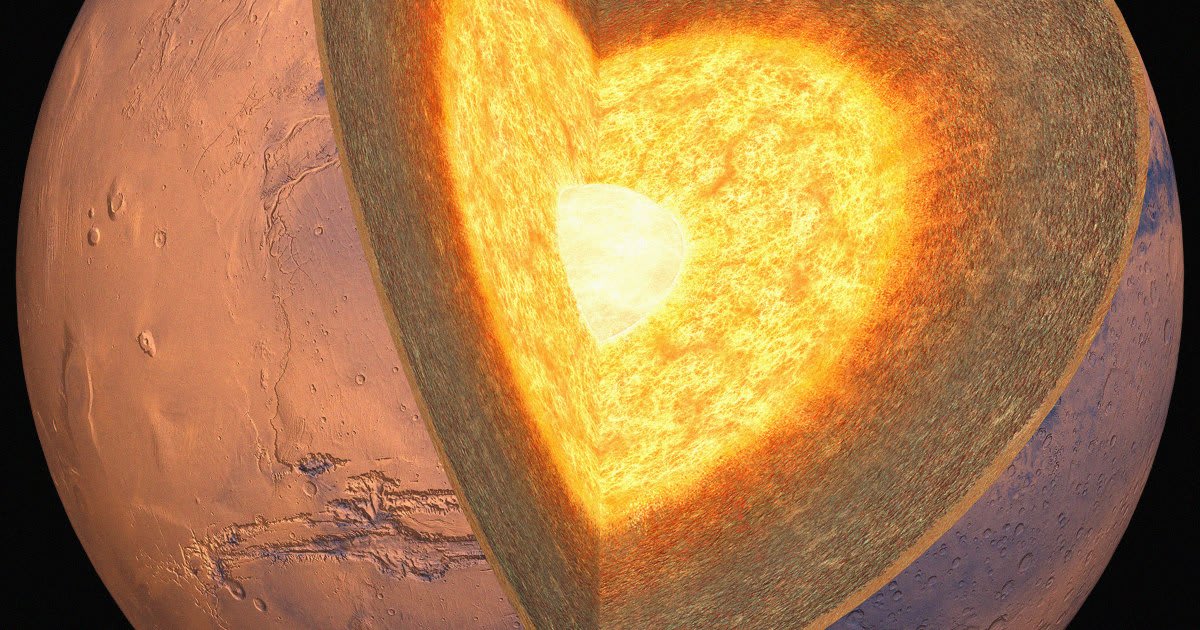
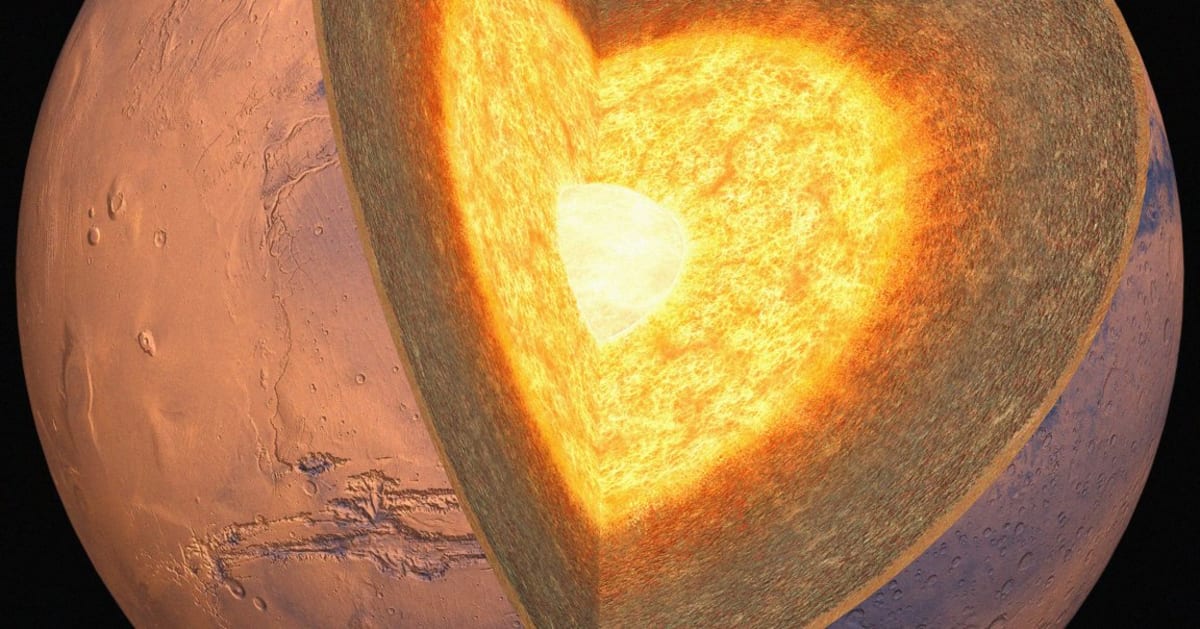
The team focused on the Tharsis volcanic province, a sprawling plateau near the equator that hosts the solar system's largest volcanoes. Computer simulations revealed a plume of unusually light, hot material pushing upward beneath this region. As this buoyant material rises and forces its way through Mars' thick 310-mile lithosphere, it creates conditions for volcanic activity.
Here's where it gets exciting. This underground movement acts like a cosmic ballet. As the lighter material moves outward near the equator, denser material sinks inward toward the planet's rotation axis. The result? Mars spins faster, just like an ice skater pulling their arms in during a pirouette.
Assistant professor Bart Root, who led the research, explained that understanding Mars helps us understand our entire solar system. The planet's ancient surface preserves a record of processes that shaped rocky worlds billions of years ago.
The Bright Side
This discovery suggests Mars is far more geologically alive than scientists previously thought. Deep beneath that dusty red surface, powerful forces are still at work, moving massive plumes of material hundreds of miles below ground.
The finding opens exciting possibilities for future exploration. The research team argues it's time for a dedicated gravity mission to Mars to answer the questions this discovery raises. What other surprises might be hiding in the Martian interior?
Every rotation brings new understanding of our planetary neighbor, and the story is far from over.
More Images
Based on reporting by Futurism
This story was written by BrightWire based on verified news reports.
Spread the positivity!
Share this good news with someone who needs it