Material Repairs Itself 1,000+ Times, Could Last Centuries
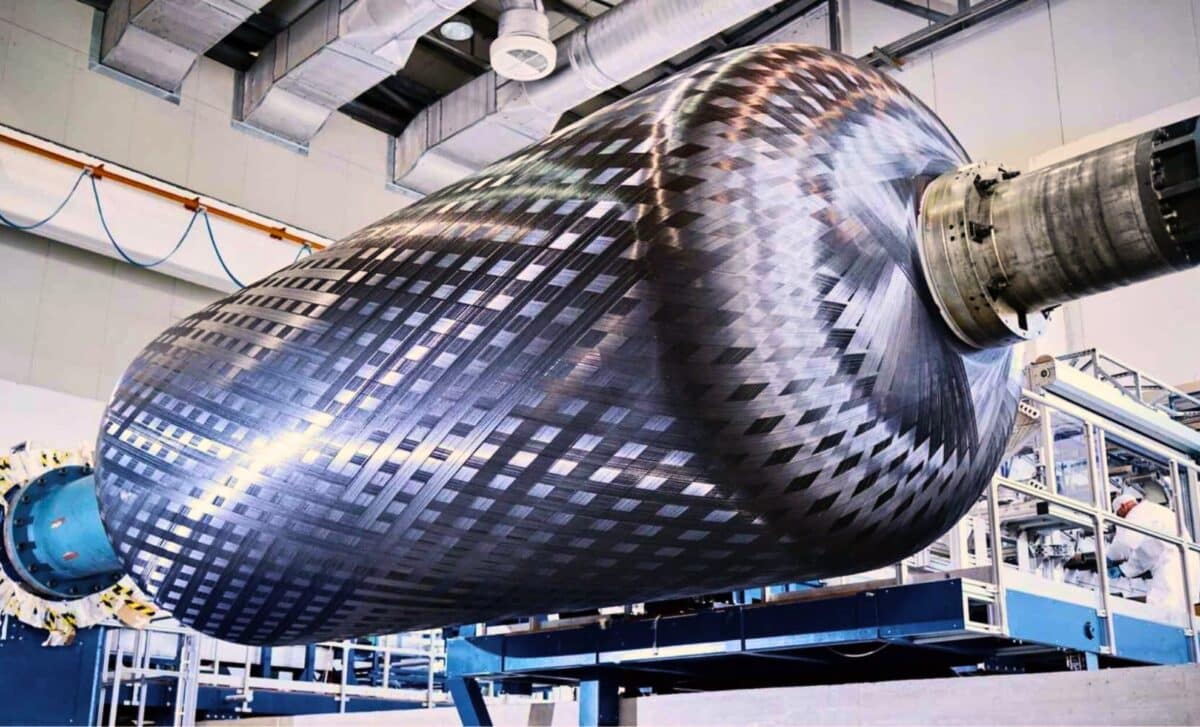
Engineers created a fiber composite that heals internal cracks over 1,000 times, potentially extending airplane, car, and wind turbine parts from decades of use to centuries. The breakthrough tackles a structural problem that's plagued lightweight materials since the 1930s.
Imagine if the wings on a plane or the blades on a wind turbine could stitch themselves back together after cracking, not just once, but more than a thousand times.
A team of U.S. engineers just made that possible. They've developed a fiber composite material that can heal its own internal damage over 1,000 times, addressing a weakness that has limited how long we can use lightweight materials in everything from aircraft to renewable energy infrastructure.
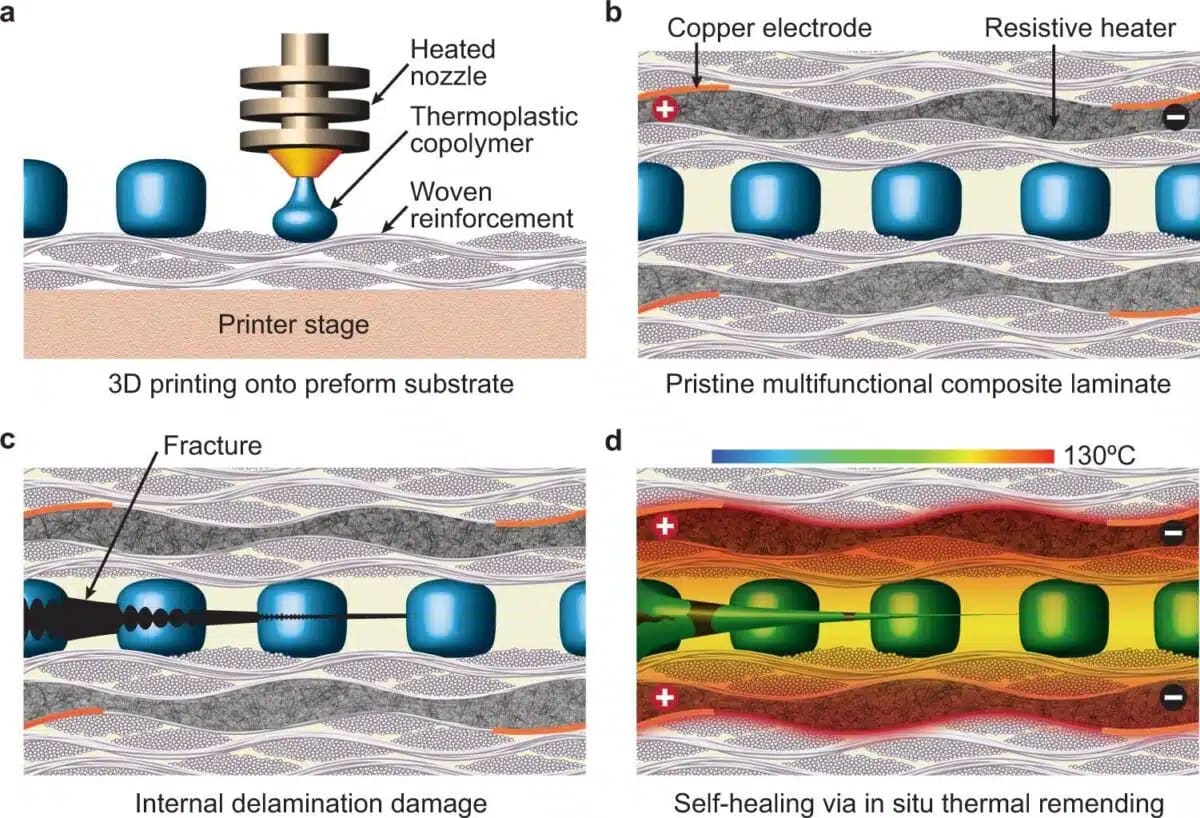
The breakthrough targets something called delamination. That's when the internal layers of fiber-reinforced composites separate after cracks form, causing the whole structure to weaken rapidly. It's been the Achilles heel of these materials since the 1930s, forcing industries into expensive cycles of inspection, repair, and replacement.
The new material works through two clever upgrades. First, researchers 3D-print a special healing agent directly onto the fiber layers, creating a flexible interlayer made from a self-healing polymer. This layer makes the material two to four times more resistant to cracking from the start.
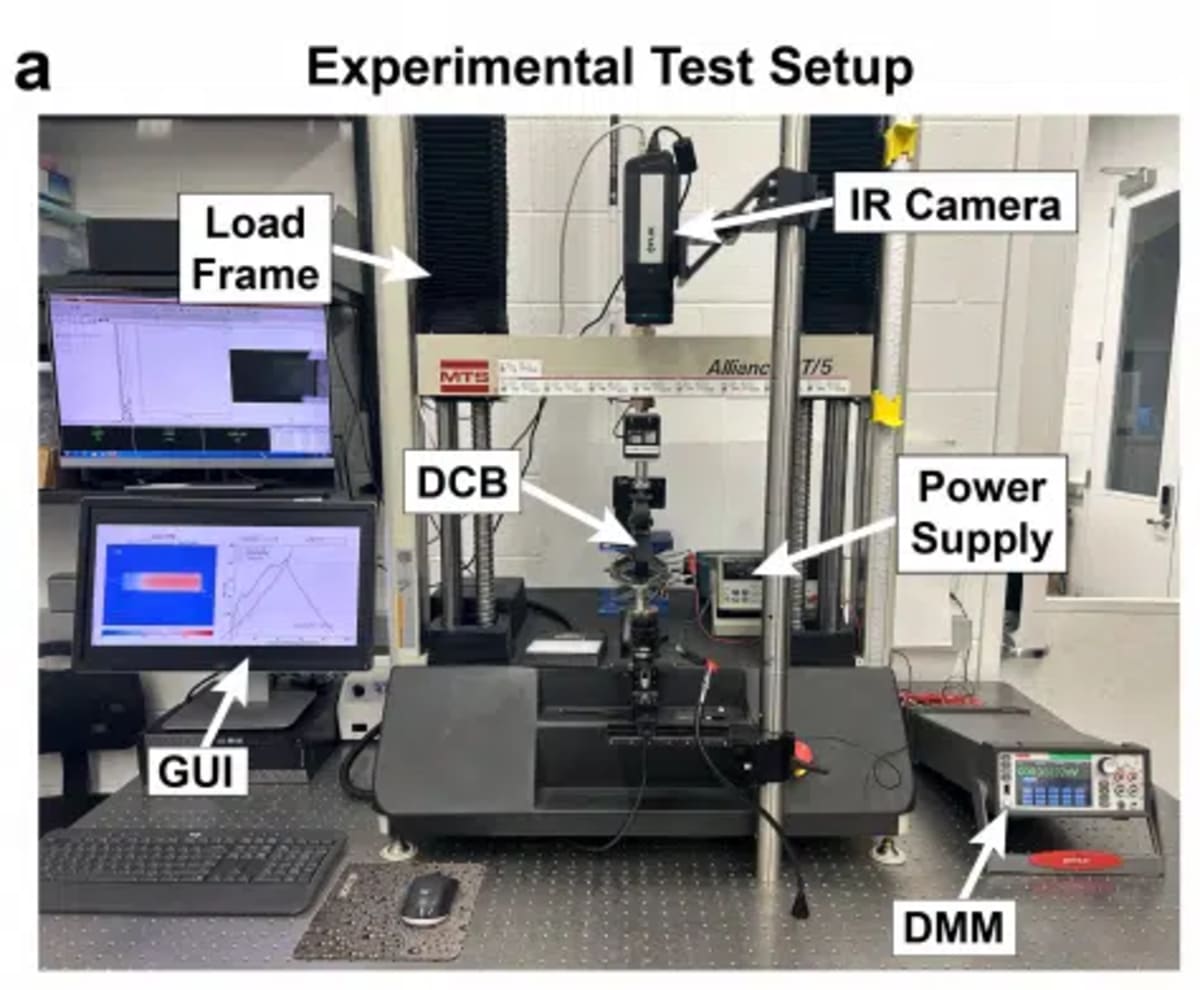
Second, they embedded thin carbon heaters inside the composite. When sensors detect damage, an electrical current warms the healing layer until it melts, flows into cracks, and re-bonds the damaged areas. The repair material is already inside the structure, so no patches or adhesives needed.
Jason Patrick, a professor at North Carolina State University who led the research, tested the material by repeatedly breaking and healing it for 40 days straight. The composite held strong through all 1,000 cycles. Based on these results, the team estimates components could last 125 years with quarterly healing sessions, or even 500 years with annual treatments. That's a massive jump from the typical 15 to 40 years most composite parts last today.
The Ripple Effect
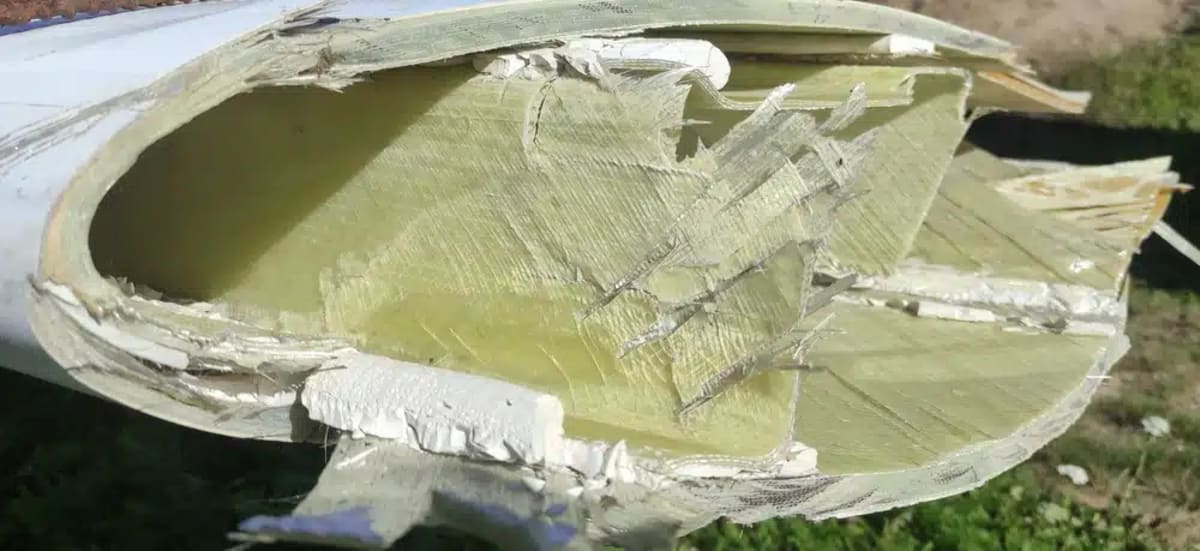
The timing matters especially for wind energy. Turbine blades are built from these same stubborn composite materials because they need to be strong yet light enough to spin efficiently. But when those blades reach the end of their 20-year lifespan, they're nearly impossible to recycle.
According to the National Renewable Energy Laboratory, the U.S. could face 2.2 million tons of blade waste by 2050. Most decommissioned blades currently end up in landfills, and several European countries have already banned the practice due to space concerns.
A material that lasts five to 25 times longer means fewer blades manufactured, fewer shipped across oceans, and far less waste sitting in landfills. It's the kind of solution that helps renewable energy actually stay renewable.
The technology still needs real-world testing before it can fly on commercial planes or spin on industrial turbines. But the lab results represent an order of magnitude improvement over previous self-healing materials, bringing century-long components from science fiction into the realm of engineering reality.
A future where we build things once and repair them forever just got a lot closer.
More Images
Based on reporting by Google News - Wind Energy
This story was written by BrightWire based on verified news reports.
Spread the positivity!
Share this good news with someone who needs it