
Math Puzzle Sparked Romance and New Field of Study
A simple brain teaser about dots on a page in 1930s Budapest led to both a lifelong marriage and an entirely new branch of mathematics. The "happy ending problem" proves that even abstract puzzles can create real-world joy.
A geometry puzzle shared among friends in 1930s Budapest didn't just solve a mathematical mystery. It sparked a romance that lasted a lifetime and launched an entire field of modern math.
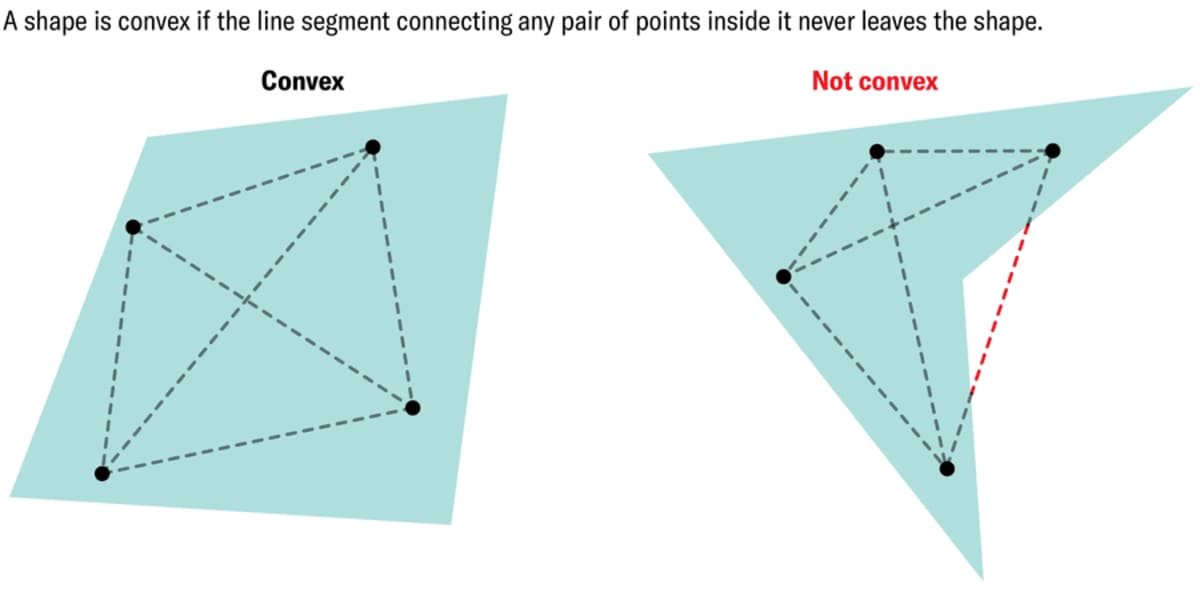
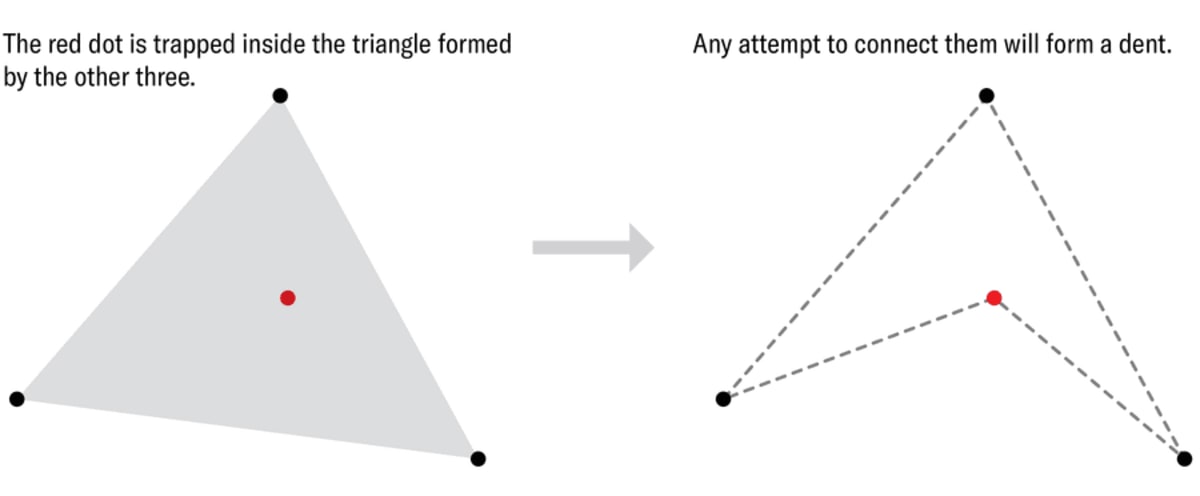
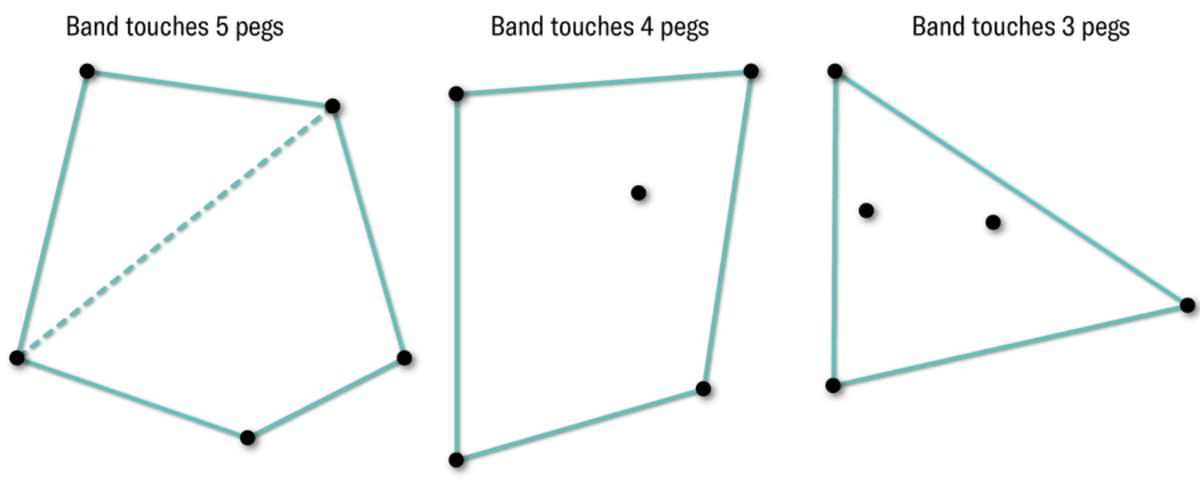
Esther Klein presented her university friends with a deceptively simple challenge: scatter five dots randomly on a page, making sure no three dots line up. Will four of those dots always form a clean four-sided shape with no dents?
The answer is yes, always. Klein proved it with an elegant rubber band visualization that delighted her peers, including a young Paul Erdős, who would become history's most prolific mathematician.
But Klein didn't stop there. She asked the bigger question: how many dots would you need to guarantee a five-sided shape, or a six-sided one, or even a 100-sided polygon?
Fellow mathematician George Szekeres joined Erdős to crack the problem in 1935. They proved that for any polygon you can imagine, some specific number of dots will always guarantee that shape appears. You can't outsmart the math, no matter how cleverly you arrange your dots.
Somewhere between sketching geometric drawings and debating proofs, Klein and Szekeres fell in love. They married in 1937, and Erdős dubbed their discovery the "happy ending problem" in honor of their romance.
Their life together became as remarkable as their mathematical breakthrough. As a Jewish couple fleeing Nazi persecution, they spent the war years as refugees in Shanghai, where their first child was born. In 1948, they resettled in Australia and devoted themselves to mathematics and teaching.
Szekeres became president of the Australian Mathematical Society while Klein taught at Macquarie University. She ran after-school geometry sessions for students, posing puzzles just as she had done with friends in her Budapest days.
The Ripple Effect
The happy ending problem grew into something far bigger than its creators imagined. It helped establish Ramsey theory, an active branch of modern mathematics that finds order within apparent chaos. The field explores how patterns inevitably emerge when you gather enough elements, whether dots on a page or relationships in networks.
Today, mathematicians worldwide continue building on Klein and Szekeres's foundation, proving that sometimes the most profound discoveries start with simple questions shared among friends.
Their story reminds us that curiosity and human connection often walk hand in hand, creating legacies that outlast any single lifetime.
More Images

Based on reporting by Scientific American
This story was written by BrightWire based on verified news reports.
Spread the positivity!
Share this good news with someone who needs it