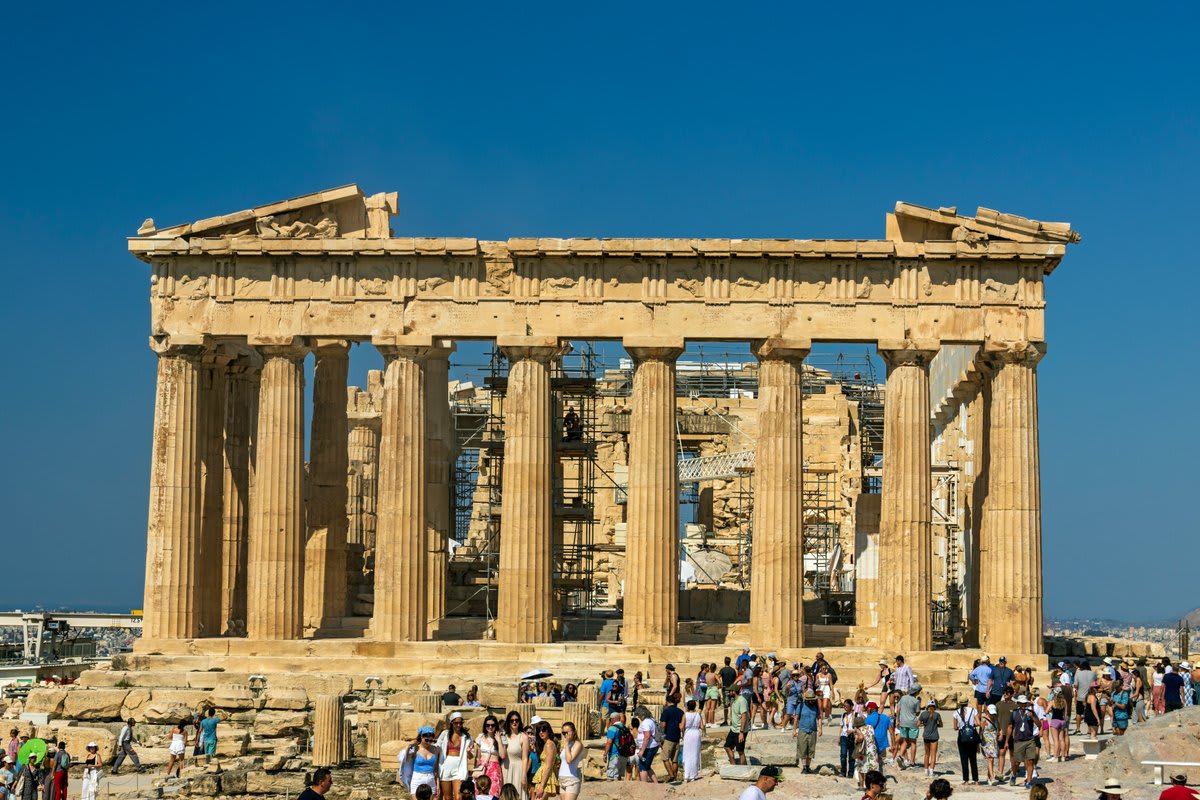
Mathematician Solves 2,500-Year Parthenon Mystery
A new study reveals the ancient Greeks didn't curve the Parthenon's base to create an optical illusion after all. The truth behind this architectural choice is simpler and more beautiful than we thought.
For centuries, scholars believed ancient Greek architects curved the Parthenon's platform to trick our eyes into seeing straight lines. A mathematician just proved that elegant theory wrong.
Alain Goriely from the University of Oxford analyzed the famous temple's subtle curves using modern vision science. His findings, published in Royal Society Open Science, show the human eye simply can't detect the six-centimeter curve from most viewing distances.
The long-standing explanation seemed logical enough. The Parthenon sits on a curved platform called a stylobate that bends slightly upward like a gentle hill. Historians thought this prevented the massive structure from appearing to sag in the middle.
But Goriely discovered a problem with this theory. Humans can only spot curves of 1.5 to five centimeters in a straight line from about 25 meters away, and that's under perfect laboratory conditions.
In the real world, the Parthenon's three-dimensional complexity creates visual noise that makes the curve even harder to see. When you stand close enough to notice the curve, it looks curved, not straight.
"If it appears straight, why is it curved?" Goriely asks, pointing out the logical flaw in the illusion theory. The ancient Greeks were brilliant architects, but they weren't creating optical tricks with their columns and platforms.
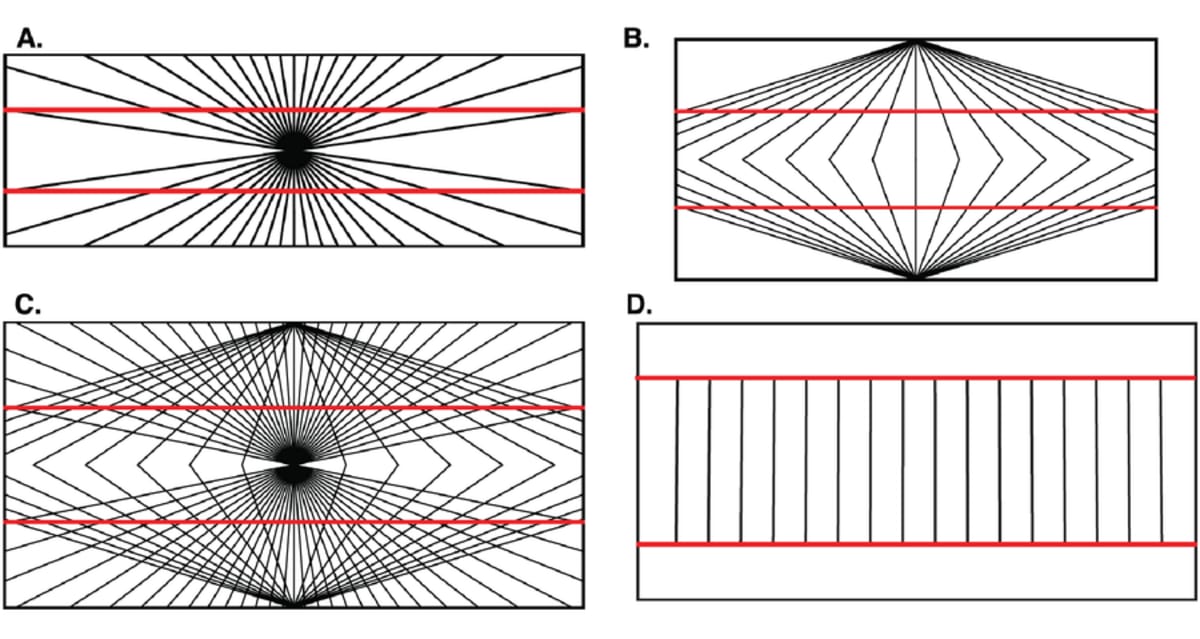
Some theorized the columns' slight inward tilt might work with the curved base to create straightening effects. Goriely tested this using known illusions like the Hering and Wundt effects, where crossing lines make straight lines appear bent. The geometry doesn't match up.
Why This Inspires
So why did the ancient Greeks curve the Parthenon's base? The answer reveals something more profound than optical trickery.
The curve likely improved drainage during Athens' rainy seasons. But more importantly, it created perfect mathematical harmony. Architectural historian Mark Wilson Jones notes the Parthenon features an exact 2:1 ratio between the platform's width and the structure's total height, and that "sweetness" depends on the stylobate's curve.
The ancient Greeks valued symmetry and precision as expressions of divine beauty. They weren't fooling anyone's eyes. They were creating mathematical poetry in stone, where every measurement sang in perfect harmony with the others.
This discovery reminds us that sometimes the simplest explanation is the right one. The Parthenon's architects didn't need optical illusions to create something magnificent. Their commitment to proportion, beauty, and practical design was enough to build a temple that still inspires wonder 2,500 years later.
More Images
Based on reporting by Scientific American
This story was written by BrightWire based on verified news reports.
Spread the positivity!
Share this good news with someone who needs it