Maui Turns Water Tanks Into Solar Power Stations
A Hawaiian county just figured out how to turn massive concrete water storage tanks into clean energy generators, solving a land shortage problem while cutting electricity costs. The innovative rooftop solar arrays are now powering the same water facilities they sit on top of.
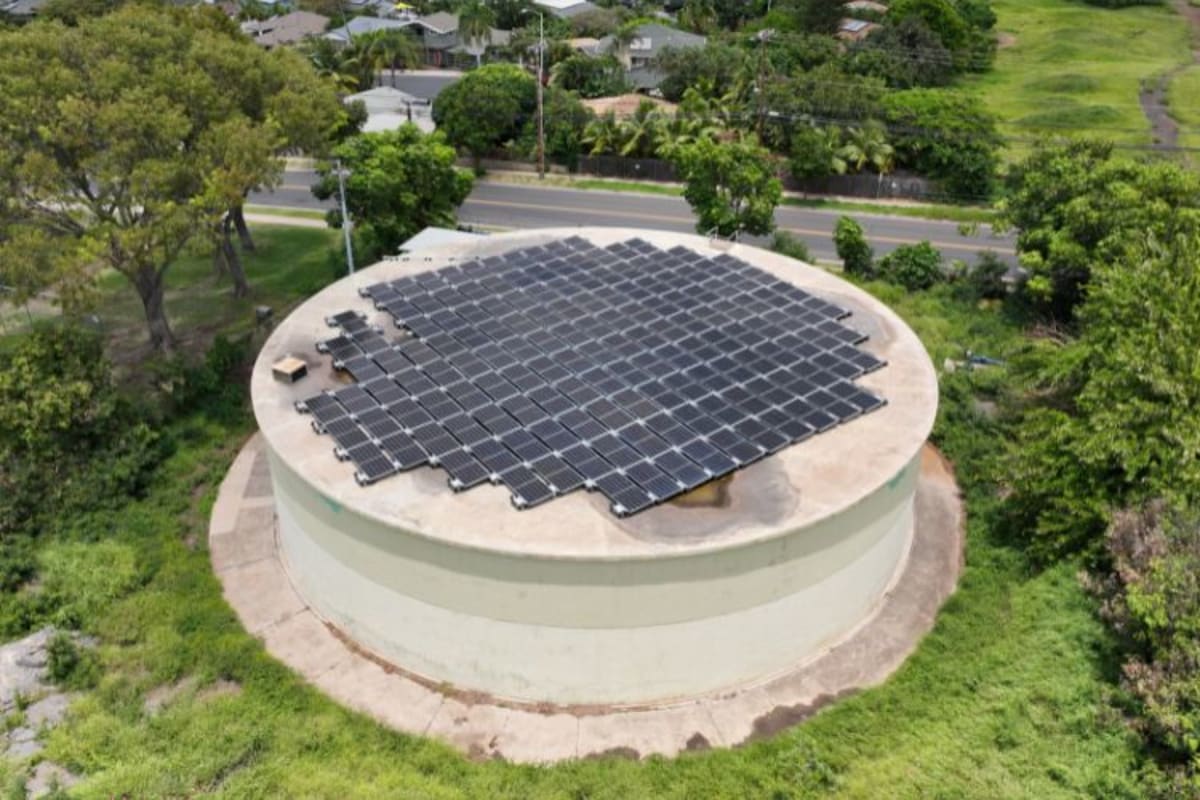
Water utilities in Maui County are now generating their own solar power on the last place you'd expect: the roofs of their giant concrete water tanks.
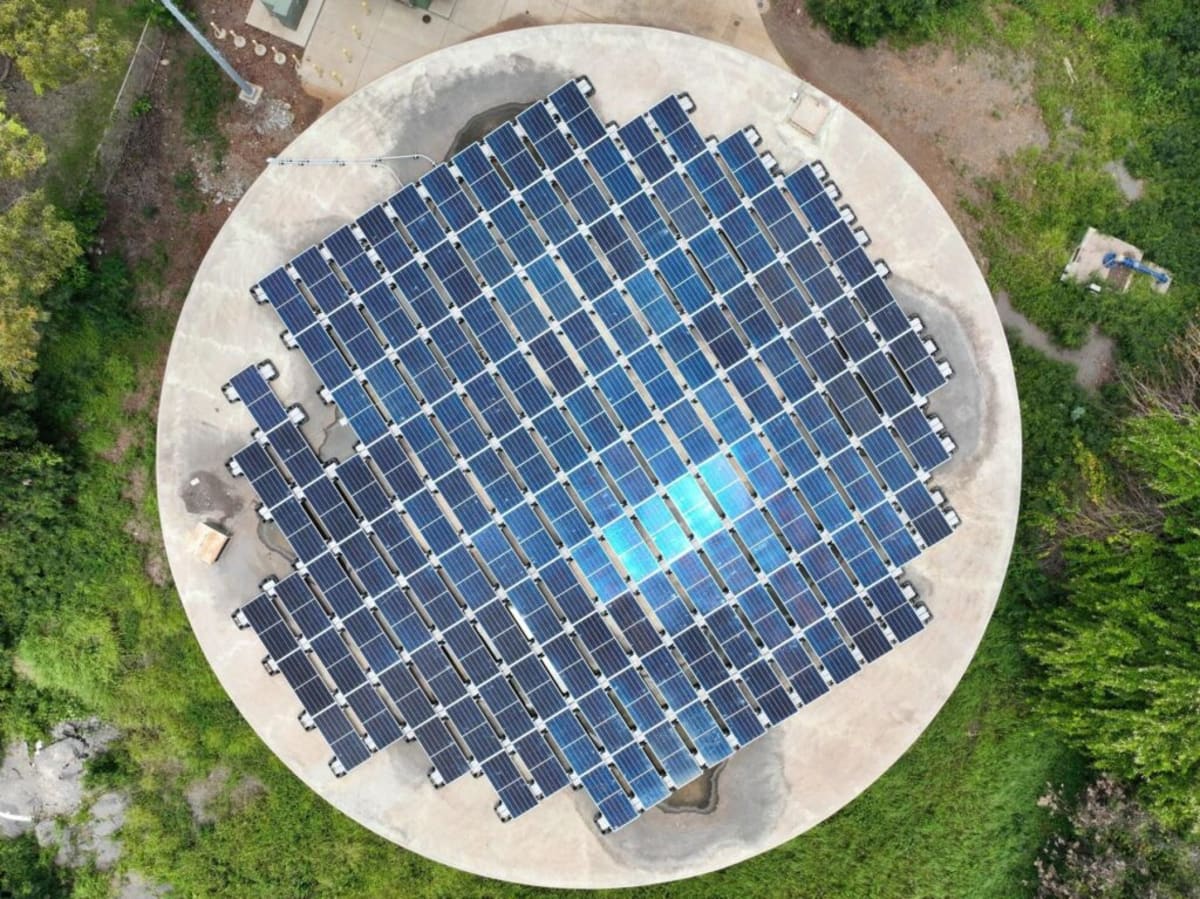
The county installed solar arrays ranging from 105 to 141 kilowatts on top of circular reservoir roofs across multiple facilities. Each system helps power the wells, pumps, and treatment plants it sits above, turning unused rooftop space into clean energy generators.
The move tackles two problems at once. Pumping and treating drinking water eats up roughly 80% of municipal water costs in electricity alone, making energy the largest controllable expense for most utilities. Meanwhile, flat land for solar panels is incredibly scarce on Hawaiian islands, where every square foot counts.
But putting solar panels on water tanks isn't as simple as slapping them on a roof. Engineers had to solve challenges that don't exist with ordinary buildings.
The biggest constraint was weight. These decades-old concrete tanks can't be drilled into because they store drinking water, so the solar arrays sit on top using ballast (heavy weights) instead of bolts. That weight has to be carefully calculated because water tanks already carry enormous loads during earthquakes, when the water inside creates its own lateral force.
The circular shape created another puzzle. Solar panels come in rectangles, but reservoir roofs are round. Engineers had to pack maximum capacity into the usable center while leaving clear pathways around the edges for firefighters and maintenance crews to access hatches, vents, and inspection points.
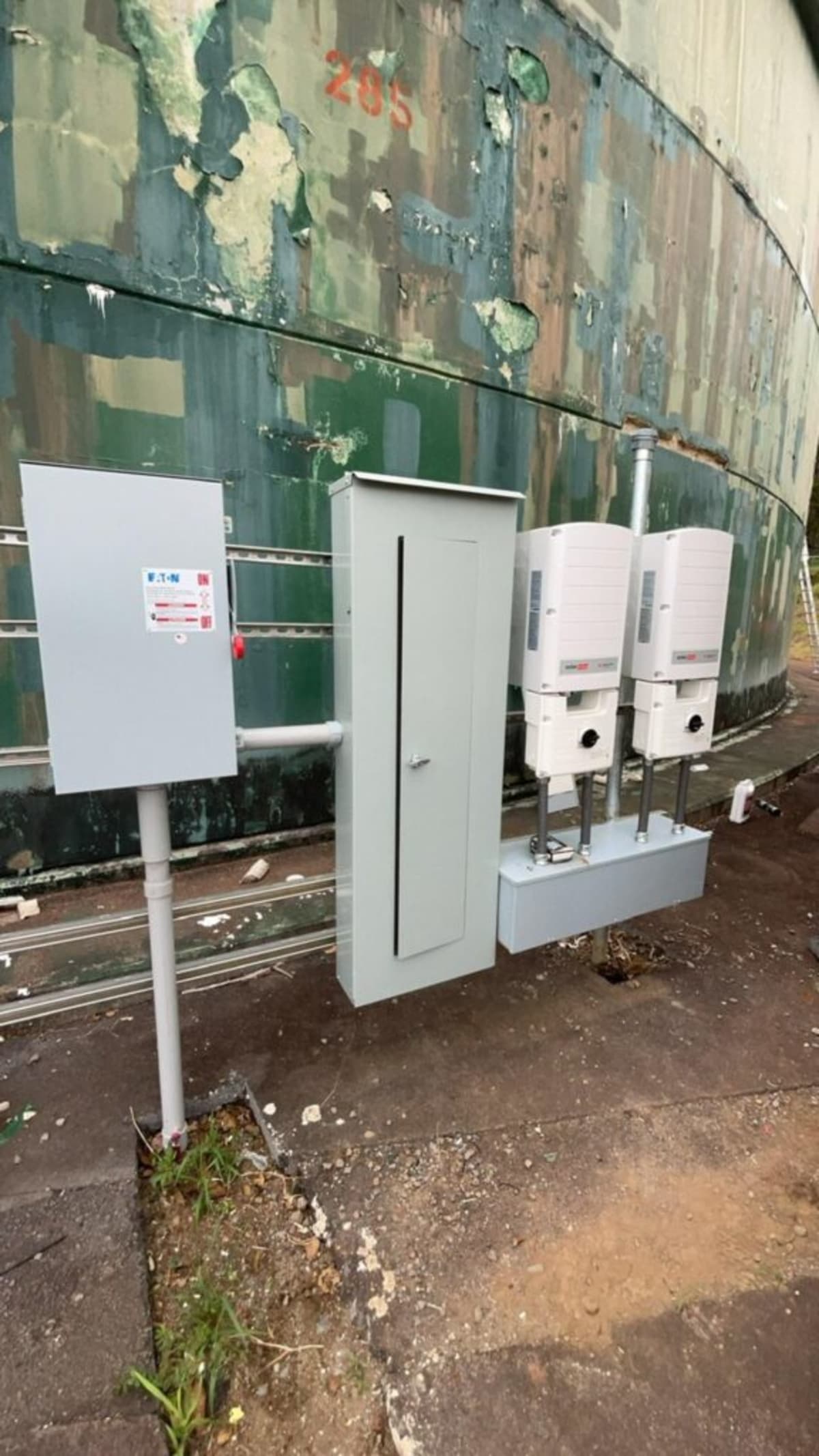
They kept the panels low and flat to catch less wind, which meant less ballast weight was needed. Power equipment like inverters sits on freestanding racks next to the tanks at ground level rather than adding more weight to the structure.
The Ripple Effect
This portfolio with Johnson Controls proves that creative infrastructure use can overcome land scarcity while cutting operating costs. The same facilities that were already maintained by the utility now generate clean power without taking up a single extra acre of precious island land.
The approach preserves the reservoirs' primary function while adding decades of solar generation. Access hatches stay clear for required sanitary inspections, drainage patterns remain intact, and the water storage tanks continue serving communities exactly as they did before, just with solar panels quietly generating power overhead.
Other island communities and landlocked utilities facing similar space constraints now have a working model to follow.
The sun was always shining on these water tanks; Maui just figured out how to put it to work.
More Images

Based on reporting by Renewable Energy World
This story was written by BrightWire based on verified news reports.
Spread the positivity!
Share this good news with someone who needs it