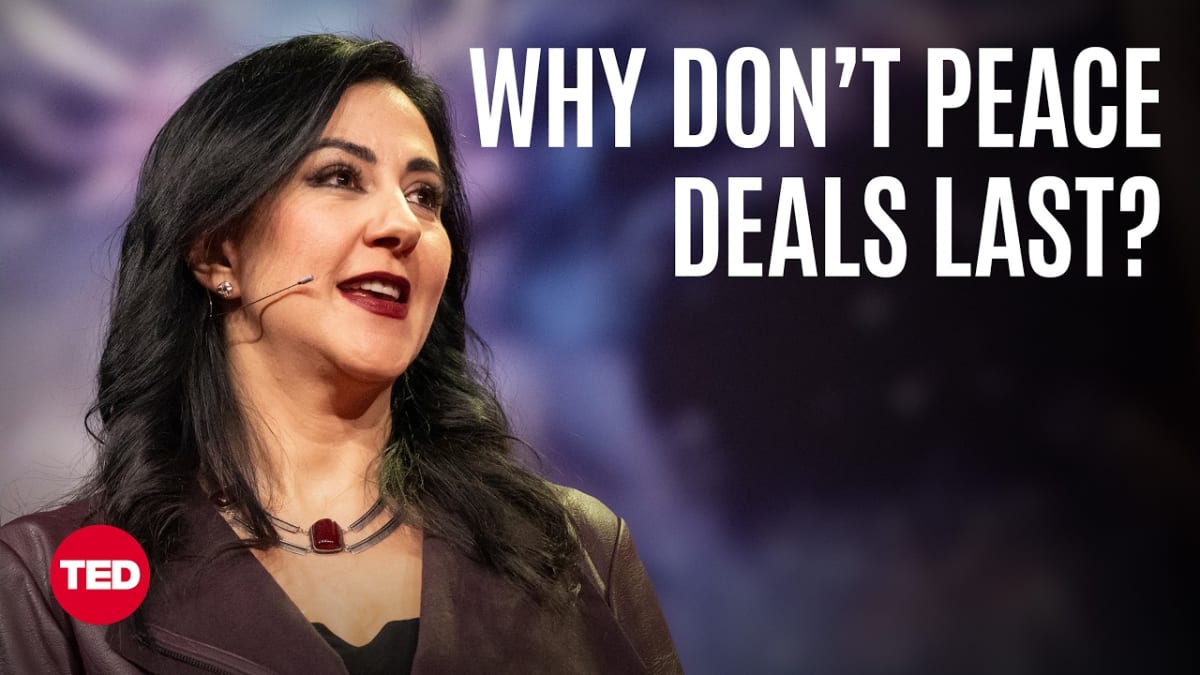
Mediator Ends 40-Year Search for Peace's Missing Piece
After four decades in the world's deadliest conflict zones, mediator Hiba Qasas discovered why most peace efforts fail. Her counterintuitive approach brought hundreds of Israeli and Palestinian leaders together during active war.
What if everything we thought about making peace was backward? Mediator Hiba Qasas spent 40 years inside some of the world's most dangerous conflict zones before she cracked the code that eludes most peacebuilders.
Her discovery challenges everything we've been taught. Most peace efforts start with empathy, asking enemies to understand each other's pain and humanity first. Qasas learned this approach fails almost every time.
Instead, she flips the script entirely. Her method begins with self-interest, identifying what both sides actually need and want. Only after establishing shared incentives does she introduce the harder work of empathy and understanding.
The results speak louder than theory. Using this approach, Qasas brought hundreds of Israeli and Palestinian leaders into active collaboration, even while war raged around them. These weren't symbolic meetings or empty gestures but real partnerships built on mutual benefit.
Her insight came from watching decades of well-intentioned peace talks collapse. When mediators lead with "understand your enemy's suffering," people shut down before negotiations even begin. They're not ready to feel empathy for someone they see as a threat.
But when conversations start with "here's how we both win," doors open. People can discuss practical solutions without first processing generations of trauma. The emotional work comes later, once trust has a foundation.
Why This Inspires
Qasas proves that idealism doesn't always require starting with the hardest part. Sometimes the most compassionate path forward is the practical one, where people see concrete reasons to cooperate before they're asked to forgive.
Her work offers hope for conflicts that seem frozen in place. By reordering the steps toward reconciliation, she's found a way to get adversaries in the same room and keep them there long enough to build something real.
The power of her approach lies in its honesty about human nature. We're not always ready to empathize with our enemies, and that's okay. What matters is finding a starting point that works, even if it's not the one we'd ideally choose.
Qasas didn't just theorize about peace from a distance. She spent four decades in the field, learning what actually works when the stakes are life and death. Her message is clear: peace isn't about being perfect or noble from day one.
Sometimes the path to lasting peace starts with something as simple as showing people they have more to gain together than apart.
Based on reporting by TED
This story was written by BrightWire based on verified news reports.
Spread the positivity!
Share this good news with someone who needs it