Medieval Church Discovered at Serbian Fortress
Archaeologists uncovered a previously unknown medieval church at Serbia's Koprijan fortress, complete with a striking red plaster cross marking its sacred heart. The find sheds new light on a turbulent period when this strategic stronghold defended against Ottoman advances in the late 14th and early 15th centuries.
Deep within the ruins of a 650-year-old fortress, archaeologists have found something no one knew existed: a complete medieval church that once offered hope to defenders on Serbia's frontlines.
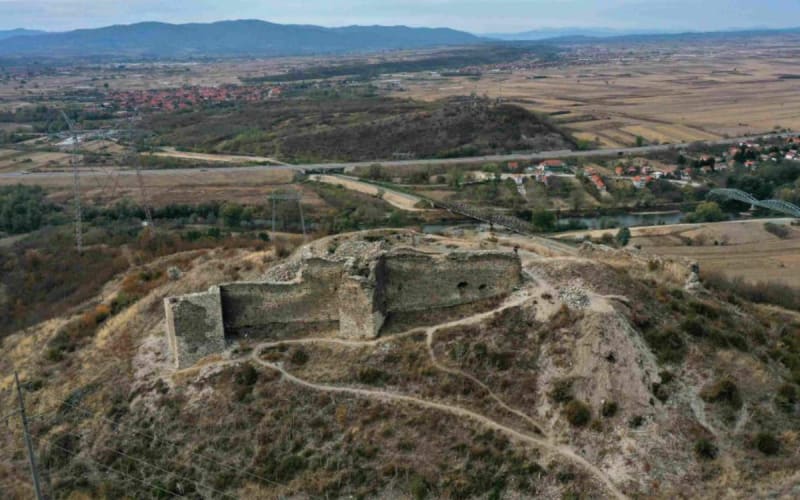
The discovery happened during the 2025 excavation season at Koprijan fortress near Doljevac, where researchers from the Archaeological Institute have been carefully peeling back centuries of history since 2022. Perched on Mount Seličevica above the South Morava River, this strategic stronghold once controlled vital trade routes through the Niš Basin during some of medieval Serbia's most dangerous decades.
The church remains emerged within Sector 5 in the fortress's Upper Town. Its walls were built from stone bound with mud, suggesting builders erected a wooden log church on this sturdy foundation, a common design in late medieval Balkan architecture.
But the real treasure lay waiting in the central apse. There, archaeologists found a cross crafted from red plaster, positioned exactly where worshippers would have focused their prayers. This liturgical centerpiece confirms the building's sacred purpose and points to a carefully planned worship space where soldiers and residents sought divine protection.
The excavation revealed multiple layers of occupation, each telling part of Koprijan's dramatic story. A thick fire layer rich with soot and ash speaks to a violent end, likely when the wooden roof structures burned. Beneath the destruction, researchers found artifacts dating to the late 14th and early 15th centuries, when the fortress saw its most intensive use.
History records that Prince Lazar restored Koprijan in 1372 as a border fortress against Ottoman expansion. The city changed hands repeatedly during the brutal power struggles that defined this era. Sultan Musa captured and destroyed it in 1413, though Despot Stefan Lazarević soon reclaimed it. The fortress likely fell permanently to Ottoman forces around 1451 and was never rebuilt.
The Ripple Effect
This discovery does more than add another dot to historical maps. The church's existence reveals how medieval communities created spaces of peace and hope even in militarized zones under constant threat. These weren't just soldiers manning walls; whole communities lived, worshipped, and raised families within these protective stones.
The site has been protected since 1947 and designated an immovable cultural property of great importance since 1979. Now, with Ministry of Culture funding and support from Doljevac Municipality, conservation work proceeds alongside excavation. The Institute for the Protection of Cultural Monuments from Niš is actively preserving the eastern rampart while archaeologists continue their careful work.
The project's long-term vision transforms Koprijan from a forgotten ruin into an accessible monument where visitors can walk through Serbia's medieval heritage. When that happens, the red plaster cross will once again serve its original purpose: drawing people toward something greater than themselves.
Based on reporting by Google: archaeological discovery
This story was written by BrightWire based on verified news reports.
Spread the positivity!
Share this good news with someone who needs it
%2Fhttps%3A%2F%2Ftf-cmsv2-smithsonianmag-media.s3.amazonaws.com%2Ffiler_public%2Ff8%2F2a%2Ff82aae37-3a31-4995-b8f3-4be66db320c8%2Fmembers_of_the_research_team_during_the_documentation_and_analysis_work.jpeg)