Medieval Gold Ring With Blue Sapphire Found in Norway
An archaeologist in Norway's oldest city unearthed a stunning gold ring with a brilliant blue gemstone, a treasure untouched for nearly 1,000 years. The delicate ninth-century piece reveals the wealth and artistry of medieval Scandinavian royalty.
Linda Åsheim thought her colleagues were playing a prank when she spotted something glinting in the dirt beneath medieval Tønsberg, Norway's oldest city.
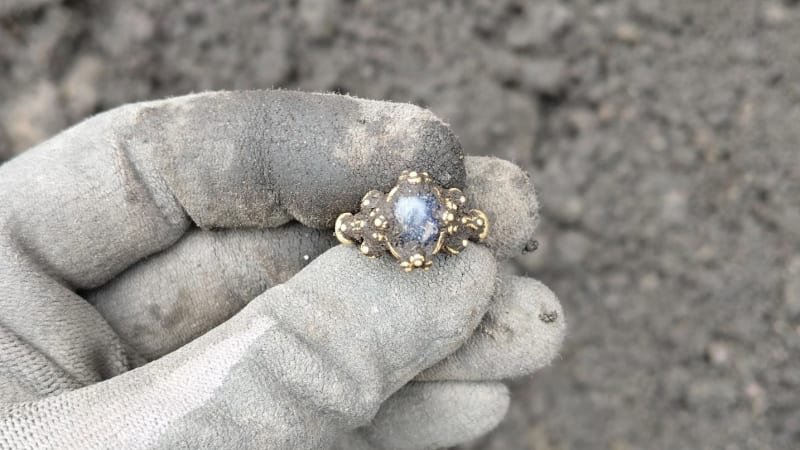
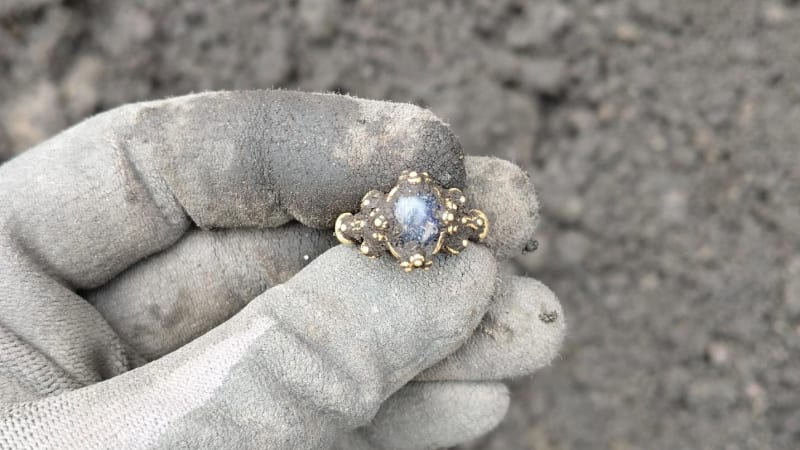
The archaeologist with the Norwegian Institute for Cultural Heritage Research had just discovered a delicate gold ring topped with a dazzling blue gemstone, likely a sapphire. Thin gold threads twisted into intricate spirals frame the stone, while tiny gold balls dot the surface like frozen dewdrops.
"I was completely shaken and had to ask the construction guys if they were messing with me," Åsheim said after making the discovery last summer. She was excavating the remains of a medieval town built in the ninth century, just below a royal castle complex.
The ring's craftsmanship tells a story of long-distance trade and cultural exchange. Experts believe it was made between the ninth and 11th centuries using goldwork techniques that traveled from the Byzantine Empire to Norway during the early Middle Ages.
Based on its size, the ring likely belonged to a high-status woman with fingers roughly equivalent to a modern U.S. women's size 5 1/2 to 7 1/2. In medieval times, such jewelry signaled wealth and power in a society where few could afford precious metals and gemstones.
The blue stone itself may have carried deeper meaning beyond beauty. Medieval people believed sapphires symbolized divine power and could help the wearer maintain their chastity and even cure boils, according to researchers.
Why This Inspires
This discovery reminds us that beauty and artistry have captivated humans across centuries. Someone carefully crafted this ring with painstaking detail nearly 1,000 years ago, never imagining it would one day move a modern archaeologist to tears.
The find also connects us to the women of medieval Norway, whose stories are often lost to time. This ring survived wars, fires, and centuries of change, preserving a small piece of someone's identity.
It's been 15 years since the last gold ring was found in Tønsberg, making this discovery particularly special. Project manager Hanne Ekstrøm Jordahl called it "a fantastically beautiful and rare specimen," and archaeologists are now working to learn more about the woman who once wore it.
After cleaning, the ring's brilliant blue stone shines as brightly as the day it was made, a testament to craftsmanship that has outlasted empires.
More Images



Based on reporting by Live Science
This story was written by BrightWire based on verified news reports.
Spread the positivity!
Share this good news with someone who needs it

%2Fhttps%3A%2F%2Ftf-cmsv2-smithsonianmag-media.s3.amazonaws.com%2Ffiler_public%2Ff8%2F2a%2Ff82aae37-3a31-4995-b8f3-4be66db320c8%2Fmembers_of_the_research_team_during_the_documentation_and_analysis_work.jpeg)