Medieval Women Mastered Falconry to Claim Real Power
New research reveals medieval women weren't just accessories in falconry—they owned hunting grounds, trained fierce birds, and even made careers as hawk masters. These women used birds of prey to claim authority and status in a world that tried to limit them.
Forget everything you thought you knew about medieval women sitting quietly in towers.
New research shows that elite women in the Middle Ages wielded hawks and eagles as tools of real power, creating their own hunting grounds and defining themselves on their own terms. While conduct manuals suggested women stick to small birds like merlins, historical records tell a different story.
Margaret Beaufort, grandmother to Henry VIII, kept an impressive collection that included not just dainty merlins but powerful goshawks and lanners. She designed and managed her own deer park at Collyweston Palace, complete with terraces and ponds perfect for falconry. Her daughter-in-law, Queen Elizabeth of York, hunted there with goshawks too.
These weren't just hobbies. Women made actual careers from their expertise with birds of prey.
A woman named Ymayna worked as keeper of the Earl of Richmond's hawks and hounds at Richmond Castle in the mid-1200s. Dame Juliana de Berners, a prioress, is believed to have authored parts of the Boke of St Albans, which includes treatises on hunting and hawking that people relied on for generations.
When medieval women had the chance to represent themselves, they chose birds of prey. Elizabeth of Rhuddlan, daughter of King Edward I, picked a seal design showing her standing upright with an obedient bird in her left hand. Elizabeth, Lady of Sevorc, went bolder—her seal shows her riding side-saddle with a falcon in one hand and a large eagle's claw in the other.
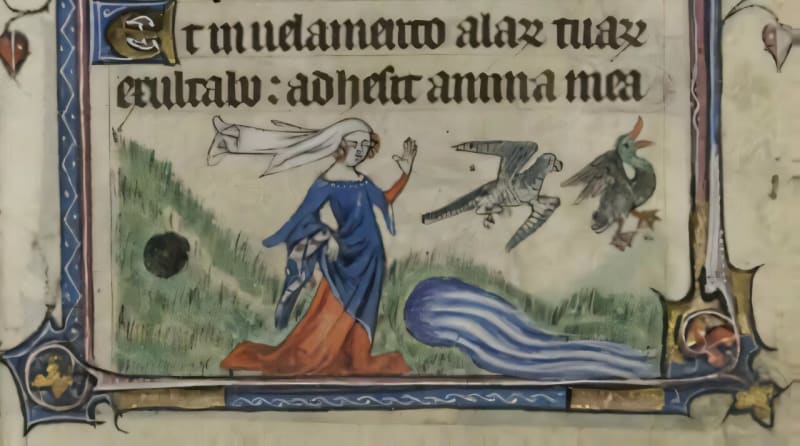
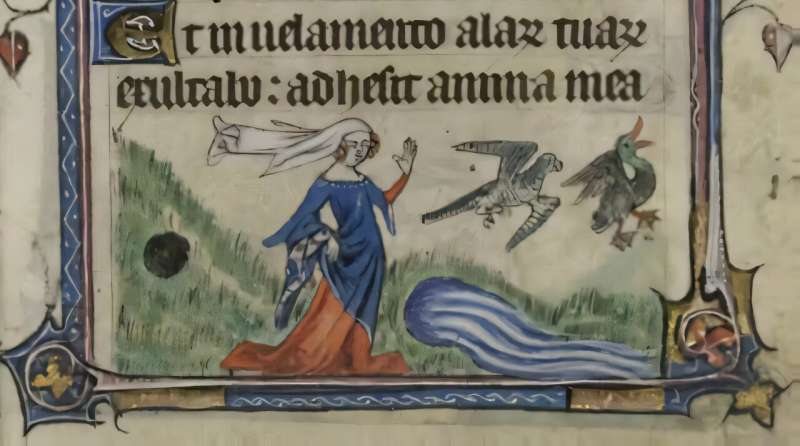
The Taymouth Hours, a 14th-century illuminated book made for a queenly reader, depicts women with billowing headdresses hunting mallards with large birds of prey. These women stand with authority, demonstrating skill and command.
Why This Inspires
This research matters because it reveals how women found creative ways to claim power within restrictive systems. They didn't wait for permission or stick to "appropriate" choices. They trained fierce birds, managed land, built expertise, and created communities of capable women.
The relationship between women and birds of prey, now explored in films like Hamnet and H is for Hawk, has roots stretching back centuries. Medieval women understood something timeless: mastery over a wild creature reflects mastery over your own life and choices.
These women refused to be tamed or limited, and their legacy soars on.
More Images



Based on reporting by Phys.org
This story was written by BrightWire based on verified news reports.
Spread the positivity!
Share this good news with someone who needs it
%2Fhttps%3A%2F%2Ftf-cmsv2-smithsonianmag-media.s3.amazonaws.com%2Ffiler_public%2Ff8%2F2a%2Ff82aae37-3a31-4995-b8f3-4be66db320c8%2Fmembers_of_the_research_team_during_the_documentation_and_analysis_work.jpeg)