Miami Medical Team Builds AI Helpers in 100 Days
Doctors and staff at University of Miami's Miller School of Medicine just proved you don't need to be a programmer to build AI tools that save hours of work every day. In a 100-day challenge, medical professionals with zero coding experience created digital assistants that automate their most tedious tasks.
Imagine cutting a 20-minute daily task down to seconds, or instantly translating complex medical reports into words patients can understand. That's exactly what happened when University of Miami's pathology department decided to stop wondering about AI and start building it.
Dr. Yanyun Wu had a simple idea. Instead of waiting for tech companies to solve medicine's workflow problems, why not teach doctors and staff to create their own solutions? She launched the 100-Day Agentic AI Challenge, designed for people who'd never written a line of code.
The challenge divided into three phases: Learn, Apply, and Showcase. Participants attended teaching sessions and group discussions, then dove into Microsoft's low-code platforms. Everything stayed secure within the university's private systems.
The results stunned even the organizers. Graduate coordinator Faith Siem built a chatbot that instantly answers complex training compliance questions. Dr. Felipe Ruiz Casas created an assistant that matches clinical notes to billing codes in seconds instead of the usual 20 minutes daily.
Dr. Diego Montoya Cerrillo developed a quality checker that reads surgical reports and verifies them against strict staging criteria automatically. No more slow manual audits. Dr. Carmen Gomez-Fernandez built something even more touching: a tool that translates technical pathology jargon into sixth-grade reading level explanations for scared patients.
Sophie Egea created a guide that walks researchers through the maze of protocols needed to request pathology specimens. Each tool solved a real problem these professionals faced every single day.
The Ripple Effect
The beauty of this challenge extends far beyond one hospital department. These medical professionals proved that AI isn't just for Silicon Valley engineers. When you give smart, motivated people the right training and tools, they build exactly what they need.
The pathology department is already planning to expand the program. Other departments at Miller School are asking how they can run their own challenges. The model is spreading because it works: identify your repetitive tasks, learn simple no-code tools, and build solutions that give you time back for what matters.
This approach transforms AI from something mysterious and threatening into something practical and empowering. The doctors aren't replacing human judgment. They're automating the paperwork and cross-checking that pulls them away from patients and critical decisions.
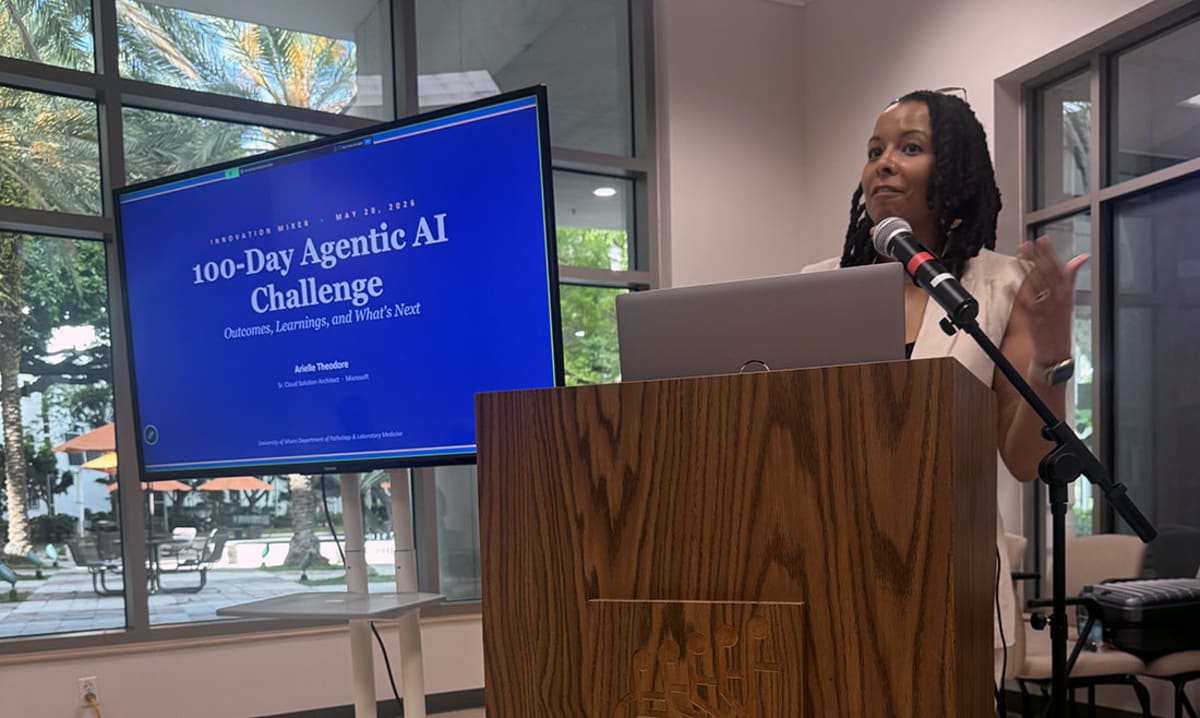
Microsoft's Arielle Theodore helped organize the challenge specifically because these tools work best when designed by the people who'll use them. The participants understood their workflows better than any outside developer ever could.
The real victory isn't just the time saved, though that matters enormously. It's watching medical professionals discover they can shape their own digital future. They don't have to wait for someone else to fix their problems. They can build the solutions themselves.
Medicine has always been about solving problems and helping people. Now those same professionals are proving they can extend that mission into the digital tools they use every day, one workflow at a time.
More Images


Based on reporting by Google News - School Innovation
This story was written by BrightWire based on verified news reports.
Spread the positivity!
Share this good news with someone who needs it