Michigan Saves Butterfly From Brink of Extinction
A butterfly once so common scientists didn't bother counting them nearly vanished by 2022, with only nine left in the wild. Now, thanks to two zoos and dedicated researchers, nearly 1,300 Poweshiek skipperlings flew free this summer in their Michigan prairie homes.
When only nine butterflies of an entire species remain in the wild, most people would call it game over. Michigan scientists called it a starting point.
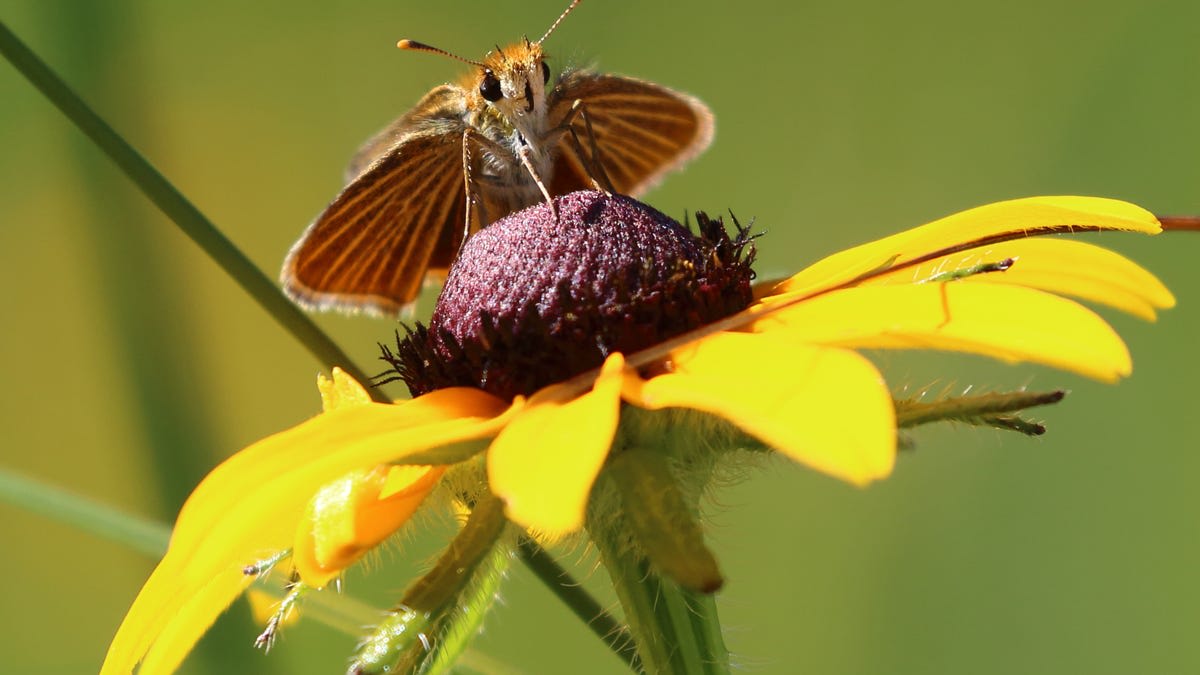
The Poweshiek skipperling butterfly was everywhere across Midwest prairies just decades ago. Biologists didn't count them because they were on practically every flower. Then habitat loss and pesticides wiped them out so quickly that by 2014, the federal government listed them as endangered.
By 2022, researchers could find only nine of these tiny, orange-striped butterflies in a single Oakland County prairie fen. There were ten times as many giant pandas on Earth as Poweshiek skipperlings.
"It was almost expected that this butterfly was going to be gone soon," said David Pavlik, a research assistant with Michigan State University's endangered butterfly program. "The population trajectories were just so bad."
Bill Flanagan, conservation manager at John Ball Zoo in Grand Rapids, had never heard of the species when he got the call in 2020. After researching, he realized he was looking at "probably one of the most critically endangered animals, period."
But he said yes anyway. So did the Minnesota Zoo. Together, they launched a captive breeding program that seemed impossible.
The first year, two breeding pairs produced just 32 fertilized eggs. This year, 48 pairs created more than 4,500 eggs. In July, researchers released nearly 1,300 butterflies into Michigan prairie fens, with 675 going to a newly restored site in Jackson County.
The change has been stunning. "This was by far the best year in 20-plus years for Poweshiek skipperlings," Pavlik said. On some summer days, researchers counted over 100 butterflies at a single site, numbers nobody had seen in decades.
The Ripple Effect
Saving the Poweshiek skipperling required restoring entire prairie fen ecosystems, the specific wetland meadows where these butterflies spend 50 weeks a year as caterpillars before emerging for their brief, brilliant week of flight. Those restored habitats now support countless other native species that depend on the same vanishing landscape.
The work also created a blueprint. Other critically endangered butterflies face similar threats from habitat loss and pesticides, and this partnership proved that even species on the absolute edge can come back with the right intervention.
Now comes the real test. Researchers are watching to see if these released butterflies can mate, lay eggs and sustain themselves without human help. That's the ultimate goal: wild populations thriving on their own again.
"I think everything that the Poweshiek Skipperling International Partnership has done has undoubtedly saved the species," Pavlik said.
From nine butterflies to over a hundred in a single survey, the Poweshiek skipperling is showing Michigan that extinction doesn't have to be forever.
More Images
Based on reporting by Google: species saved endangered
This story was written by BrightWire based on verified news reports.
Spread the positivity!
Share this good news with someone who needs it