Microscopic Video Contest Reveals Hidden World of Tiny Life
A researcher's video of fluttering cilia in a child's airways just won an international microscopic film competition, revealing stunning beauty in the invisible world around us. The contest showcases how everyday curiosity is helping scientists make new discoveries.
A Chinese researcher captured something extraordinary while studying a child with a rare lung disease: tiny hair-like structures called cilia moving in brilliant green waves through the airways.
Ning Xu's video, magnified 100 times, won first place in the 2026 Nikon Small World In Motion competition. The footage shows cilia in a child with primary ciliary dyskinesia, a condition where these tiny structures move abnormally and make breathing difficult.
Dr. Xu used complex light waves to illuminate different parts of the sample in color, helping scientists better understand this rare disease. What started as medical research became a window into the hidden beauty of our own bodies.
The competition drew filmmakers and scientists from around the world, all eager to share what they'd discovered through their microscopes. Vietnamese researcher Nguyen Nam Nhat won second place after accidentally capturing drama in a water droplet: a roundworm pressing against a single-celled organism called a Dileptus until it lost a chunk of its body.
"I had intended only to film Dileptus specimens to study their shape," Mr. Nguyen said. Instead, he discovered a new defensive behavior that scientists hadn't documented before.
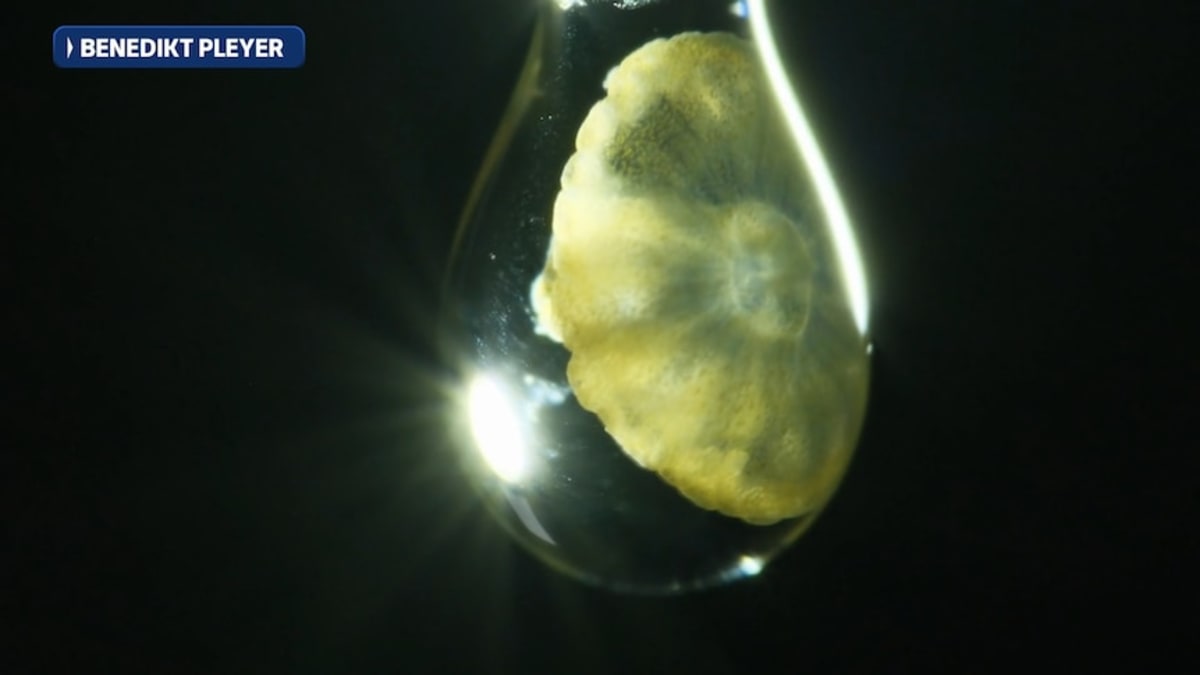
Third place went to Benedikt Pleyer for footage of jellyfish larvae suspended in water droplets. Mr. Pleyer spent months perfecting his technique, sliding tiny larvae into drops of water hanging from a string.
Other winning videos showed bioluminescent phytoplankton glowing when disturbed, MSG crystals forming intricate patterns, and even a pregnant tardigrade meeting another of these nearly indestructible creatures. One video captured fungus growth that causes garlic rot, while another featured a vibrant sea slug from the Pacific Ocean.
Why This Inspires
These microscopic filmmakers are proving that anyone with curiosity and a camera can contribute to science. Mr. Pleyer, an amateur enthusiast, believes everyday observers play a vital role in discovery.
"The microcosmos is a vast field and we don't know much about it yet," he said. Digital technology has made microscopic photography cheaper and more accessible than ever before.
Mr. Pleyer captured his bioluminescent phytoplankton by using glycerol to hold them in place and a small electric charge to trigger their glow without shaking the camera. These creative solutions show how amateur scientists are developing new techniques to reveal nature's secrets.
The competition highlights how beauty and discovery exist everywhere, even in places too small for our eyes to see. What looks like simple pond water might contain roundworm battles, and what seems like a medical problem reveals stunning choreography happening inside our bodies.
With microscopes becoming more affordable, more people are exploring this hidden world and making observations that professional scientists might never see. The invisible universe is finally coming into focus, one patient video at a time.
More Images



Based on reporting by ABC Australia
This story was written by BrightWire based on verified news reports.
Spread the positivity!
Share this good news with someone who needs it