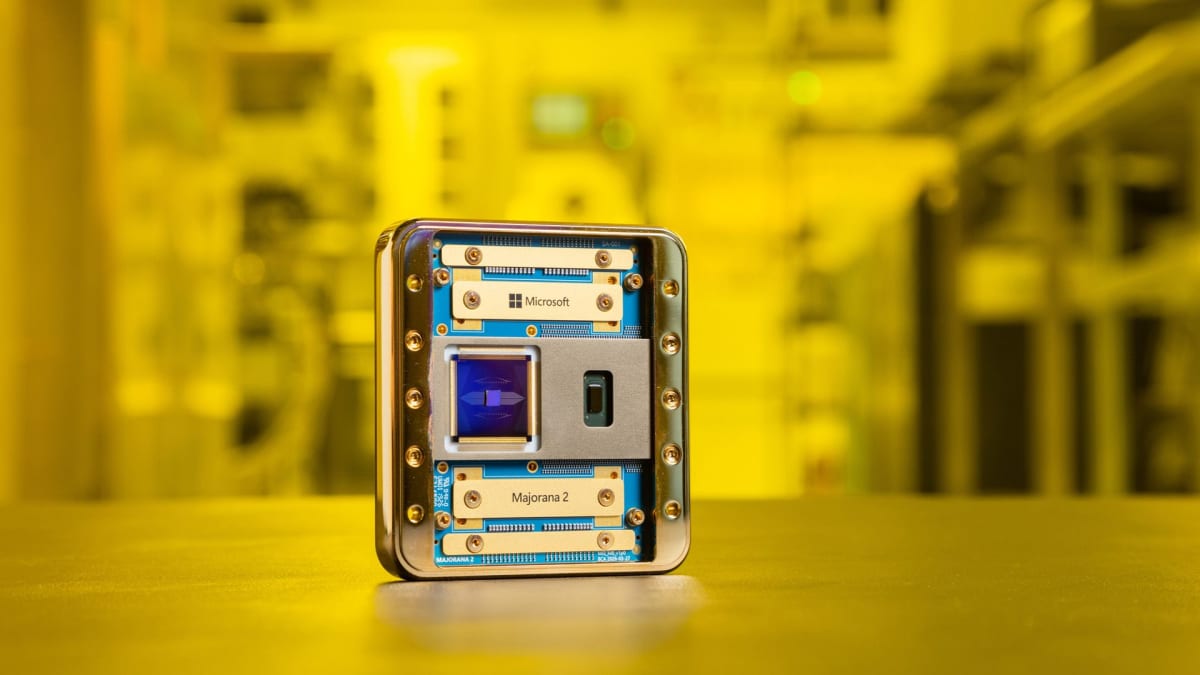
Microsoft's Quantum Chip Now 1,000x More Reliable
Microsoft's new quantum chip keeps qubits stable for up to 60 seconds instead of milliseconds, bringing practical quantum computers years closer to reality. The breakthrough could slash the timeline to commercial quantum computing in half.
Scientists just cleared one of the biggest hurdles standing between us and computers powerful enough to solve problems that would take today's supercomputers centuries.
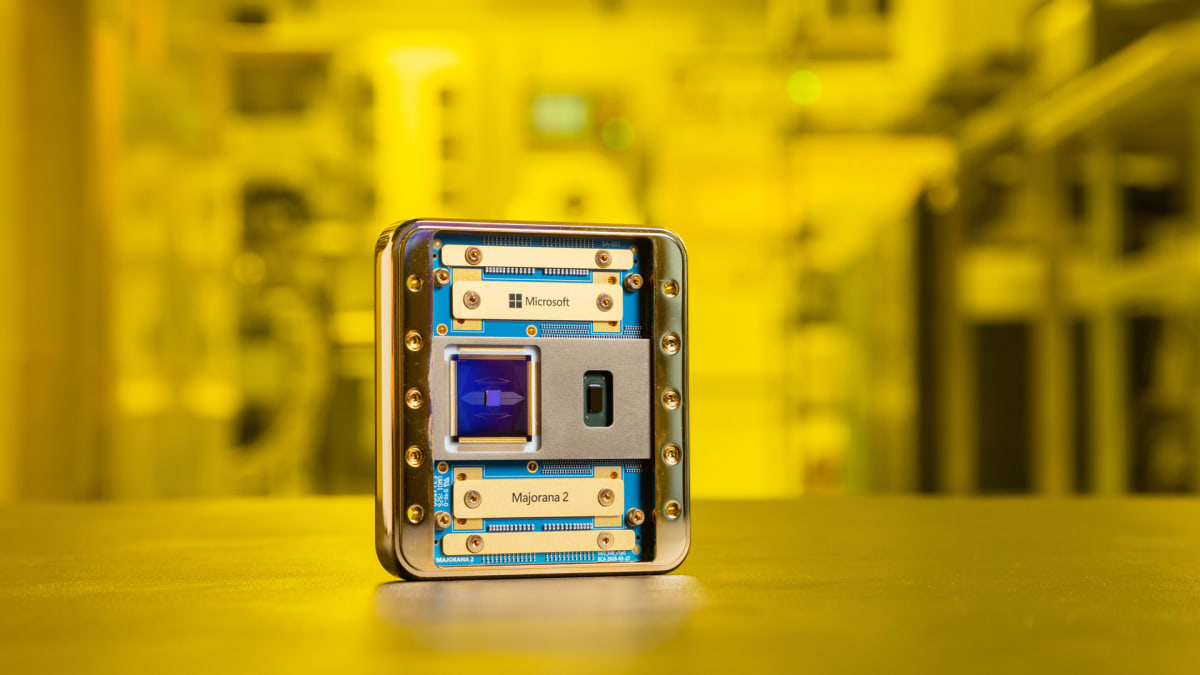
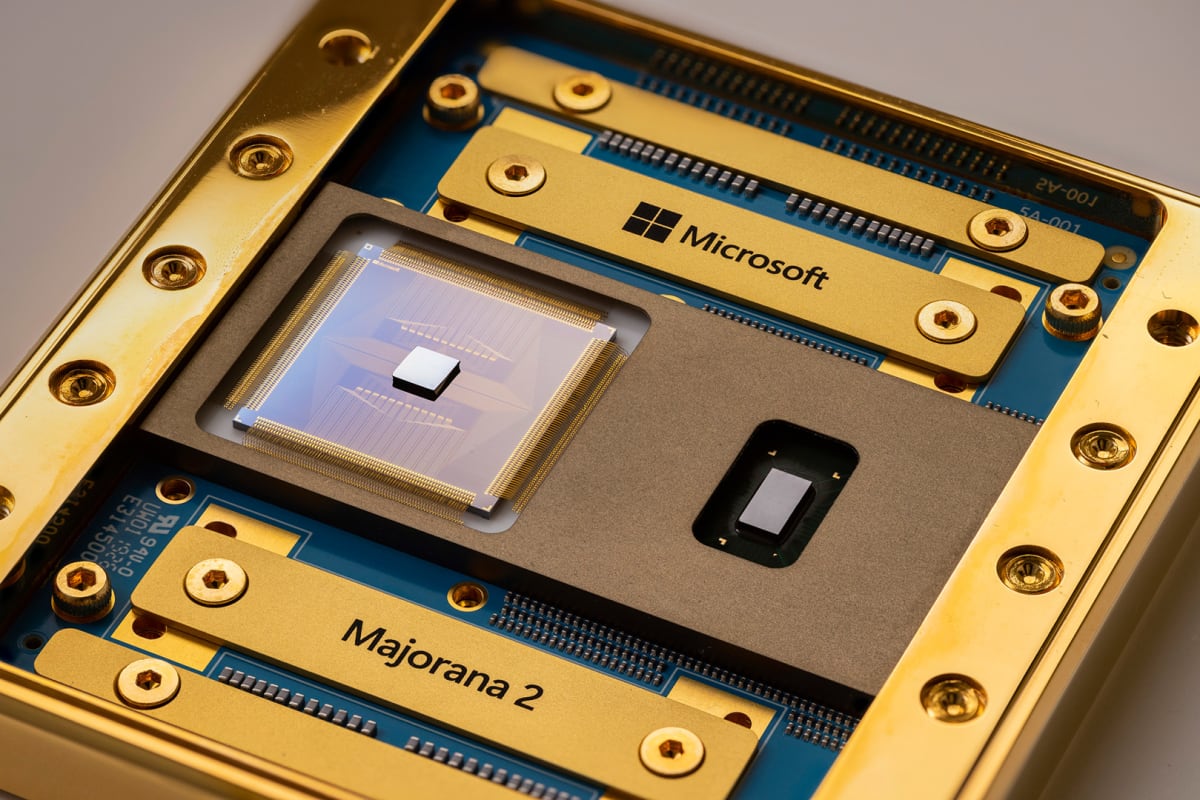
Microsoft's new quantum chip, Majorana 2, can maintain its delicate quantum state for up to a minute. That might not sound impressive until you realize most quantum chips lose their computing power in milliseconds. This thousand-fold improvement means quantum computers could finally become reliable enough for real-world use.
The chip works by creating special particles that physicist Ettore Majorana theorized about 90 years ago. These particles act as their own opposites, allowing them to store information more stably than conventional quantum bits. When conditions are just right, the chip enters a "topological" state where atoms stay connected over long distances, processing information in ways regular computers simply can't.
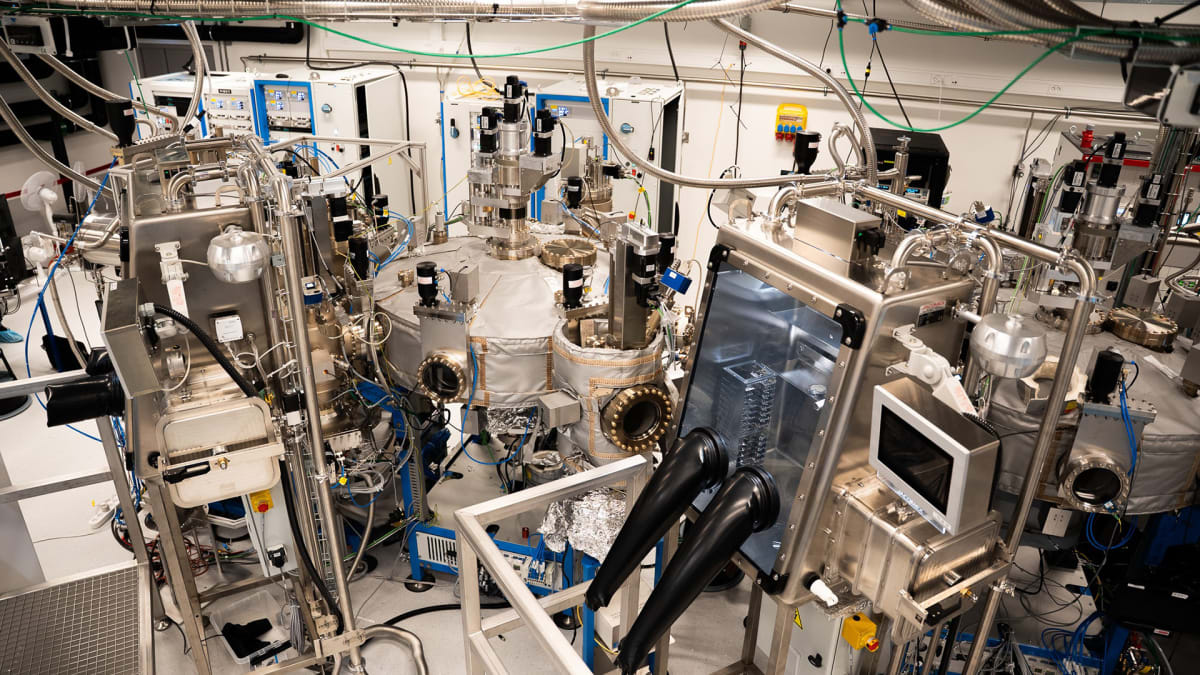
Getting there required building the chip atom by atom. The team used layers of semiconductor materials with lead shielding to protect the fragile quantum states from interference like electromagnetic waves and cosmic radiation. That doubled the physical barrier protecting qubits from environmental noise.
Here's where it gets really clever. The scientists used artificial intelligence to figure out exactly how to add impurities into the crystalline structure without disrupting it. Too many impurities in the wrong spots would ruin everything, but AI agents helped them find the perfect recipe through simulations instead of endless trial and error.
Why This Inspires
This breakthrough shows how combining different cutting-edge technologies can solve problems that seemed impossible just years ago. By bringing AI and quantum physics together, Microsoft's team turned decades of work into rapid progress.
The advance could cut the development timeline for commercial quantum computers from decades to just a few years. Microsoft says they're now on track to deliver a fault-tolerant quantum computer by 2029, machines that could revolutionize everything from drug discovery to climate modeling.
Not everyone is convinced yet. Some scientists want more proof before accepting Microsoft's claims about their topological approach to quantum computing. The findings haven't been peer-reviewed, and experts have questioned whether the underlying technology has been fully proven.
But the team remains confident they're on the right path. Each year brings improvements that edge closer to a quantum computer with massive commercial and societal value. Compared to last year's chip, they're literally a thousand times better.
The future of computing just got a lot closer, one stable qubit at a time.
More Images

Based on reporting by Live Science
This story was written by BrightWire based on verified news reports.
Spread the positivity!
Share this good news with someone who needs it