Midwife Care Cuts Preterm Birth Risk 45% in New Study
A groundbreaking study shows that continuous care from community-based midwives dramatically reduces preterm births, with the biggest benefits for women facing social disadvantages. Over 6,600 pregnancies in South London proved this simple shift in care could transform outcomes for mothers and babies.
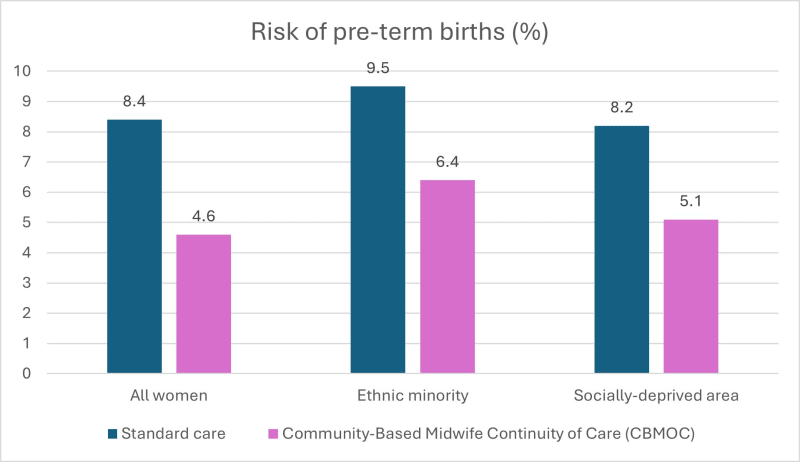
Women who receive ongoing care from the same team of community-based midwives are 45% less likely to deliver prematurely than those in standard care programs.
The research from King's College London tracked 6,600 pregnancies in South London between 2018 and 2020. About a quarter of the women received Community-Based Midwife Continuity of Care, where the same small team of midwives supported them through pregnancy, birth, and postpartum recovery.
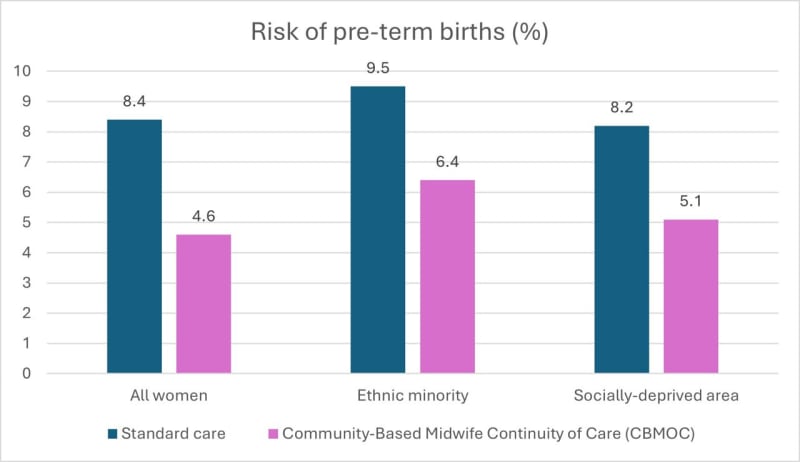
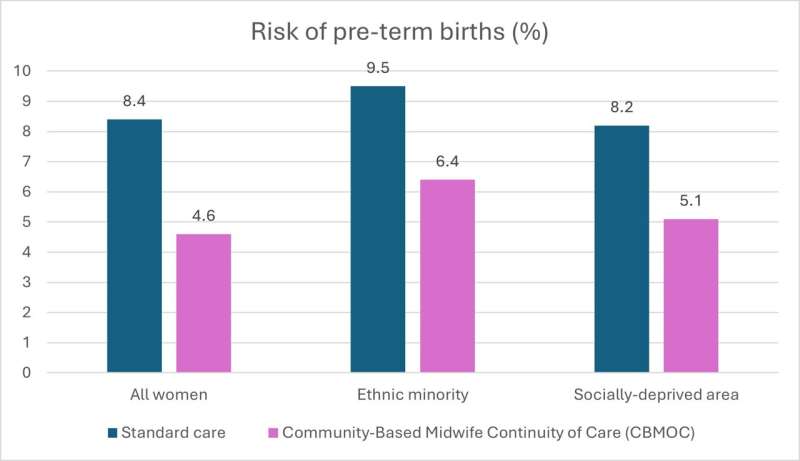
The results were remarkable across all groups, but especially powerful for women who typically face the highest risks. For Black, Asian, and other ethnic minority women, preterm birth rates dropped from 9.5% to 6.4%. Women in the most socially disadvantaged areas saw their risk fall from 8.2% to just 5.1%.
The difference between the two care models is meaningful. In the continuous care approach, a dedicated team of midwives works with each woman from her first appointment through recovery, providing care both at home and in hospitals. When complications arise, women get specialist obstetric care while keeping their trusted midwife team involved.
Standard care splits responsibility among midwives, general practitioners, and obstetricians across different locations. Women might see different providers at each appointment.
Beyond reducing preterm births, the continuous care model led to more natural deliveries, fewer missed appointments, and better mental health referrals. Women developed real relationships with their care teams and received support closer to home.
The Ripple Effect
This research offers a roadmap for closing health gaps that have persisted for generations. When women know their care team and receive consistent support in their own communities, outcomes improve for everyone.
The findings align perfectly with England's new 10-year NHS plan to shift more care from hospitals to communities. Dr. Cristina Fernandez Turienzo, the study's lead author, notes that locality-based care combining community support with midwife continuity can meaningfully reduce health inequities.
There's a catch, though. NHS England paused national rollout of continuous midwife care in September 2022 due to staffing shortages. Currently, only some NHS Trusts offer this model, and women can't choose which type of care they receive.
Professor Jane Sandall, the study's senior author, emphasizes that this approach gives women care close to home with providers who coordinate seamlessly with specialists when needed. The solution exists and works.
The South London study's strength lies in its diverse population and comprehensive health data, representing demographics found worldwide. Future research will need to ensure women at greatest social risk are included in trials, as they've historically been underrepresented.
A 45% reduction in preterm births isn't just a statistic; it means healthier babies, safer deliveries, and mothers who feel genuinely supported during one of life's most vulnerable moments.
More Images
Based on reporting by Medical Xpress
This story was written by BrightWire based on verified news reports.
Spread the positivity!
Share this good news with someone who needs it