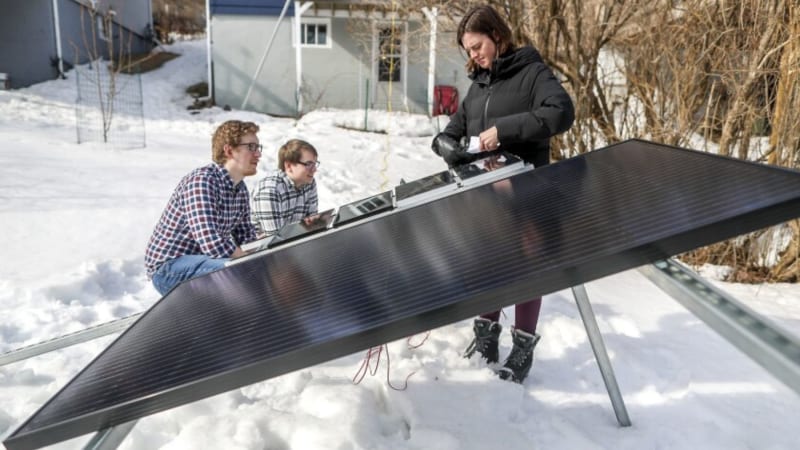
Minnesota Couple Invents Solar Panels That Melt Their Own Snow
A Duluth couple created self-heating solar panels that melt snow from underneath, keeping clean energy flowing all winter long. Their invention just won $50,000 from the Department of Energy and could transform solar power in cold climates.
After losing three days of solar power to a Minnesota snowstorm, Karl Wagner and Danielle Rhodes decided winter shouldn't get to shut down clean energy anymore.
The Duluth couple faced a problem familiar to anyone with rooftop solar in snowy states. Heavy snowfall buries panels completely, blocking sunlight and stopping electricity production for days at a time. Manual removal means climbing on icy roofs with scrapers, which is dangerous and impractical.
Wagner engineered a solution called Solar for Snow that changes how panels handle winter weather. He built a thin heating layer directly into the solar panel that can sense where snow sits and warms only those specific spots. The snow loosens gently and slides off within hours, letting the panels get back to producing electricity.
The system avoids the risks of roof climbing and the awkwardness of snow rakes. More importantly, it keeps solar panels working through much of winter instead of staying buried until spring arrives.
Northern states lose significant amounts of clean energy every winter because of snow coverage. After major storms, panels can sit under thick snow while sunshine goes completely to waste above them. For years, this was simply accepted as the cost of living in cold climates.
Wagner's invention caught the attention of the U.S. Department of Energy, which awarded him $50,000 through its American-Made Solar Prize program. He also received backing from Minnesota Power and Heliene, a local solar manufacturer committed to bringing the technology to market.
The Ripple Effect
If this technology becomes standard in cold regions, millions of solar panels across America's snowbelt could stay productive year-round. That means more consistent clean energy generation, better returns on solar investments, and fewer carbon emissions from backup power sources during winter months.
The approach could also make solar more appealing in northern states where homeowners have hesitated because of winter downtime concerns. Communities from Maine to Montana deal with the same snow-covered panel problem every year.
Wagner still faces challenges before the technology reaches widespread use. The heating layer adds costs to panel manufacturing, requires a small power connection, and must prove it can last 25 years or more like standard solar equipment. He's now focused on simplifying the design and bringing prices down.
For the first time, solar panels in snowy climates might work all twelve months instead of taking winter off.
Based on reporting by Google News - Clean Energy
This story was written by BrightWire based on verified news reports.
Spread the positivity!
Share this good news with someone who needs it


