MIT Cable Design Powers Next-Gen Quantum Computing
MIT researchers invented flexible cables that make quantum computers easier and cheaper to build. A Colorado company is now using them to help bring quantum computing out of the lab and into the real world.
Building a quantum computer used to mean wrestling with hundreds of stiff, bulky cables in freezing conditions. MIT Lincoln Laboratory just changed that with a simple ribbon-like design that's transforming the industry.
Quantum computers promise to solve complex problems at speeds regular computers can't match. They could revolutionize medicine, cybersecurity, and scientific research. But building them requires keeping quantum bits stable at temperatures colder than outer space.
The traditional approach used coaxial cables that generated excess heat, took up enormous space, and were so brittle that installation could take days. As quantum computers grow more powerful with more qubits, the cable problem only gets worse.
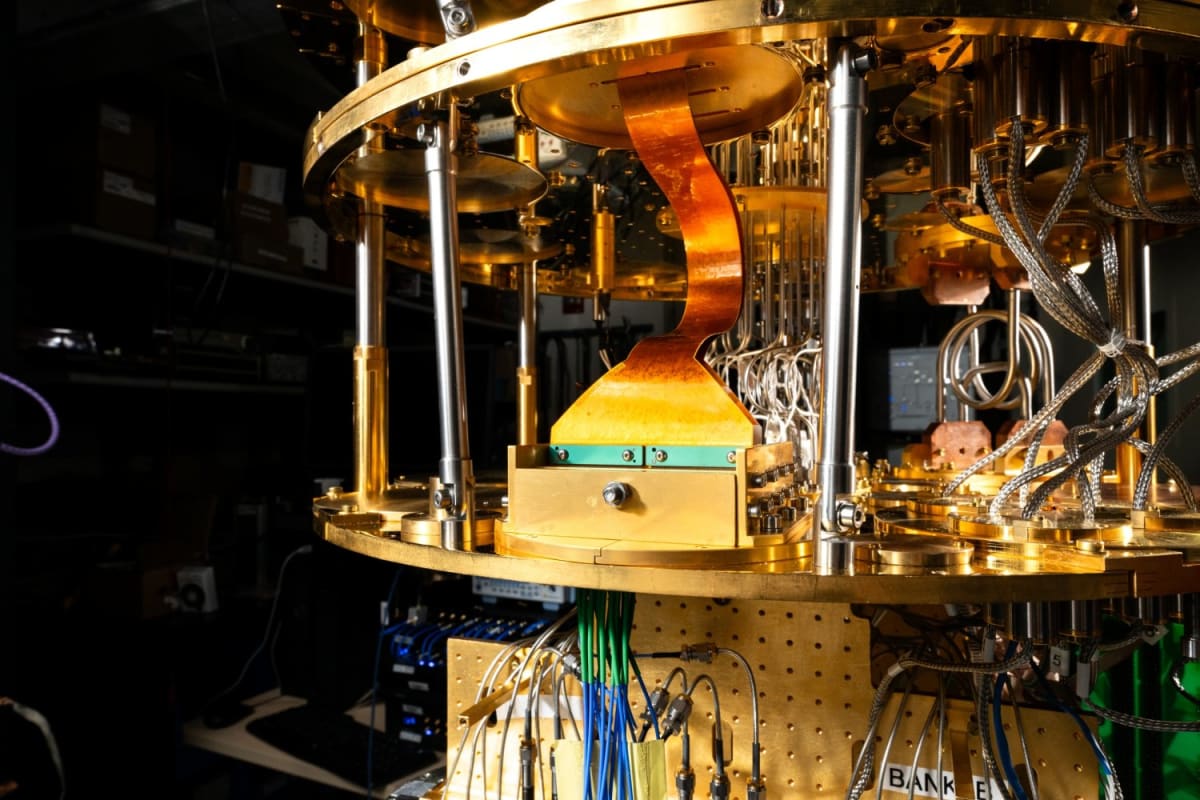
MIT researchers designed flexible ribbon cables using a stripline configuration with conductive layers sandwiched between polymer shields. The breakthrough is that any circuit board manufacturer can make them using standard equipment.
"The main innovation is that the laboratory's cables can be fabricated by a traditional printed-circuit-board manufacturer," says John Cummings, principal investigator on the project. "They're cheaper to fabricate and easier to install than traditional coaxial cables."
Maybell Quantum, a Colorado hardware supplier, licensed the design and is now integrating the cables into their dilution refrigerators. Installation tasks that once took days now take just hours. The ribbon format is mechanically robust, reducing breakages common with thin coaxial cables.
The Ripple Effect
This technology addresses a crucial bottleneck in quantum computing's journey from lab curiosity to industrial tool. Right now, building quantum systems requires specialized equipment and expert training at high costs. Maybell's mission is making quantum development accessible to commercial manufacturers.
"If you want to scale to hundreds of chips, you need interconnects that can handle more signals more reliably," says Kyle Thompson, Maybell's founder and chief technology officer. The flexible cables enable true scalability.
Maybell plans to use the cables across all thermal stages of their refrigerators, starting with thermometry, heaters, and sensors. The company sees this as reshaping manufacturing norms with faster, more consistent builds and easier field service.
The impact extends beyond convenience. Moving federally funded innovation into American manufacturing strengthens the entire U.S. quantum ecosystem. As quantum computers transition from research tools to commercial reality, this infrastructure could help industries from finance to medicine harness their computational power.
Sometimes the biggest breakthroughs come from solving the smallest problems standing in the way.
Based on reporting by MIT News
This story was written by BrightWire based on verified news reports.
Spread the positivity!
Share this good news with someone who needs it