NASA Opens First Major Wind Tunnel in 40 Years
NASA just unveiled a cutting-edge wind tunnel in Virginia that will test everything from next-generation aircraft to Mars helicopters. The facility gives researchers twice the speed and better accuracy than its predecessors to shape the future of flight.
For the first time in over four decades, NASA has a brand new wind tunnel ready to test the aircraft and spacecraft that will define the next generation of flight.
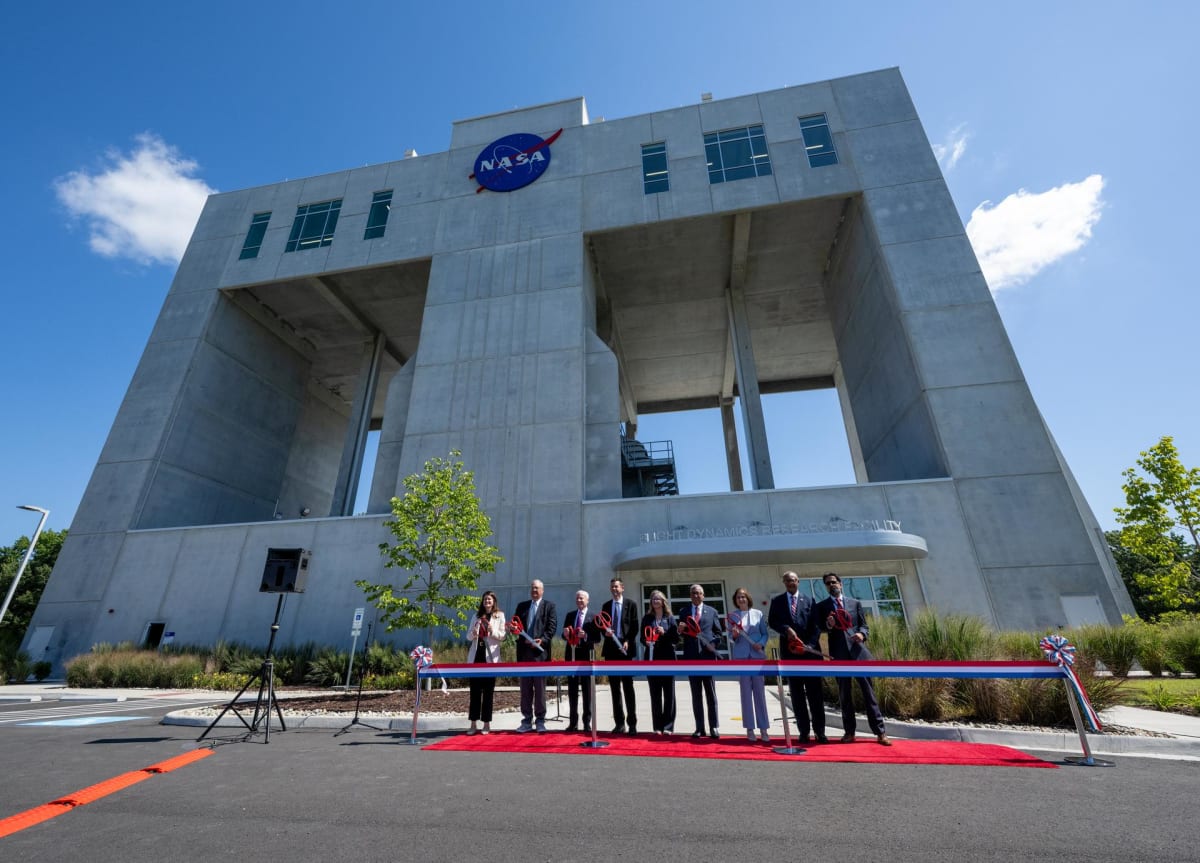
The Flight Dynamics Research Facility opened Friday at NASA's Langley Research Center in Hampton, Virginia. This state-of-the-art testing ground will help engineers perfect designs for everything from commercial drones to vehicles that land astronauts on the Moon.
The 25,000-square-foot building replaces two aging wind tunnels with modern capabilities that researchers have dreamed about for years. Its 20-foot test chamber is larger than the old facilities, meaning scientists can use bigger, more detailed models that produce better data.
Speed matters too. The new tunnel reaches 117 miles per hour, twice as fast as its predecessors, letting engineers test heavier models that simulate real vehicles flying at higher altitudes.
Four 750-horsepower motors drive the wind power, each connected to a 14-foot fan with eight carbon fiber blades. These lightweight blades can adjust airspeed quickly and precisely during tests, giving researchers the flexibility to study how aircraft behave in different conditions.
The facility will support practical research that affects everyday life. Engineers will test commercial aircraft safety features, autonomous flight vehicles, and drone technology. Military aircraft will get evaluated here too.
NASA's space exploration goals also get a boost. As the agency prepares for a sustained human presence on the Moon through the Artemis program, this wind tunnel will test designs for safely landing crews and equipment on the lunar surface.
The facility opens doors to even bigger dreams. NASA plans to use it for designing aircraft that could fly in the thin Martian atmosphere, bringing powered flight to another planet.
Built through a partnership with the U.S. General Services Administration, the facility is the fourth new building delivered under Langley's 20-year campus revitalization plan. It replaces outdated infrastructure with an energy-efficient design that reduces maintenance costs.
The Ripple Effect
This investment in testing capability reaches far beyond NASA's walls. Universities and private companies will partner with the agency to test their own innovations, accelerating aerospace advances across the entire industry.
The facility represents what happens when government commits to long-term scientific infrastructure. By replacing 40-year-old technology with modern systems, NASA ensures American researchers have the tools to stay ahead in both aviation and space exploration.
Students and early-career engineers will train on equipment that didn't exist when their professors were learning. The knowledge gained here will influence aircraft design, improve flight safety, and help humanity extend its reach across the solar system.
America's next breakthrough in flight is already taking shape in that Virginia wind tunnel.
More Images
Based on reporting by NASA
This story was written by BrightWire based on verified news reports.
Spread the positivity!
Share this good news with someone who needs it