MIT Creates Better AI Truth Detector to Flag Fake Answers
MIT researchers developed a breakthrough method to catch AI chatbots when they're confidently wrong, potentially saving lives in healthcare and finance. The new technique spots unreliable answers better than existing methods by comparing responses across different AI models.
AI chatbots can sound incredibly confident even when they're completely wrong, but MIT just found a reliable way to catch them in the act.
Researchers at MIT developed a new method that flags when large language models like ChatGPT are overconfident but incorrect. The breakthrough could prevent devastating mistakes in high-stakes fields like healthcare and finance, where trusting a wrong answer could cost lives or millions of dollars.
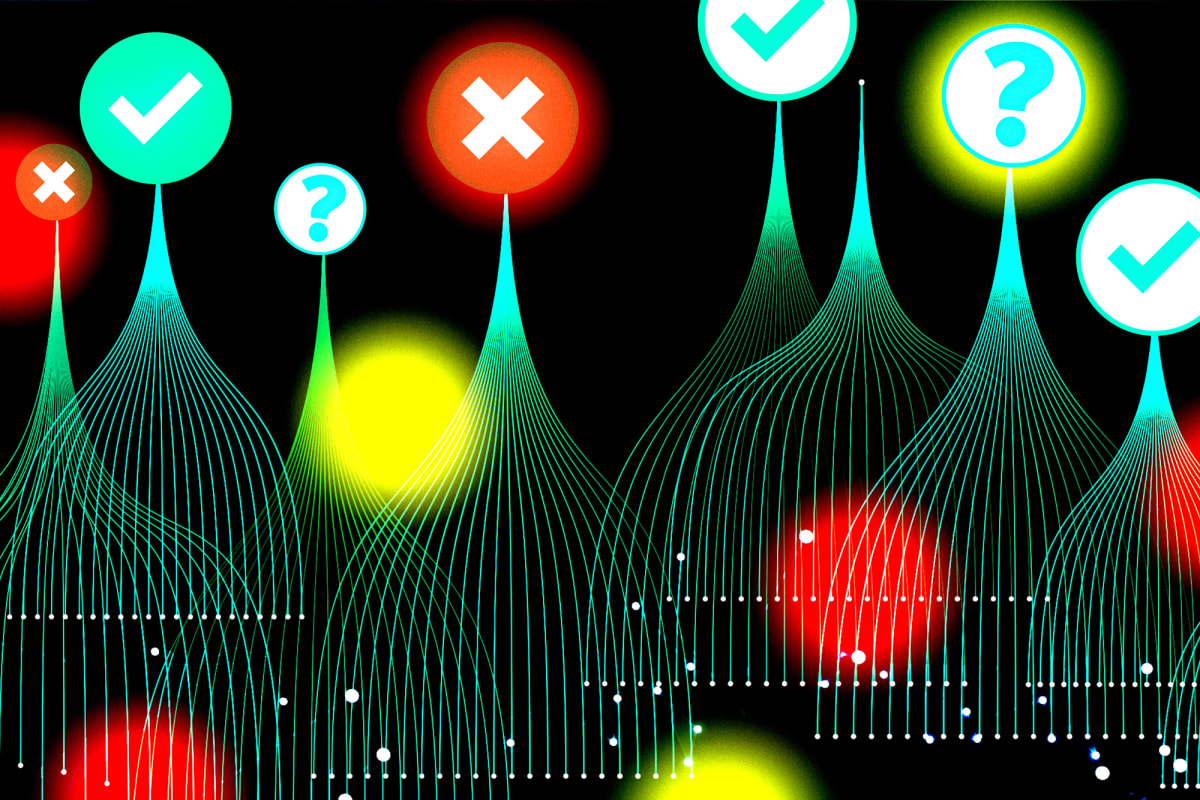
The problem with current AI systems is simple but serious. Ask ChatGPT the same question ten times, and it might give you the same wrong answer every single time with total confidence. Existing tools measure this self-consistency, but they can't tell the difference between confidently right and confidently wrong.
MIT electrical engineering graduate student Kimia Hamidieh and her team took a different approach. Instead of asking one AI model the same question repeatedly, they compare answers across multiple similar models like ChatGPT, Claude, and Gemini. When these different systems disagree, that's a red flag that the answer might be unreliable.
The team tested their total uncertainty metric on ten realistic tasks including question-answering and math reasoning. Their method consistently outperformed existing approaches at identifying when AI predictions couldn't be trusted.
"If I ask ChatGPT the same question multiple times and it gives me the same answer over and over again, that doesn't mean the answer is necessarily correct," Hamidieh explains. "If I switch to Claude or Gemini and ask them the same question, and I get a different answer, that is going to give me a sense of the epistemic uncertainty."
The researchers combined two types of uncertainty measurements for the most accurate results. They measured both how confident a single model feels about its answer and how much different AI models disagree with each other.
Why This Inspires
This research represents a crucial step toward AI systems we can actually trust. As these tools become more embedded in critical decisions affecting our health, finances, and safety, knowing when to trust them isn't just helpful—it's essential.
The beauty of MIT's solution lies in its simplicity. The team tested complex approaches but discovered that comparing models from different companies worked best. Sometimes the most elegant solutions are the straightforward ones.
This breakthrough means future AI tools could come with built-in uncertainty warnings, flagging answers that deserve a second look from human experts.
The research offers hope that we can harness AI's incredible potential while building in the safety checks we desperately need.
Based on reporting by MIT News
This story was written by BrightWire based on verified news reports.
Spread the positivity!
Share this good news with someone who needs it