MIT Creates Open-Source Tool That Makes AI Smarter at Charts
MIT researchers built ChartNet, a free training dataset with over 1 million charts that helps AI models understand business graphs and scientific figures. Small companies can now access powerful AI tools without massive budgets.
Artificial intelligence just got way better at reading the charts and graphs that fill financial reports and scientific papers, thanks to a breakthrough from MIT researchers.
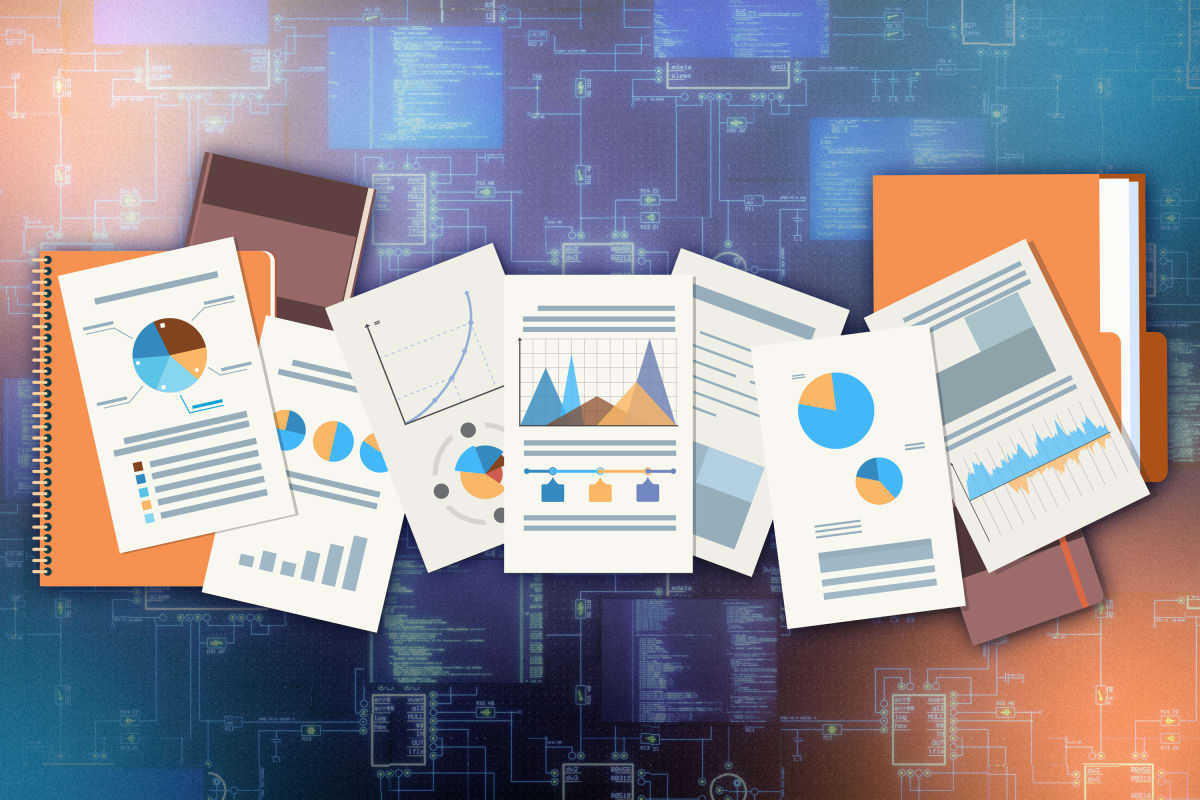
Scientists from MIT and the MIT-IBM Computing Research Lab created ChartNet, an open-source training dataset containing over 1 million diverse charts. The resource teaches vision-language models how to accurately interpret the visual, numerical, and textual information packed into graphs and figures.
Even the most advanced commercial AI models struggle with this task right now. A company paying top dollar for cutting-edge AI might still get incomplete or wrong information when asking it to analyze a business trend chart or interpret scientific data.
"We developed ChartNet to be a one-stop shop for chart understanding, covering basically anything that an AI model and a practitioner who is training that model might need," says Jovana Kondic, the MIT graduate student who led the research.
The team used a clever data generation method to create their massive dataset. They started with single charts as seeds and generated hundreds of variations, building a collection of more than a million unique images. Each chart comes with the code used to create it, a text description, and a table of its numerical data.
When the researchers used ChartNet to train smaller, open-source AI models, something remarkable happened. Many of these models significantly outperformed much larger commercial systems at tasks like extracting data from charts and summarizing trends.
The Ripple Effect
This breakthrough could democratize AI access across industries. Small businesses and startups without unlimited computing budgets can now use open-source models that match or beat expensive commercial alternatives.
The finance industry, which relies heavily on chart analysis, stands to benefit immediately. Banks, investment firms, and financial advisors could deploy these improved models to extract insights from market data faster and more accurately than ever before.
Scientific research will see gains too. Researchers analyzing data visualizations in published papers can use ChartNet-trained models to quickly interpret figures and identify trends across thousands of studies.
The lack of quality training data has been a major roadblock for developing AI that understands charts. Most existing datasets contain limited images scraped from the internet without the depth needed to truly teach a model.
"A vision-language model, unlike our brains, may need to see thousands of examples during training to reliably recognize something as a line chart," Kondic explains.
By making ChartNet freely available, the MIT team hopes to inspire researchers worldwide to achieve top performance with smaller, more efficient models. The research will be presented at the IEEE Computer Vision and Pattern Recognition Conference in June 2026.
AI that understands our data just became accessible to everyone, not just companies with deep pockets.
Based on reporting by MIT News
This story was written by BrightWire based on verified news reports.
Spread the positivity!
Share this good news with someone who needs it