MIT Creates Wearable Ultrasound Patch for Heart Patients
Scientists just built the world's first wearable ultrasound system that lets heart patients get monitored at home for 48 hours straight. The technology could catch health problems early while freeing up hospital resources for those who need them most.
Imagine checking your heart's health as easily as checking your watch, without ever leaving your living room.
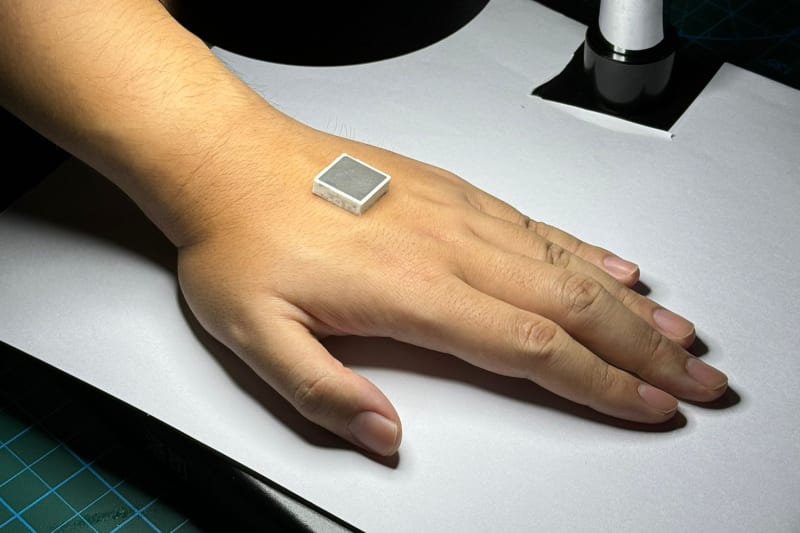
Researchers at the Singapore-MIT Alliance for Research and Technology just launched a groundbreaking project to develop the world's first wearable ultrasound imaging system. The sticky patch can monitor patients with chronic conditions like heart failure and high blood pressure for up to 48 hours at a time.
The project, called WITEC (Wearable Imaging for Transforming Elderly Care), brings together top researchers from MIT, Nanyang Technological University, and the National University of Singapore. They're working with Tan Tock Seng Hospital to test the device on real patients.
Right now, most wearable health trackers can only measure basic things like heart rate or steps. They're helpful for general wellness but can't provide the detailed information doctors need to manage serious health conditions. Traditional ultrasound machines offer that detail but they're huge, expensive, and require trained technicians to operate them in hospitals.
The new patch bridges that gap. It uses special bioadhesive materials to stick gently to your skin and capture high-quality ultrasound images continuously. AI-powered software analyzes the data in real time, looking for warning signs that something might be wrong.
The team equipped their lab with cutting-edge tools to make this happen. They installed Southeast Asia's first sub-micrometer 3D printer, which can create components as tiny as single cells. This precision ensures the patch sticks safely to skin while maintaining crystal-clear imaging quality.
The Ripple Effect
This innovation could transform how millions of people manage chronic diseases at home. Instead of occasional snapshots during clinic visits, doctors would see a continuous stream of health data, catching problems before they become emergencies.
The benefits extend beyond patients. By moving monitoring out of hospitals and into homes, the technology could ease labor shortages by freeing nurses and ultrasound technicians to focus on more complex care. Fewer people would need hospital beds for routine monitoring, leaving more resources available for those facing acute health crises.
With chronic diseases rising rapidly among aging populations worldwide, especially for people managing multiple conditions, tools like this could make quality healthcare more accessible when it's needed most.
The future of healthcare might not be in bigger hospitals but in smaller, smarter devices that bring medical expertise right to your doorstep.
Based on reporting by MIT News
This story was written by BrightWire based on verified news reports.
Spread the positivity!
Share this good news with someone who needs it