MIT Finds Bridge Between Quantum and Classical Physics
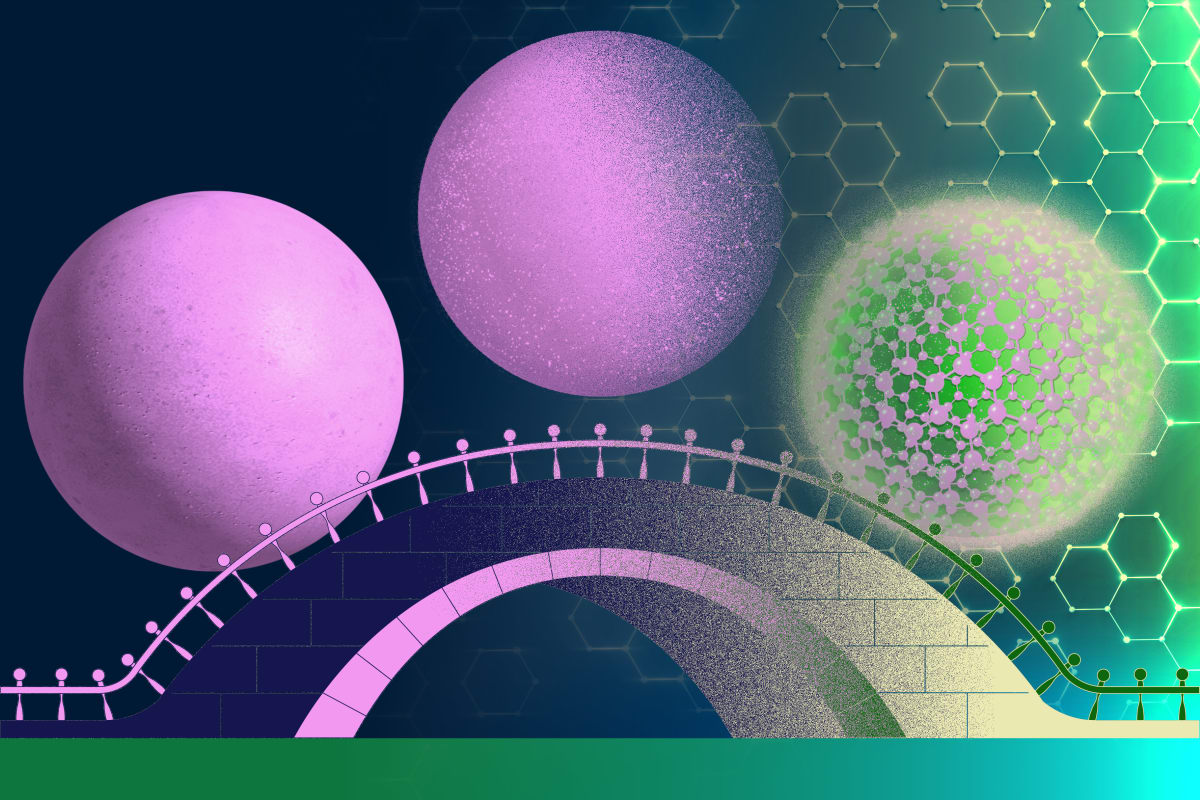
Scientists at MIT have discovered a way to describe the bizarre behavior of quantum particles using everyday classical physics equations. The breakthrough creates a new mathematical bridge connecting two worlds physicists thought were fundamentally separate.
The quantum world just got a little less mysterious, thanks to a team of MIT researchers who found that the weird behavior of subatomic particles can be understood through familiar everyday physics.
Scientists have long believed that quantum mechanics and classical physics were two separate realms. Classical physics can tell you exactly where a thrown ball will land, but once you shrink that ball to atomic size, it behaves in ways that seem to defy all common sense.
MIT professors Jean-Jacques Slotine and Winfried Lohmiller just changed that understanding. Working in the Nonlinear Systems Laboratory, they discovered that an idea from classical physics called "least action" can calculate the motion of quantum objects just as accurately as quantum mechanics equations do.
The breakthrough came while they were solving classical engineering problems for robotics and aircraft control. They realized their approach could solve famous quantum puzzles, including the mind-bending double-slit experiment where a single photon somehow passes through two holes at once.
The team published their findings in the Proceedings of the Royal Society, demonstrating that their new formulation produces exactly the same results as the Schrödinger equation. That equation has been the main tool for understanding quantum mechanics for nearly a century.
Their mathematical bridge works at all scales, from objects we can hold in our hands down to dimensions smaller than an atom. Before this discovery, only a weak connection existed between the two worlds, and it worked only for relatively large quantum particles.
Why This Inspires
This discovery matters because it shows that the universe might be more unified than we thought. The quantum world has always seemed alien and disconnected from daily experience, governed by completely different rules that defy intuition.
Now we know that the same principles guiding a ball through the air can also describe how photons behave at atomic scales. The researchers aren't saying quantum mechanics is wrong. They're simply showing there's another way to understand it using concepts that feel more familiar and intuitive.
The implications extend beyond physics labs. Slotine's work spans robotics, neuroscience, machine learning, and brain sciences. A unified mathematical approach could help scientists tackle complex problems across all these fields using a common framework.
For students struggling to wrap their heads around quantum mechanics, this could make the subject more accessible. Instead of treating it as fundamentally strange and separate, they can build on classical physics concepts they already understand.
The research reminds us that nature often has elegant underlying patterns waiting to be discovered, connecting worlds that seem impossibly different at first glance.
Based on reporting by MIT News
This story was written by BrightWire based on verified news reports.
Spread the positivity!
Share this good news with someone who needs it