Voyager 1 Still Going Strong After 49 Years in Space
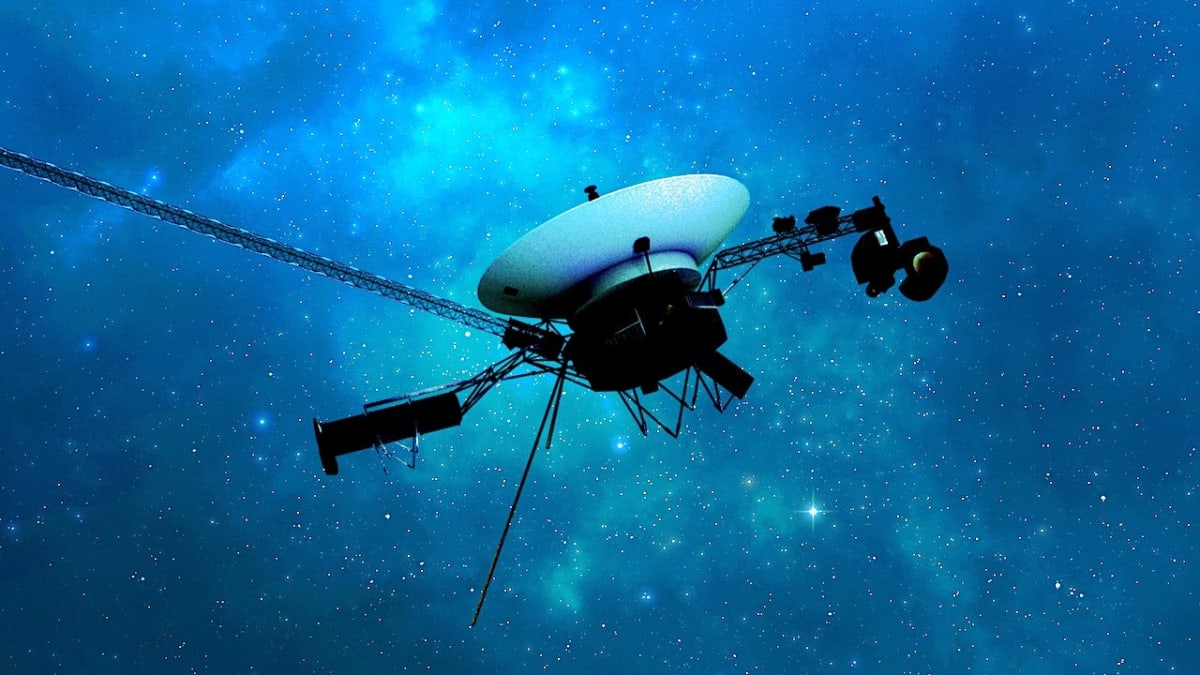
NASA turned off one instrument on Voyager 1 to save power, but the 49-year-old spacecraft continues exploring where no human-made object has ever been. Two science instruments keep sending data from beyond our solar system, 15 billion miles from home.
A spacecraft launched before most people alive today were born just got a life extension, proving that smart engineering can keep discoveries coming for decades.
NASA turned off one of Voyager 1's science instruments last week to conserve power on the 49-year-old probe exploring interstellar space more than 15 billion miles from Earth. The move gives engineers about a year to plan even better power-saving solutions that could keep both Voyager spacecraft operating well into the future.
The spacecraft still has two working instruments that continue collecting data no other human-made object can gather. One listens to plasma waves and another measures magnetic fields in the space between stars, a region Voyager 1 became the first spacecraft to reach in 2012.
The challenge comes from the probe's nuclear power source, which loses about 4 watts each year as its plutonium naturally decays. Engineers have spent years carefully managing every bit of remaining power, turning off heaters and instruments while keeping the spacecraft warm enough that critical systems don't freeze.
The team acted after Voyager 1 experienced an unexpected power drop during a routine maneuver in late February. Rather than wait for automatic safety systems to kick in, which could have been harder to recover from, engineers chose to shut down the Low-Energy Charged Particles experiment on their own terms.
This wasn't a panic decision. Mission teams agreed years ago on exactly which systems would be turned off as power declined. Of the 10 original instrument sets, seven are now off across both Voyager probes.
Why This Inspires
What makes this story remarkable is the dedication of engineers who refuse to give up on machines that have far exceeded every expectation. Voyager 1 and its twin were designed for a five-year mission to explore Jupiter and Saturn. Nearly half a century later, teams are still finding creative ways to extend their journey.
The engineers are now working on what they call "the Big Bang," a plan to swap out multiple powered devices at once with lower-power alternatives. It's the kind of innovative thinking that could squeeze years more science from spacecraft that have already rewritten our understanding of the solar system and beyond.
Commands take 23 hours to reach Voyager 1 now, yet teams still send instructions and receive data from humanity's most distant ambassador. Engineers even left a small motor running on the shut-down instrument, using just half a watt, in case they can restart it someday.
These spacecraft prove that with careful planning and creative problem-solving, we can keep pushing the boundaries of exploration for generations.
More Images


Based on reporting by Fox News Science
This story was written by BrightWire based on verified news reports.
Spread the positivity!
Share this good news with someone who needs it