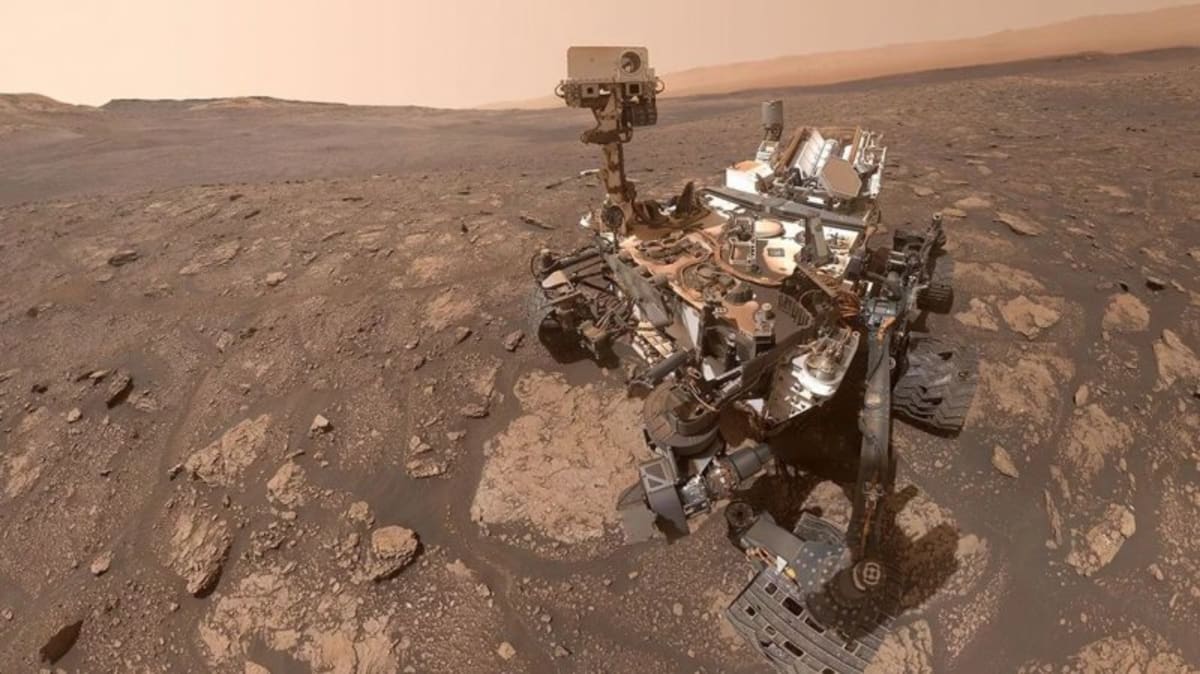
Mars Rover Finds DNA Building Blocks in 3.5 Billion Year Rocks
NASA's Curiosity rover just discovered over 20 organic molecules on Mars, including seven never seen before on the Red Planet. Among them are compounds that form the foundation of DNA and RNA, preserved in ancient clay for billions of years.
NASA's Curiosity rover has uncovered the most diverse collection of organic molecules ever found on Mars, tucked away in rocks that have sat undisturbed for 3.5 billion years.
The discovery happened in April 2026 at Glen Torridon, a region within Gale Crater where ancient lakebeds once held water. Using a chemical breakthrough called "wet chemistry," Curiosity broke down rock samples with a compound named TMAH, revealing more than 20 carbon-based molecules hidden inside Martian clay.
Seven of these molecules have never been detected on Mars before. One standout is a nitrogen heterocycle, a ring-shaped molecule that serves as a building block for DNA and RNA here on Earth. Another is benzothiophene, a sulfur-rich compound typically found in meteorites.
Scientists are quick to note that finding organic molecules doesn't automatically mean ancient life once existed on Mars. These compounds could have formed through geological processes deep underground, or they might have hitched a ride to Mars aboard space rocks billions of years ago.
Why This Inspires
What makes this discovery truly remarkable is what it reveals about Mars itself. Despite billions of years of brutal radiation battering the planet's surface, the Martian subsurface has successfully preserved these delicate, complex molecules intact.
This preservation changes the math on finding evidence of ancient life. If Mars could protect fragile organic compounds for 3.5 billion years, it could also safeguard biological signatures from the planet's wetter, warmer past.
The wet chemistry experiment that made this possible represents a major technical achievement. Previous Mars missions could only heat rocks to release gases, but Curiosity's approach breaks down samples more thoroughly, revealing chemical treasures that older methods would have missed entirely.
Glen Torridon sits in what scientists believe was once a massive lake system. The clay-rich rocks there formed when water interacted with volcanic minerals, creating ideal conditions for preserving organic material against the relentless cosmic radiation that strips Mars' surface.
Future missions to Mars, including NASA's Perseverance rover and planned sample return efforts, will build on Curiosity's groundwork by searching even deeper and bringing Martian rocks back to Earth for detailed laboratory analysis.
The discovery proves that Mars still holds secrets worth uncovering, and that the right tools can reveal chemistry billions of years in the making.
More Images




Based on reporting by Google: NASA discovery
This story was written by BrightWire based on verified news reports.
Spread the positivity!
Share this good news with someone who needs it