MIT Laser Breakthrough Speeds Brain Disease Research 25x
Scientists discovered chaotic laser light can organize itself into a precision beam that images the blood-brain barrier 25 times faster than current methods. The breakthrough could accelerate treatments for Alzheimer's, ALS, and other neurological diseases.
Chaotic laser light just organized itself into a precision tool that could fast-track cures for brain diseases.
Scientists at MIT discovered something unexpected while testing high-powered lasers. When they cranked up the power to levels most researchers avoid, the scattered, disorganized light suddenly snapped into a perfectly focused beam.
This self-organizing "pencil beam" breaks a fundamental assumption in optical physics. The conventional wisdom says more power creates more chaos, but the MIT team proved the opposite can happen under the right conditions.
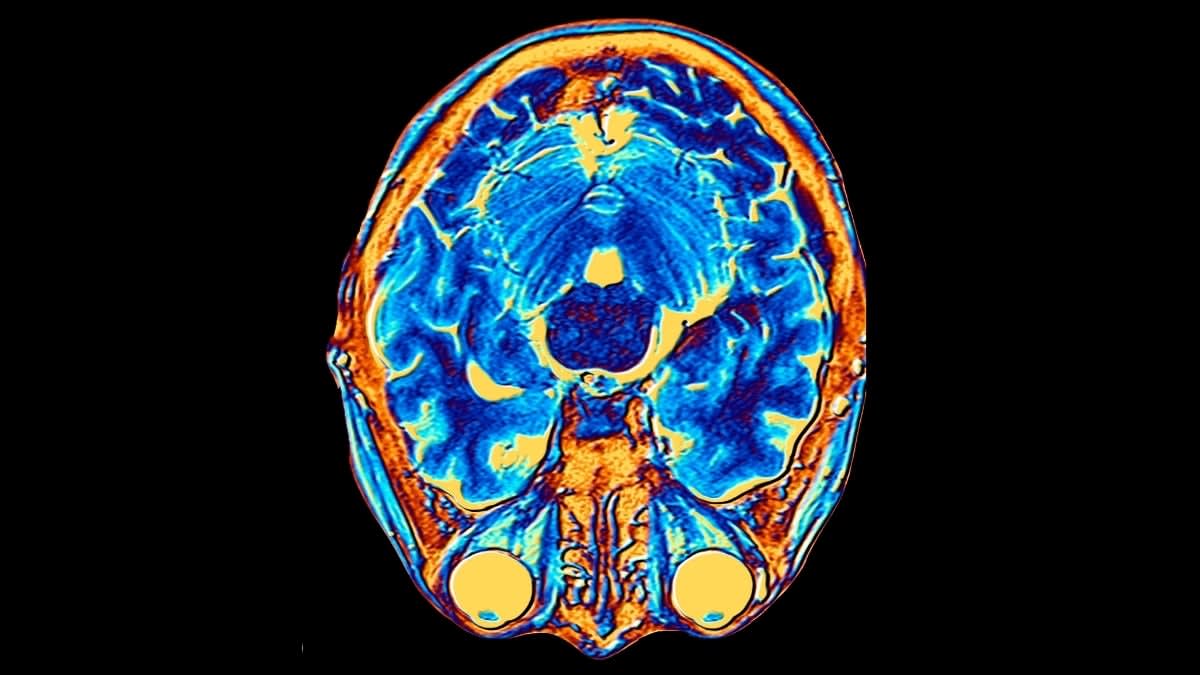
The discovery has immediate applications for brain research. Using this new beam, the team imaged the human blood-brain barrier in 3D at speeds 25 times faster than the current gold standard method, with similar image quality.
The blood-brain barrier protects our brains from harmful substances, but it also blocks most drugs from reaching brain tissue. Scientists have struggled to watch in real time whether treatments for Alzheimer's, ALS, and other neurological diseases actually reach their targets.
Now they can. The new method lets researchers observe individual cells absorbing drugs as it happens, without requiring fluorescent tags or other modifications.
"The pharmaceutical industry is especially interested in using human-based models to screen for drugs that effectively cross the barrier, as animal models often fail to predict what happens in humans," says Sixian You, the senior author and assistant professor at MIT.
The breakthrough came from following unexpected evidence rather than dismissing it. Graduate student Honghao Cao gradually increased laser power through a specialized fiber, expecting the light to scatter more due to imperfections in the glass.
Instead, as the power approached levels that might damage the fiber, the light concentrated into a single, extremely sharp beam. The team identified two key conditions that enable this self-organization: the laser must enter at a perfectly aligned zero-degree angle, and the power must reach levels where light interacts directly with the fiber's glass material.
At this critical threshold, the nonlinearity counters the intrinsic disorder, creating a balance that transforms chaotic input into an organized pencil beam. The process happens without complex optical engineering or custom beam-shaping components.
Tests showed the beam stays stable and produces cleaner images than conventional methods, with fewer blurred halos that reduce clarity. Because the technique works with normal optical setups, it doesn't require deep domain expertise to implement.
The Ripple Effect
The discovery could reshape how scientists develop neurological treatments. Faster, more detailed imaging means researchers can test more drug candidates in less time, using human-based models that better predict real-world effectiveness.
This matters because current animal models often fail to show whether treatments will work in human brains. The ability to watch drugs cross the blood-brain barrier in real time, in human tissue models, could dramatically reduce the years it takes to bring new treatments to patients.
The method also opens doors for studying other dense cellular barriers throughout the body. Any research requiring high-speed, high-resolution imaging of living tissue could benefit from this self-organizing light approach.
What started as an unexpected observation during a routine stress test has become a tool that could accelerate hope for millions living with neurological diseases.
Based on reporting by Science Daily
This story was written by BrightWire based on verified news reports.
Spread the positivity!
Share this good news with someone who needs it