MIT Names 3 Professors to Highest Faculty Honor
Three groundbreaking scientists who revolutionized brain research, aerospace engineering, and biological innovation just received MIT's most prestigious recognition. Their decades of work are changing how we understand consciousness, explore space, and engineer life-saving treatments.
MIT just awarded its highest faculty honor to three scientists whose work touches everything from how anesthesia works to the future of space exploration.
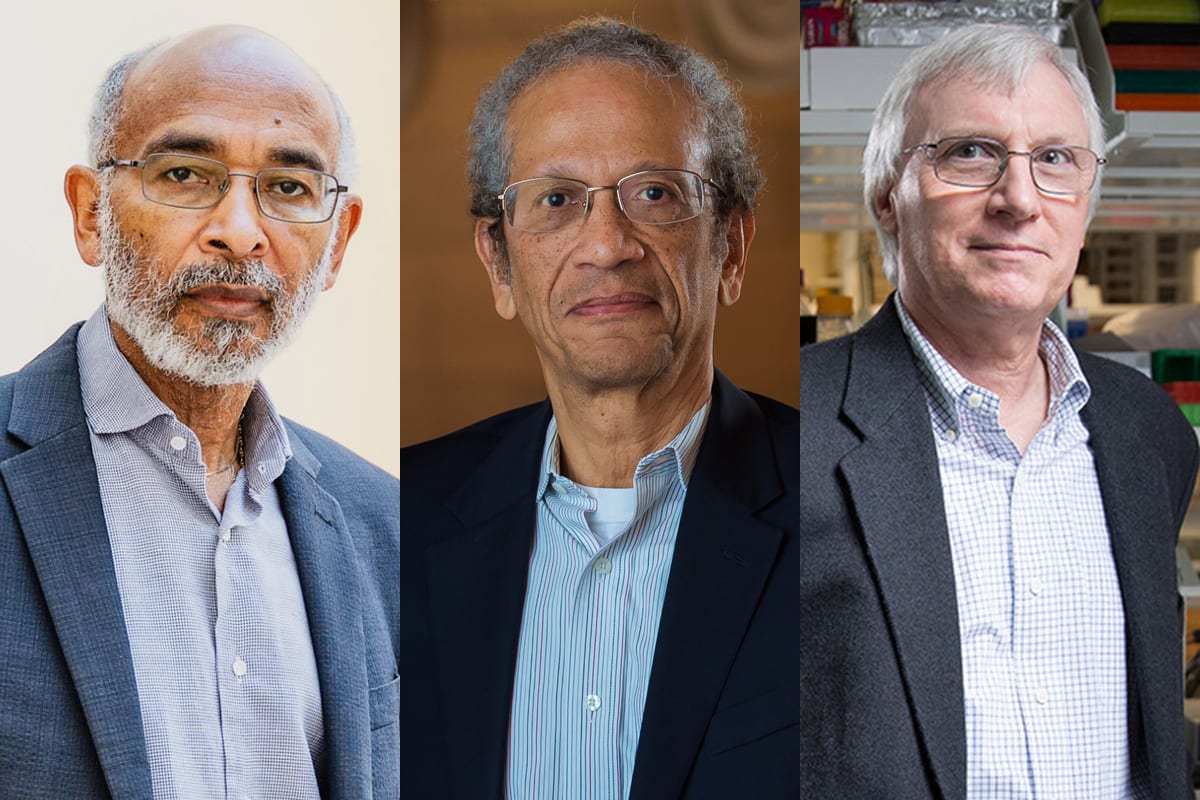
Emery Brown, Daniel Hastings, and Douglas Lauffenburger have been named Institute Professors, joining an elite group of just 12 faculty members who hold this distinction at one of the world's top universities. The appointments took effect July 1 and recognize their extraordinary contributions across medicine, engineering, and biology.
Brown, a physician and neuroscientist, has spent two decades unraveling one of medicine's biggest mysteries: what happens to our brains when we go under anesthesia. His research revealed that anesthetic drugs create unique brain wave patterns that can be monitored in real time, allowing doctors to ensure patients receive exactly the right amount of medication during surgery.
Before joining MIT in 2005, Brown made waves studying how light affects our internal clocks and even helped prove that humans naturally operate on a 24-hour cycle, not 25 hours as previously thought. He developed techniques to decode animal brain activity so precisely that researchers could tell where an animal was located just by reading its neurons.
In 2024, Brown received the National Medal of Science, the nation's highest scientific honor. He's one of only a handful of researchers elected to all three National Academies of Medicine, Sciences, and Engineering.
Hastings, who earned his master's and PhD from MIT in the late 1970s, has shaped aerospace engineering policy and education for decades. Lauffenburger founded MIT's Department of Biological Engineering, pioneering ways to apply engineering principles to living systems and medical treatments.
The Ripple Effect
The impact of these three professors extends far beyond their labs. Brown's anesthesia monitoring system is helping make surgery safer for millions of patients worldwide. His closed-loop delivery system can automatically adjust drug doses based on brain activity, reducing the risk of complications from too much or too little anesthesia.
Their work also demonstrates how interdisciplinary thinking drives breakthrough discoveries. Brown himself calls joining MIT an "inflection point" that allowed him to combine his passions for anesthesiology, statistics, and neuroscience in ways that wouldn't have been possible elsewhere.
The recognition comes with a practical benefit too: Institute Professors receive special funding to pursue bold new research directions without the usual grant-writing constraints. For these three innovators, that freedom could spark the next wave of discoveries in brain science, space technology, and biological engineering.
Their elevation to Institute Professor puts them in company with some of the most influential scientists of our time, a testament to how their curiosity and dedication have expanded human knowledge.
Based on reporting by MIT News
This story was written by BrightWire based on verified news reports.
Spread the positivity!
Share this good news with someone who needs it