MIT Professor Invents Way to Detect Space Nukes
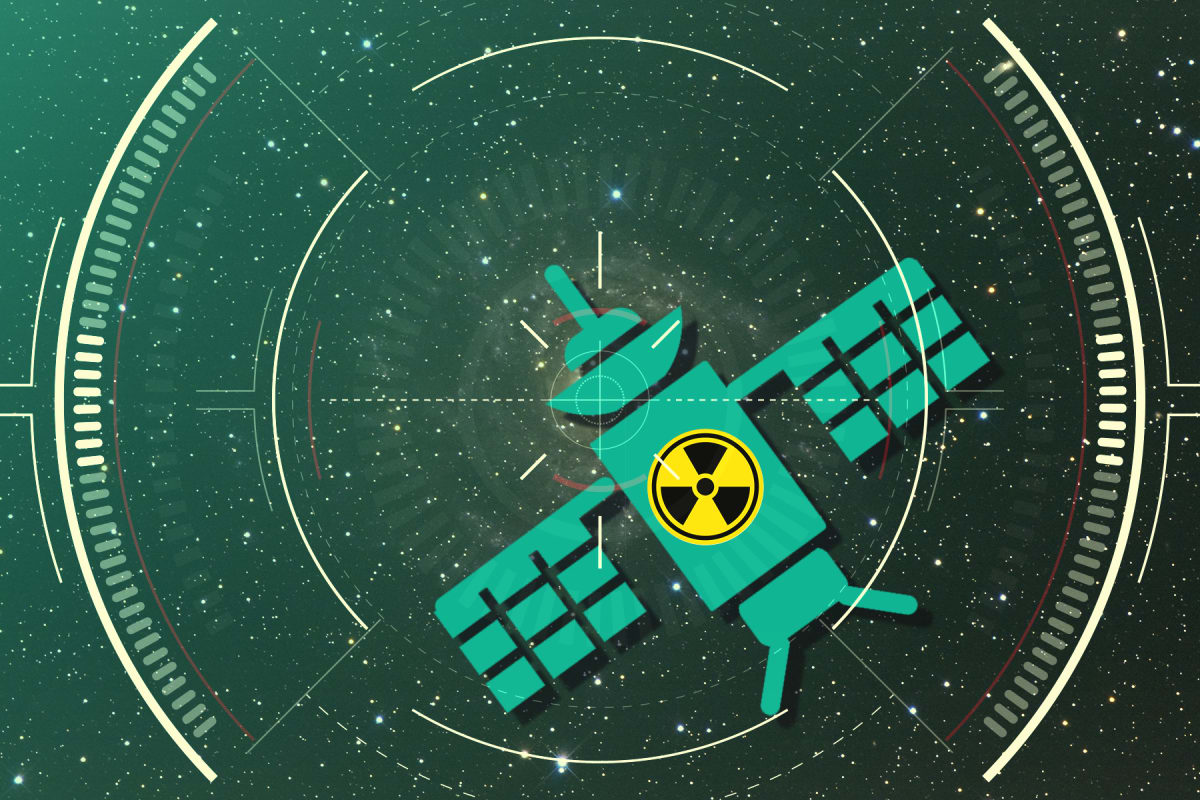
A breakthrough detection system could finally verify that satellites orbiting Earth don't carry nuclear weapons, protecting the space infrastructure billions of people depend on daily. The technology brings new hope for enforcing a treaty that's been unverifiable for 57 years.
Scientists may have finally cracked the code on detecting nuclear weapons in space, a challenge that's stumped experts since 1967.
MIT Professor Areg Danagoulian has proposed a satellite sensor system that could orbit near suspicious satellites and detect nuclear weapons with 99 percent accuracy. His research, published in Nature, offers the first peer-reviewed verification method for a treaty that has protected space for nearly six decades but had no enforcement mechanism.
The stakes couldn't be higher for our daily lives. A single nuclear detonation in low-Earth orbit would release trillions of highly energetic electrons, destroying satellites that power GPS navigation, telecommunications, internet services, and weather forecasting. Everything from your morning commute directions to emergency communication systems depends on these satellites staying safe.
The 1967 Outer Space Treaty banned nuclear weapons in space and has been signed by 118 countries including the U.S., China, and Russia. But without a way to verify compliance, the treaty has operated on trust alone.
Danagoulian's detection system works by sensing neutrons released when high-energy protons collide with radioactive materials like uranium or plutonium. A sensor about the size of a large encyclopedia could identify a nuclear weapon if it orbited within 4,000 meters of a suspect satellite for about a week. Multiple sensors or closer proximity could cut detection time to just hours.
The idea gained urgency after Russia launched Cosmos2553 in 2022, a satellite in an unusually hostile orbit. U.S. officials believe it may be testing components for a nuclear anti-satellite weapon. The orbit passes through Earth's most radioactive region, an odd choice unless you're planning to trap electrons from a nuclear blast.
Why This Inspires
What makes this breakthrough so hopeful is that it transforms an abstract treaty into something enforceable. For the first time since space exploration began, countries would know that violations won't go undetected.
Danagoulian isn't keeping his research classified in government labs. By publishing openly, he's inviting the scientific community and policymakers worldwide to build on his work. He hopes national labs will develop proof-of-concept systems and that governments will seriously consider adding this technology to their monitoring capabilities.
The approach works because nuclear materials are remarkably detectable when you know what to look for. When energetic protons hit uranium or plutonium, each collision can knock out 40 neutrons, creating a unique signature that's nearly impossible to hide or fake.
Space was declared the "province of all mankind" in 1967, and this technology could help keep it that way. The system puts diplomatic pressure on countries to either respect the treaty or face exposure, making secret violations far riskier.
Verification might finally give the Outer Space Treaty the teeth it needs to protect the satellites that connect our world.
Based on reporting by MIT News
This story was written by BrightWire based on verified news reports.
Spread the positivity!
Share this good news with someone who needs it