MIT Robots Now Learn Tasks With 80% Fewer Demonstrations
MIT researchers created a system that helps robots understand vague instructions like "stay close" by using AI to fill in the blanks. The breakthrough means robots need five times less training to safely complete household and workplace tasks.
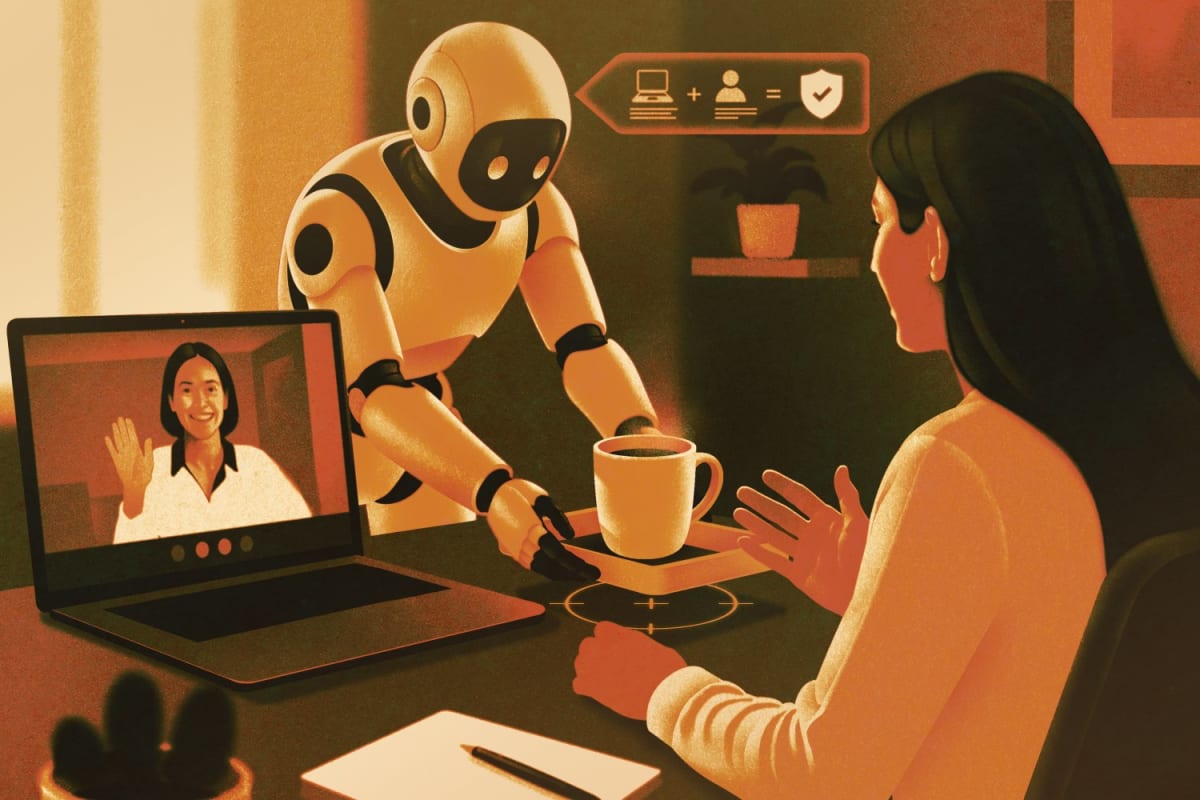
Teaching a robot to bring you coffee without interrupting your Zoom call just got a whole lot easier.
Researchers at MIT's Computer Science and Artificial Intelligence Laboratory created a system called Masked IRL that lets robots figure out what you really mean, even when your instructions are fuzzy. Instead of needing countless demonstrations and detailed directions, the technology uses large language models to clarify vague prompts and identify which details actually matter.
Here's how it works: When you tell a robot to "stay close" while wiping a table, an AI model translates that into "stay close to the surface of the table." Another AI then scans the environment and decides what's important (the laptop you're using) versus what's not (whether you were leaning on the table during training). It scores each detail as either relevant or irrelevant, then builds a safe action plan around what matters.
The system proved itself in both virtual simulations and real-world tests. A robotic arm successfully moved a coffee mug around a laptop, wiped down tables, and handed someone a bag of chips while carefully avoiding obstacles. It learned these tasks using 80% fewer demonstrations than previous methods required.
Lead researcher Minyoung Hwang, an MIT PhD student, says the goal is minimizing human effort. "We're enabling machines to get to the bottom of what users really want," she explains. That means no more spelling out every tiny detail when you ask a robot for help.
The robots also performed 15% better at identifying unstated user preferences compared to other approaches. When trained on just 50 physical demonstrations where humans moved the robot's joints to show proper motions, the machine learned to navigate complex environments safely.
Why This Inspires
This breakthrough tackles one of robotics' biggest headaches: the gap between what we say and what we mean. Humans naturally leave out obvious details when giving instructions to each other. We don't tell a coworker "bring me coffee but don't spill it on my keyboard" because that's implied. Now robots can make those same logical leaps.
The technology could transform how robots assist in homes, offices, and factories. Workers won't need robotics expertise to train their mechanical helpers. Elderly people could ask for assistance without memorizing specific command phrases. Factory managers could deploy robots faster without extensive programming.
The MIT team plans to add cameras next, letting robots visually identify important objects and obstacles in their surroundings. That would make the system even more intuitive and adaptable to new environments.
Robots that truly understand us are finally within reach.
Based on reporting by MIT News
This story was written by BrightWire based on verified news reports.
Spread the positivity!
Share this good news with someone who needs it