MIT Sandbox Turns Student Ideas Into $8.7B Impact
A decade-old MIT program has helped student entrepreneurs build companies worth billions by giving them money to fail fast and try again. One founder's third attempt created a $550 million firm whose breakthrough cancer drug is now shrinking tumors in patients out of options.
Jacob Becraft failed twice as a student entrepreneur before his third startup changed cancer treatment forever.
His company, Strand Therapeutics, is now worth $550 million and has developed a programmable mRNA drug that's shrinking tumors in patients who've exhausted every other treatment. The secret to his success? MIT gave him the freedom to fail without losing everything.
MIT Sandbox Innovation Fund celebrated its 10th anniversary recently, revealing that student teams it supported have generated $8.7 billion in combined impact. The program launched in 2016 with a simple mission: let students try entrepreneurship without the usual financial barriers.
Here's how it works. Any MIT student can apply for funding between $500 and $25,000. They get paired with two mentors and connected to expert advisors who guide them through testing ideas, building prototypes, and finding customers.
The money comes from alumni and corporate sponsors, not investors seeking equity. That means students keep full ownership of their ideas and can pivot or abandon projects without disappointing shareholders.
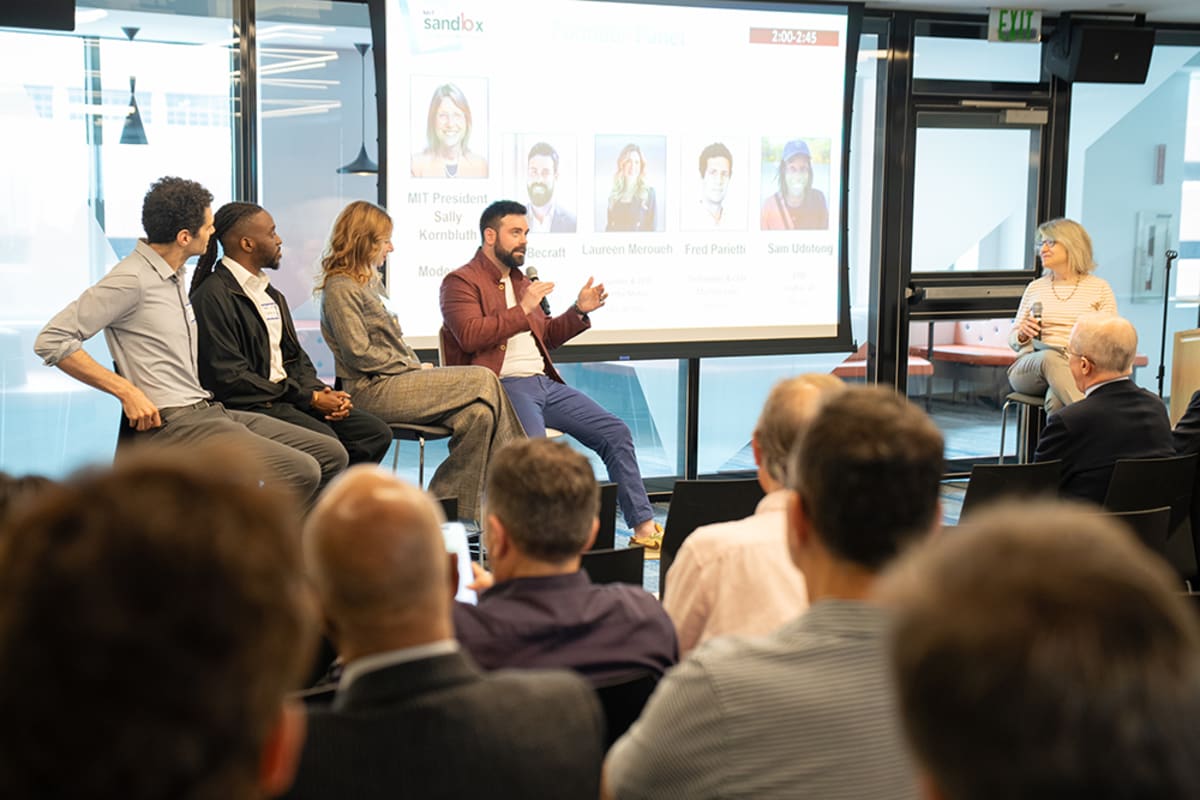
Samuel Udotong cofounded Fireflies.ai after getting initial Sandbox funding. "I think largely because we had gotten a little bit of Sandbox funding, we were actually able to take the risk to move out to San Francisco and try to build the company," he says. Without that first $5,000, the money barrier would have stopped them cold.
Fred Parietti built his first prototypes for Multiply Labs on his kitchen table, moving them around whenever his grad school housemates needed space. Today his robotics company has 60 employees, has raised $36 million, and manufactures biological drugs for pharmaceutical giants like AstraZeneca.
The program now supports about 350 teams each semester. Some are just starting out while others continue developing ideas at their own pace.
The Ripple Effect
What makes MIT Sandbox different isn't just the money. It's the permission to fail without judgment.
Elise Strobach says the program created a safe environment where she could tackle her problem backwards instead of following conventional wisdom. That unconventional approach led to AeroShield, her materials innovation company.
Startup advisor Sophie Vandebroek pinpoints what students often lack: confidence. "MIT has extraordinary students from around the globe as well as faculty who are top experts in their fields," she explains. "What's often lacking is confidence. That is where Sandbox plays a vital role."
The program's impact extends beyond individual companies. Naji Gehchan, chief medical officer at Kyverna Therapeutics, now serves as a Sandbox mentor himself. He's one of many successful entrepreneurs giving back to help the next generation.
MIT Provost Anantha Chandrakasan calls Sandbox "a defining part of MIT's innovation ecosystem." The program ensures every curious student gets the resources and community to take their first entrepreneurial steps.
From cancer treatments to AI meeting assistants to advanced robotics, these student projects are solving real problems for real people around the world.
Based on reporting by MIT News
This story was written by BrightWire based on verified news reports.
Spread the positivity!
Share this good news with someone who needs it