MIT Scientist Launches Company Using 2,000-Year-Old Concrete
A researcher who cracked the secret to Rome's self-healing concrete is now selling it commercially after proving ancient builders were even smarter than we thought. His company DMAT creates modern concrete that repairs its own cracks, just like the 2,000-year-old Roman structures still standing today.
The concrete holding up Rome's ancient buildings has outlasted anything we've built in the past century, and now one scientist is bringing that lost technology back to life.
MIT Associate Professor Admir Masic spent years puzzling over why Roman concrete structures from 2,000 years ago still stand strong while modern highways crack within decades. In 2023, he finally figured it out: the Romans used a "hot-mixing" process that embedded reactive lime fragments into their concrete, creating a material that literally heals its own cracks.
When water seeps into cracks in Roman concrete, those lime fragments dissolve and recrystallize, filling the gaps naturally. It's like having a repair crew built into the material itself.
But Masic hit a snag. His findings contradicted the writings of Vitruvius, the famous Roman architect who literally wrote the first book on architecture in the 1st century BCE. Vitruvius described a different mixing process, and scientists weren't sure who to believe: the ancient master or the modern lab results.
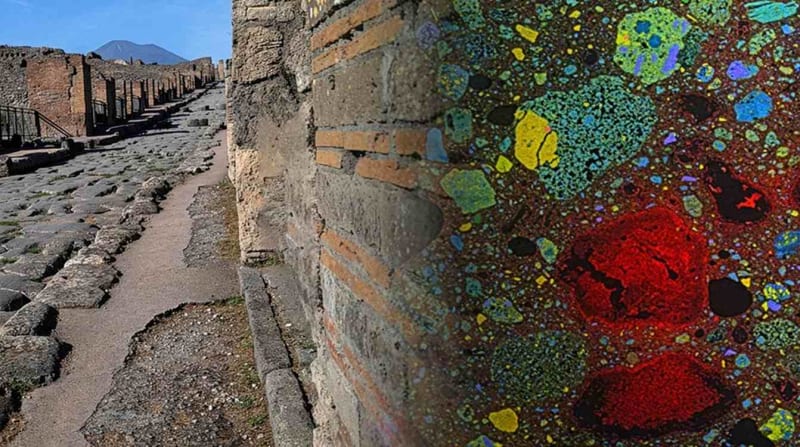
Then archaeologists discovered something remarkable in Pompeii. An active construction site from 79 CE sat frozen in time, complete with piles of unmixed materials and tools, preserved by the eruption of Mount Vesuvius.
Masic's team studied those 2,000-year-old ingredient piles and found intact quicklime fragments already mixed with volcanic ash, proving the hot-mixing process happened exactly as his research predicted. The site also revealed that Romans used pumice and other volcanic materials that continued reacting and strengthening the concrete for centuries after construction.
"This material can heal itself over thousands of years," Masic explains. "It has survived earthquakes and volcanoes. It has endured under the sea and survived degradation from the elements."
Why This Inspires
Modern concrete is one of the biggest contributors to carbon emissions, and it crumbles within decades. Meanwhile, Roman bridges and aqueducts have lasted two millennia with minimal maintenance.
Masic didn't just publish his findings and move on. Three years after his discovery, he launched DMAT, a company that produces concrete using Roman techniques adapted for modern construction. His goal is to create materials that regenerate themselves rather than deteriorate.
The implications stretch far beyond fixing potholes. If we can build infrastructure that repairs itself and lasts for centuries instead of decades, we could dramatically reduce construction waste, carbon emissions, and the constant cycle of demolition and rebuilding that defines modern cities.
Ancient Rome conquered the world with superior engineering, and now their greatest building secret is getting a second life in the 21st century.
More Images



Based on reporting by Google News - Technology
This story was written by BrightWire based on verified news reports.
Spread the positivity!
Share this good news with someone who needs it