MIT Spinout Turns Plastic Bottles Into Building Materials
A company born at MIT is solving two global problems at once by transforming plastic waste into strong building parts. Atlas Building Composites just helped build a 40-foot bridge using recycled water bottles and other single-use plastics.
The world needs millions more homes, and our oceans are drowning in plastic waste. An MIT spinout called Atlas Building Composites just figured out how to solve both problems with one brilliant solution.
The company has developed an AI-powered robotic system that converts plastic bottles and other single-use plastics into building materials stronger than wood. Their recycled composite parts can be used for home foundations, decks, wall trusses, floors, and roofs.
"We're turning bottles into buildings," says Atlas chair A.J. Perez, who co-founded the company after years of research at MIT. The technology emerged from MIT HAUS, a research effort focused on sustainable home architecture.
Here's how it works: Single-use plastic gets shredded and fed into the Atlas system, where it melts and fuses with American-made fiberglass. A large-scale 3D printer then creates the building parts, which are already supporting real structures like barns, sheds, and docks across the country.
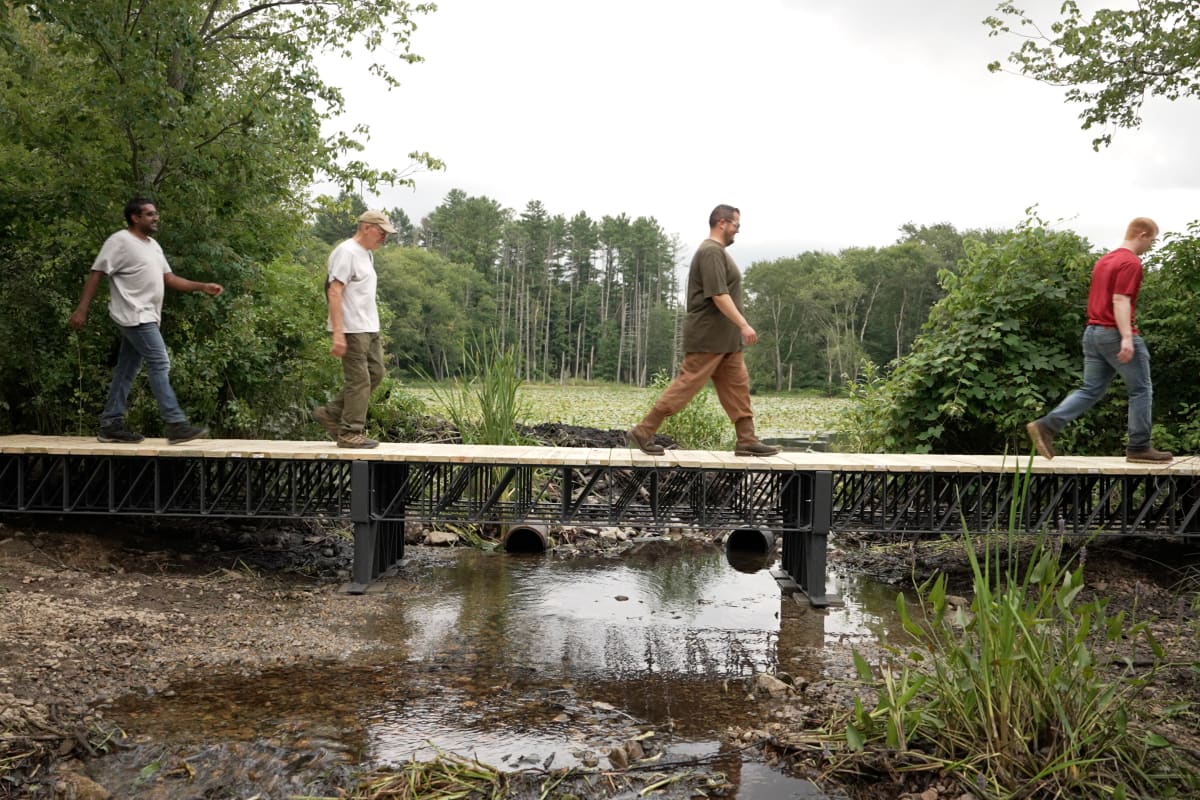
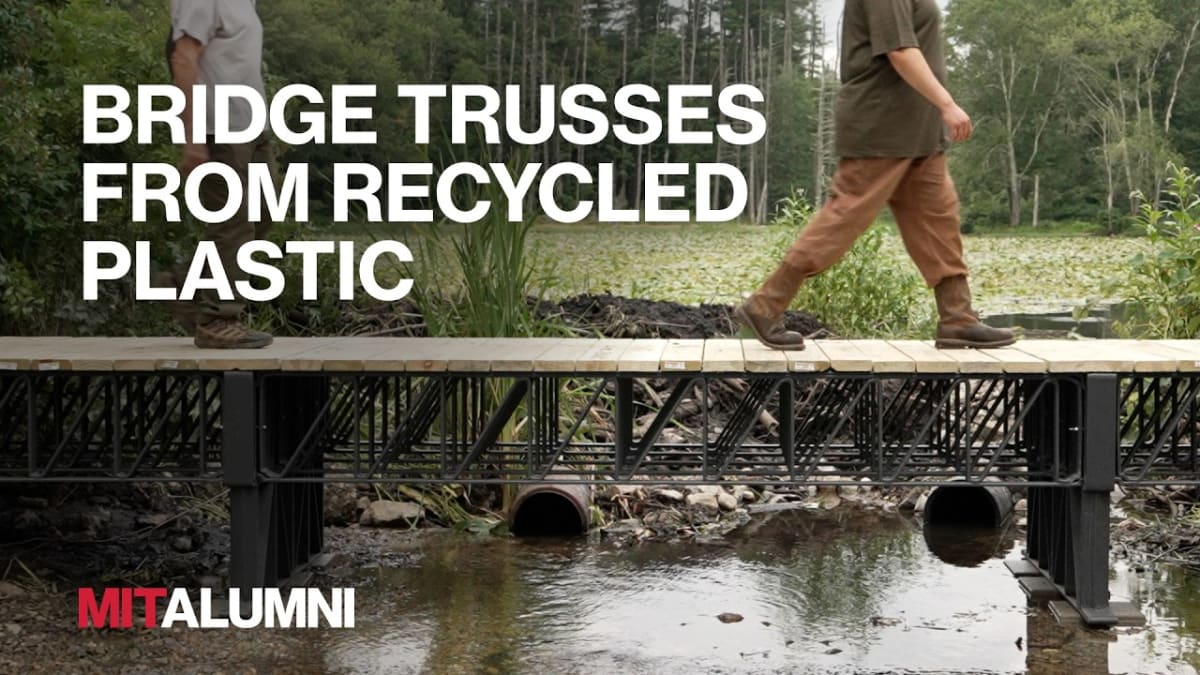
The company just hit a major milestone by supplying the U.S. Army Corps of Engineers with recycled composite trusses for a 40-foot bridge in a Massachusetts wetland. That's not a prototype or a demonstration. That's infrastructure the Army trusts.
What makes this technology especially powerful is that it doesn't use water. Traditional plastic recycling requires enormous amounts of water, which creates barriers for communities without reliable water access.
"This is key to democratizing recycling," Perez explains. "Now, every country around the world, regardless of their water access, will be able to do something about their plastic."
The waterless process also eliminates the need for complicated water agency approvals and permits, making it easier for communities to set up local recycling facilities. Perez and co-founder Matt Pouliot envision thousands of their robotic production systems operating around the world.
The Ripple Effect
Building 1 billion homes using conventional methods would require doubling global concrete production and dramatically accelerating deforestation. Atlas offers a different path that tackles multiple crises simultaneously.
The company addresses the 8 gigatons of plastic polluting our oceans, rivers, and cities while meeting housing needs without mining, refining, or cutting down forests. Each local Atlas facility will create jobs while cleaning up plastic waste in its own community.
"We want this to be localized to benefit local communities," Perez says. "The plastic is already everywhere. The more local Atlas is, the lower the cost and footprint."
From water bottles to bridges, this MIT innovation proves that the solutions to our biggest problems might be hiding in our trash.
More Images
Based on reporting by MIT News
This story was written by BrightWire based on verified news reports.
Spread the positivity!
Share this good news with someone who needs it