MIT Startup's Heat Batteries Store Grid Power for 100 Hours
A thermal battery system that glows hotter than lava could finally make renewable energy storage affordable at massive scale. Fourth Power's breakthrough technology stores electricity as white-hot heat in carbon blocks, then converts it back when needed.
Imagine a battery that glows as bright as the sun and could power your city for days on end.
MIT Professor Asegun Henry has built exactly that. His company, Fourth Power, is turning renewable energy storage upside down by storing electricity as extreme heat in inexpensive carbon blocks that reach temperatures nearly half as hot as the sun's surface.
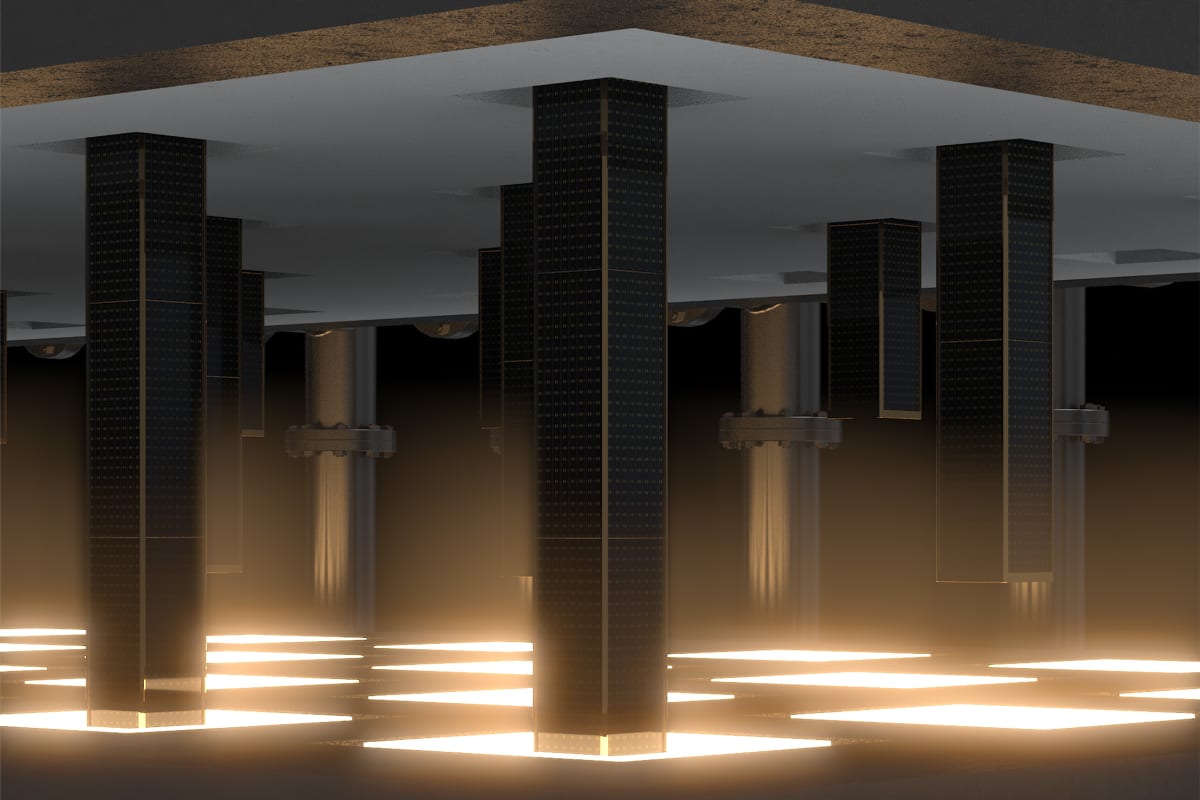
The system works like an inside-out oven. Instead of moving hot gas through pipes like traditional systems, Fourth Power pumps molten metal to transfer heat into carbon bricks. Those bricks glow white-hot at temperatures between 1,900 and 2,400 degrees Celsius.
When the grid needs power, the system converts that blazing light back into electricity using special cells that work like souped-up solar panels. Henry's team achieved a record-breaking 40 percent efficiency in converting light to electricity in lab tests.
The physics behind it are surprisingly simple. When you double the temperature of glowing material, it doesn't just emit twice as much light. It emits 16 times more light, hence the company name Fourth Power.
Henry earned his breakthrough credentials back in 2017 when his ceramic pump set a Guinness World Record for operating at 1,200 degrees Celsius. He chose to pump white-hot liquid tin because it doesn't corrode carbon, solving one of thermal storage's biggest problems.
The real game changer is cost. Fourth Power's batteries can store grid-scale electricity for 10 to 100 hours at prices significantly cheaper than lithium-ion batteries. That matters enormously for solar and wind farms that need to store excess energy for cloudy days and calm nights.
Power companies and data centers are already showing interest. The company is currently testing each component at operating temperatures and plans to demonstrate a fully integrated system later this year.
The Ripple Effect
Affordable long-term energy storage has been the missing piece in the renewable energy puzzle. Solar panels and wind turbines have become cheap, but storing their power for when it's actually needed has remained stubbornly expensive.
Fourth Power's approach could change that equation entirely. By using inexpensive materials like carbon instead of rare metals, and operating at extreme temperatures that maximize power density, the system shrinks dramatically compared to other storage methods. Smaller systems mean lower costs across the board.
For communities transitioning away from fossil fuels, this technology offers a practical path forward. Cities could store daytime solar power to use all night. Wind farms could bank energy from gusty days to supply calm periods.
The thermal battery works for any scale, from supporting local grids to backing up massive data centers. That flexibility means the technology can adapt as energy needs evolve.
Henry's journey from MIT graduate student to world-record holder to company founder shows how patient research into fundamental problems can yield transformative solutions. He spent years asking why ceramics aren't used more often for heat transfer, then methodically solved each problem he uncovered.
Clean energy advocates have long said storage technology would make or break the renewable revolution, and solutions like Fourth Power's suggest the breakthrough moment may finally be arriving.
Based on reporting by MIT News
This story was written by BrightWire based on verified news reports.
Spread the positivity!
Share this good news with someone who needs it