MIT Student Creates Gene Therapy for Rare Child Epilepsy
A PhD student at MIT is developing a breakthrough gene therapy for children with SYNGAP1 disorder, a rare genetic condition that causes seizures starting as young as 4 months old. Early tests in mice have eliminated seizures completely.
Shannon Knight is turning childhood epilepsy research into real hope for families facing a devastating diagnosis.
The MIT PhD student is developing a gene therapy for SYNGAP1 disorder, a rare genetic condition that causes severe seizures in babies as young as 4 months old. Children with this disorder face intellectual disabilities, eating and sleeping challenges, and movement difficulties that worsen as they grow.
Current treatments only manage symptoms. Anti-seizure medications often stop working as children age, leaving families with few options and constant worry.
Knight is taking a different approach. She's using CRISPR gene-editing technology to fix the root cause: a mutation that makes one copy of the SYNGAP1 gene nonfunctional.
The results in early testing are remarkable. Mice treated with the therapy showed complete relief from seizures and all behavioral symptoms.
Knight's journey to this breakthrough started in high school during a medical event in Chicago. She held the brain of someone who had died from Alzheimer's disease and felt an instant connection to neuroscience. "I realized that this man's entire memory was in my hands, and something clicked for me," she says.
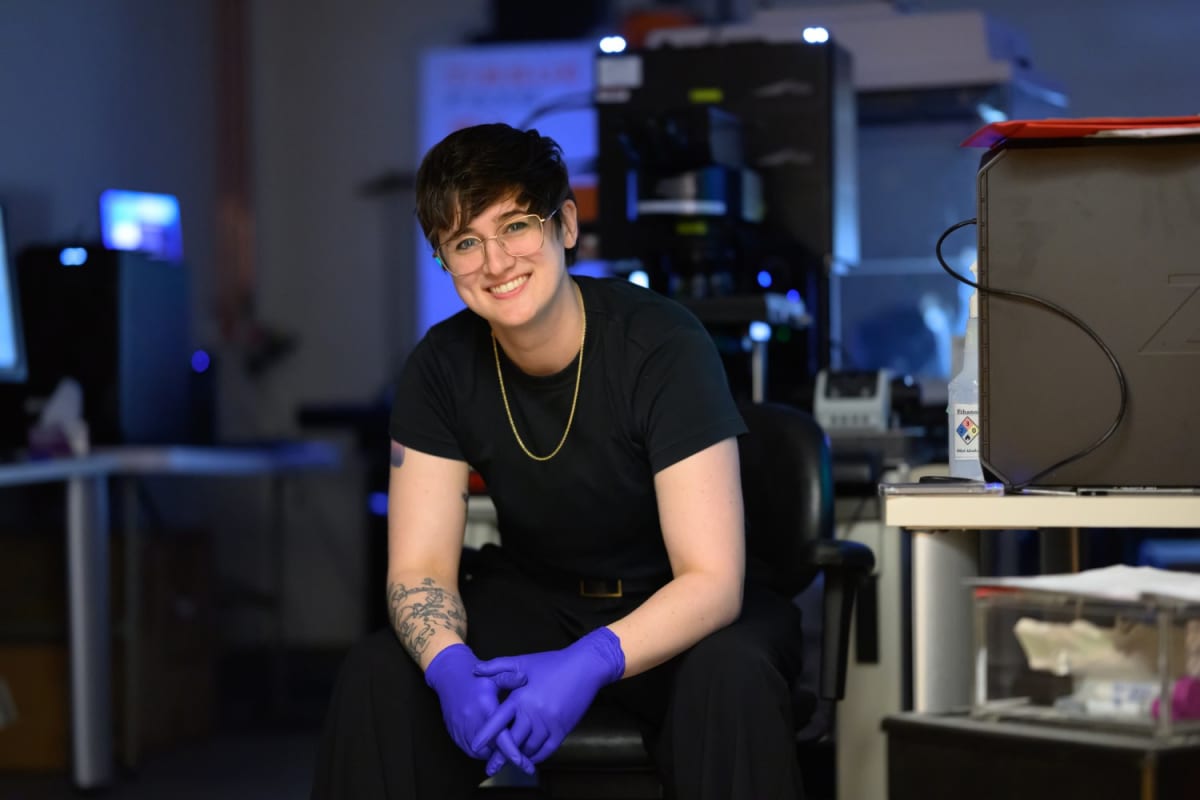
Now in her sixth year at MIT's McGovern Institute for Brain Research, Knight works in Professor Guoping Feng's lab. She's building on the team's previous success with Phelan-McDermid Syndrome, another rare genetic disorder. That gene therapy is now in clinical trials with patients.
Knight aims to follow the same path with SYNGAP1 therapy: obtain FDA approval and begin human clinical trials. Her work represents years of meticulous research, from learning CRISPR basics at Harvard University to now leading breakthrough treatments.
Why This Inspires
Knight calls her approach "leading science with empathy." She's not just pursuing research for academic achievement. Every experiment, every late night in the lab, focuses on the families waiting for answers.
"I hope my efforts in the lab work toward the benefit of the people affected, rather than just for the benefit of my own science," she explains.
Her commitment extends beyond the lab. In 2025, Knight received a Goodwin Medal for being a "conspicuously effective" teaching assistant, showing exceptional dedication to training the next generation of scientists.
For families facing rare genetic disorders, Knight's work offers something precious: a future where their children might live seizure-free lives.
Based on reporting by MIT News
This story was written by BrightWire based on verified news reports.
Spread the positivity!
Share this good news with someone who needs it