MIT Students Build AI Device That Guides Your Hand Movements
MIT students created a wearable device that uses AI and electrical pulses to guide hand movements, winning top honors at a 48-hour hackathon. The prototype could one day help people learn new skills or recover from injuries.
Imagine an AI that could gently guide your hand to play piano notes or help you relearn movements after an injury. A team of MIT students just made that possible in a single weekend.
Software engineering students at the Massachusetts Institute of Technology built Human Operator, a wearable device that combines AI vision, voice commands, and electrical muscle stimulation into one system. They developed the entire prototype in just 48 hours during MIT Hard Mode 2026, a hackathon where they won the Learn Track award.
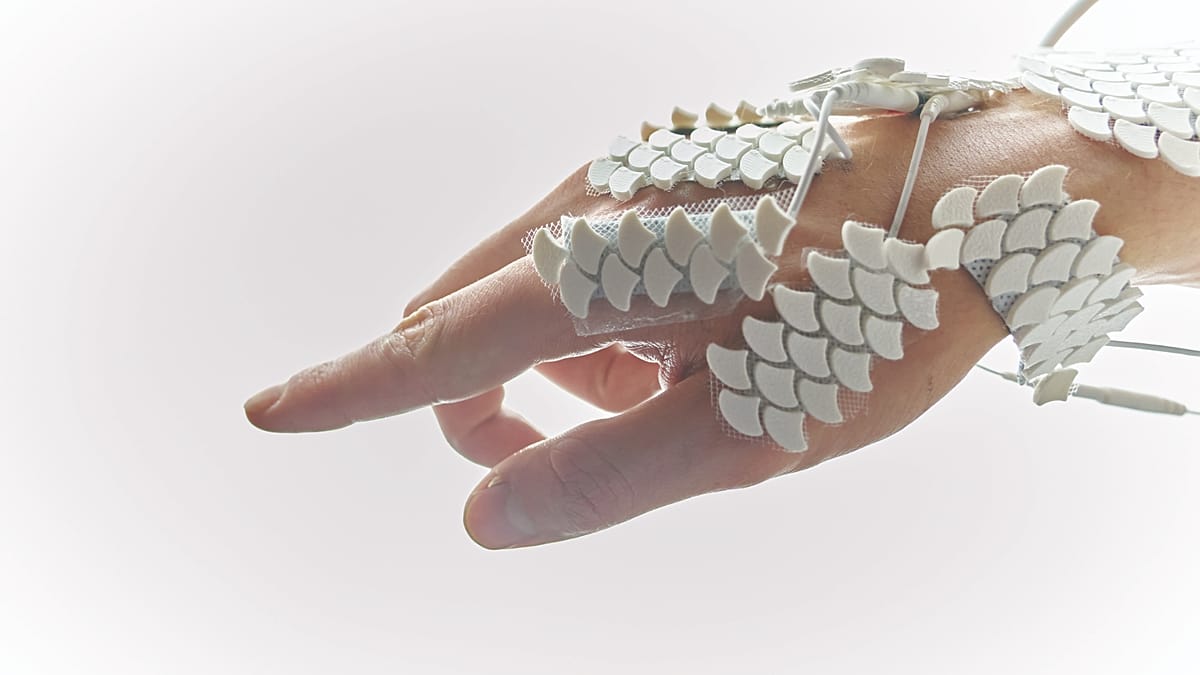
Here's how it works: Users wear a head-mounted camera and electrical stimulation pads on their wrist or forearm. When someone gives a spoken command like "wave" or "make an OK sign," the AI vision model analyzes what the camera sees and converts that request into specific hand movements.
Small electrical pulses then activate the right muscles to create those movements. The technology behind the muscle stimulation isn't new. Physical therapists already use electrical muscle stimulation, or EMS, to help patients rebuild strength and motor control.
What makes Human Operator special is pairing that proven technology with AI that can understand both language and visual context. The system decides which muscles to activate based on what the user asks for and what's happening in their environment.
In demonstrations, the device successfully guided users through waving, playing specific piano notes, and forming hand gestures. The movements happen through gentle electrical pulses rather than the user consciously controlling their own muscles.
Why This Inspires
The creators describe their invention as "giving AI a body," but really they're exploring how AI might give people more control over their own bodies. For someone recovering from a stroke or learning a complex manual skill, having an AI coach that can physically guide their movements could transform rehabilitation and education.
The fact that students built this working prototype in a single weekend shows how quickly assistive technology is advancing. What once might have required years of research and millions in funding can now emerge from creative young minds with access to existing tools.
Human Operator is still just a prototype, and the team hasn't announced plans to develop it commercially. But their hackathon win proves that combining existing technologies in new ways can open unexpected doors for human potential.
Technology that helps people recover, learn, and do things they couldn't do before—that's innovation worth celebrating.
More Images


Based on reporting by Euronews
This story was written by BrightWire based on verified news reports.
Spread the positivity!
Share this good news with someone who needs it