MIT's AI Creates Virtual Worlds to Train Helpful Robots
MIT researchers built a system where three AI agents design realistic digital homes, kitchens, and hotels so robots can practice everyday tasks before entering the real world. This breakthrough could finally bring truly helpful robots into our homes and workplaces.
Robots learning to help around the house just got a major upgrade, thanks to a clever new training system from MIT.
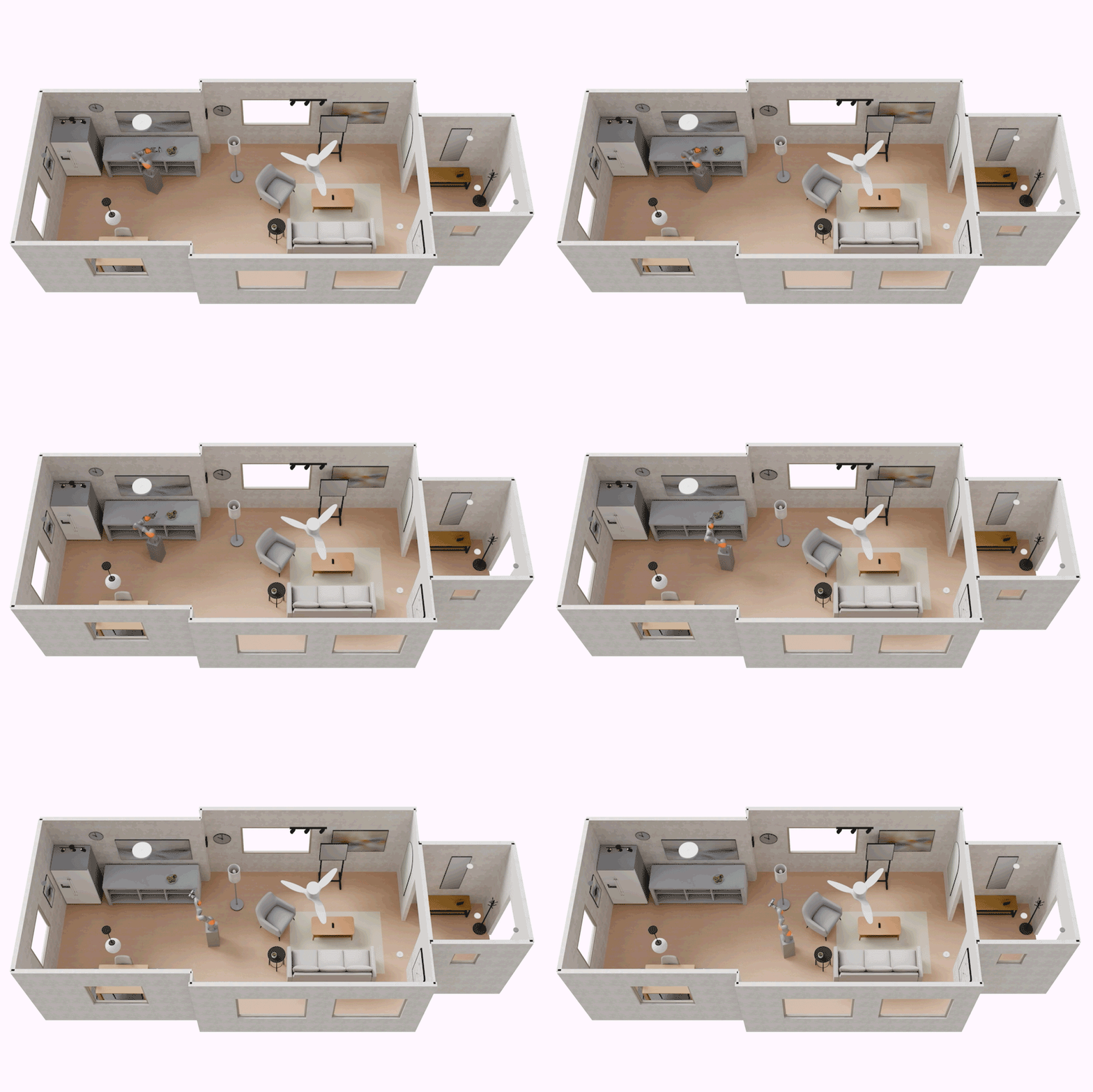
Researchers at MIT's Computer Science and Artificial Intelligence Laboratory created "SceneSmith," a system where three AI agents work together like a creative team. One designs virtual rooms, another critiques whether they look realistic, and a third manages the process until everything looks just right.
The result? Digital kitchens, garages, bedrooms, and restaurants so realistic that robots can practice everyday tasks there before powering on in the real world. These virtual spaces contain up to six times more objects than previous systems, giving robots rich environments to learn skills like placing dishes in the sink or organizing groceries on shelves.
"We've found that the system can construct 3D scenes the way a human designer would," says Nicholas Pfaff, MIT PhD student and lead researcher. "It made insanely creative and diverse arrangements. I hadn't taught the system to do that in the prompts; it just improvised."
The breakthrough solves a major bottleneck in robotics. Like humans, robots learn best through experience, but physically teaching them every task across different settings takes enormous time and effort. Virtual training grounds offer a faster path forward.
The team has already generated over 1,300 unique scenes. When they tested robot action plans in these digital worlds, the results were eye opening. The AI accurately spotted when robots failed at their chores, agreeing with human evaluators over 99 percent of the time. This means engineers can now identify flawed approaches in simulation rather than through costly real world trial and error.
Why This Inspires
This technology brings us closer to robots that can genuinely help in daily life. Engineers can now test whether their robots are ready for homes, hospitals, or factories without endless physical trials.
The virtual environments proved remarkably realistic. When researchers dropped in a robot trained on real world data that had never seen a SceneSmith scene, it successfully grabbed an apple from a bowl and placed it on a cutting board. The robot navigated cabinets, moved bottles, and traveled between rooms as if it were in an actual house.
The three agent system works by building scenes in stages, like decorating a real home. They create floor plans, add furniture, place objects on walls and surfaces, and refine details until everything feels authentic. Each agent taps into advanced vision language models trained on countless images and text from the internet, giving them an intuitive sense of how real spaces should look.
This collaboration between AI agents could dramatically speed up how quickly we get helpful robots into the world, making the future of assistance a little closer to reality.
Based on reporting by MIT News
This story was written by BrightWire based on verified news reports.
Spread the positivity!
Share this good news with someone who needs it