MIT's AI Lets Robots See Through Walls Using Wi-Fi Signals
MIT researchers trained AI to help robots "see" hidden objects through walls using wireless signals, opening doors for safer warehouses and smarter homes. The breakthrough solves a decade-old problem that kept earlier versions from working reliably.
Imagine a robot that could find your lost wallet buried under a pile of clothes or safely navigate around you in your home, even when you're in another room. MIT researchers just made that future much closer to reality.
After more than ten years of work, scientists at MIT have cracked a major challenge in robotic vision. They taught AI systems to reconstruct the shapes of hidden objects and entire rooms using only Wi-Fi-like signals that bounce off surfaces. The innovation overcomes a key limitation that plagued earlier attempts at wireless vision.
The breakthrough centers on a stubborn physics problem called specularity. When wireless signals hit an object, they bounce away in just one direction, leaving most of the surface invisible to sensors. Previous methods could only see the top of hidden objects, missing crucial details about their complete shape.
The research team, led by MIT Media Lab professor Fadel Adib, trained generative AI models to fill in those blind spots. But they faced another hurdle: no existing dataset was large enough to train their AI properly. Their creative solution was adapting regular computer vision datasets to mimic the properties of millimeter wave reflections, a process that would have taken years if they'd collected new data from scratch.
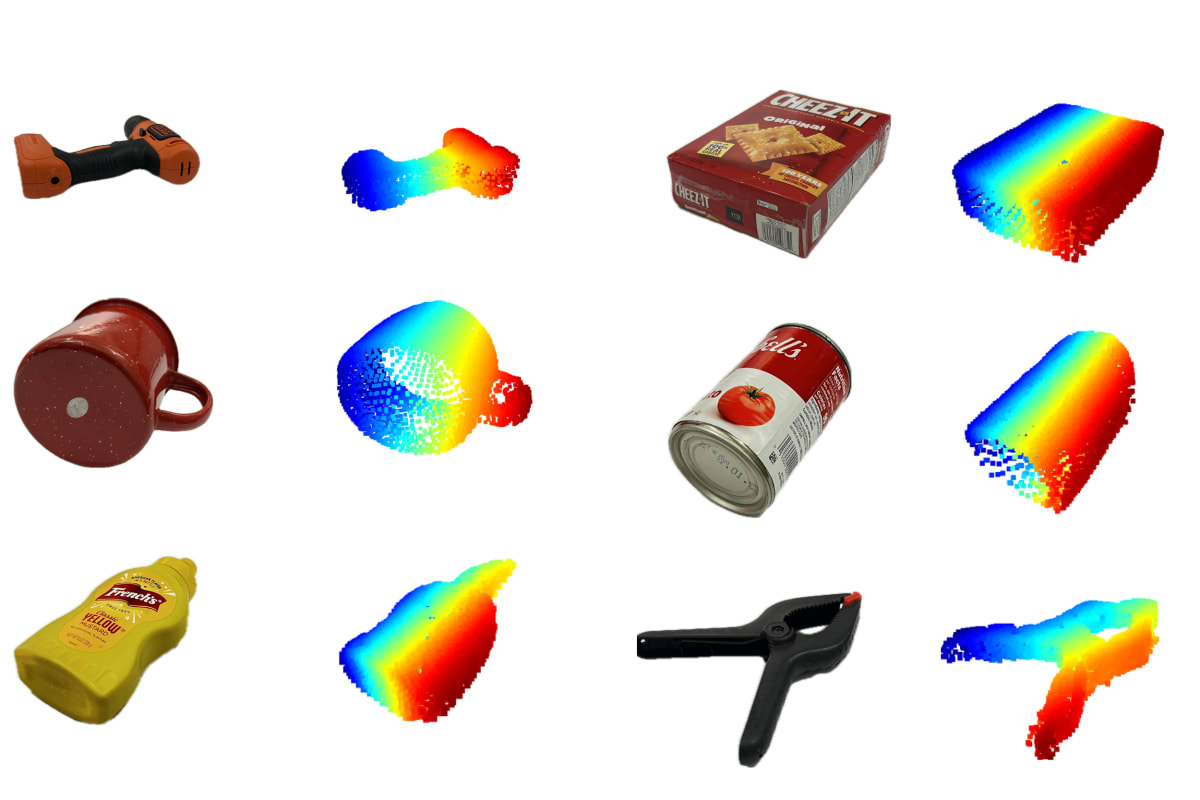
The system now produces remarkably accurate 3D reconstructions. In one version, it can map hidden objects a robot needs to grasp. In another, it reconstructs entire rooms by analyzing signals that bounce off people moving through the space, all from a single stationary radar.
The Ripple Effect
The applications reach far beyond finding lost items. Warehouse robots could verify packed boxes without opening them, cutting down on shipping errors and wasteful returns. Smart home robots could understand exactly where people are in a room, making them safer and more helpful companions.
Unlike camera-based systems that raise privacy concerns, this wireless approach protects people's identities while still gathering useful spatial information. The technology works through common materials like drywall, plastic, and cardboard, making it practical for real-world environments.
The team calls their innovation a "qualitative leap" from earlier wireless sensing methods. What started as a way to peek through obstacles has evolved into a complete vision system that interprets the invisible world around us.
This AI-powered wireless vision could transform how robots understand and interact with their surroundings, making them more capable partners in our homes and workplaces.
Based on reporting by MIT News
This story was written by BrightWire based on verified news reports.
Spread the positivity!
Share this good news with someone who needs it