MIT's GeoPT Cuts AI Physics Testing Time by 75%
Engineers can now test vehicle designs and robots in virtual wind, water, and crash scenarios twice as fast using new AI that actually understands physics. MIT's GeoPT could eliminate countless expensive physical experiments while making simulations more accurate than ever.
Testing whether a plane design is safe used to mean running endless physical experiments or waiting hours for computer simulations that still might get the physics wrong.
MIT researchers just changed that. Their new AI system called GeoPT understands physics the way other AI models understand text and images, opening the door to faster, cheaper, and more accurate testing for everything from cars to robots.
The breakthrough solves a problem that's plagued engineers for years. Traditional AI simulation models need massive amounts of physics data that takes forever to collect. Every single data point requires complex calculations at thousands of points on a 3D shape, making it painfully slow to gather enough examples for the AI to learn from.
GeoPT takes a smarter approach. Instead of relying solely on these time-consuming calculations, it learned physics by watching 1.3 million virtual scenarios where tiny particles interacted with complex 3D shapes. Think of it like teaching physics using marbles and action figures, but at massive scale.
The results speak for themselves. GeoPT reached peak performance twice as fast as leading models and needed 60 percent less training data in some tests. When simulating how boat hulls handle waves and wind, it hit top accuracy four times faster than the best alternatives.
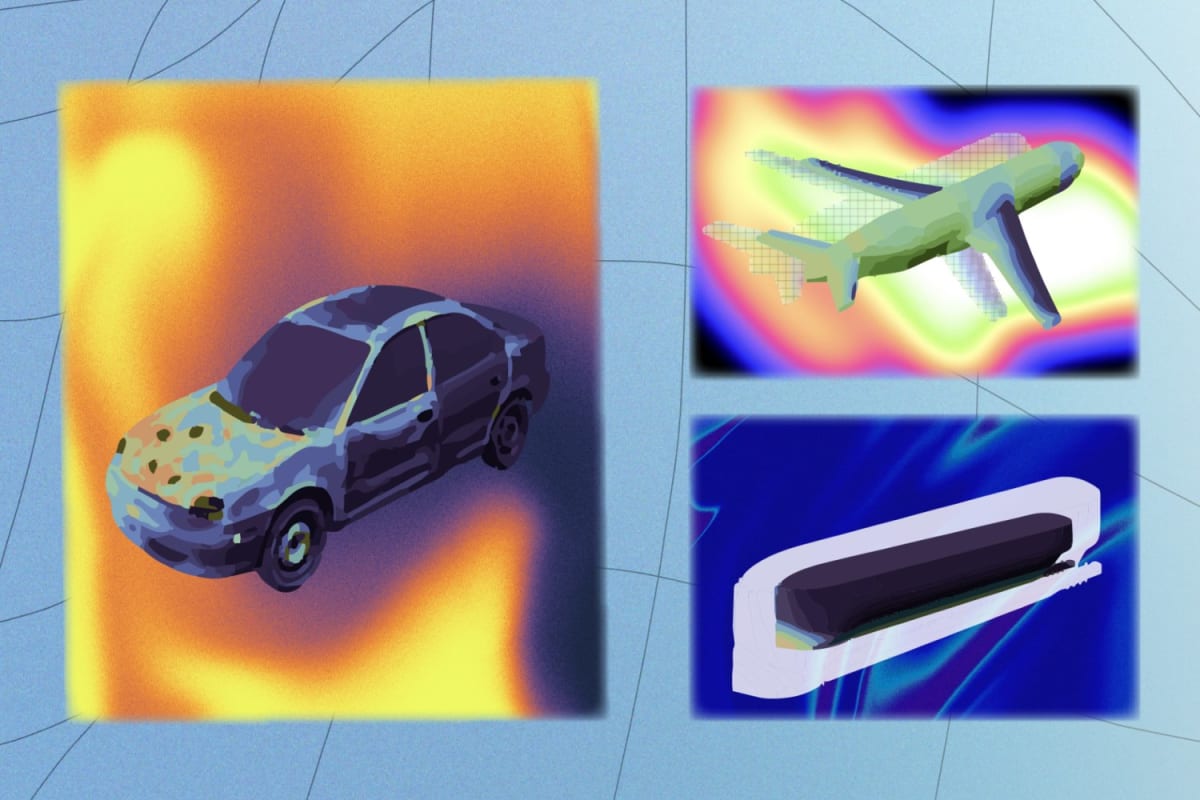
Engineers can now upload 3D models of battleships, passenger planes, or trucks, specify wind speed and direction, and get detailed heat maps showing exactly how forces will affect different parts of the object. The system handles everything from crash simulations to how light bounces around objects to whether boats stay afloat in rough seas.
"We believe physics is the third modality for AI models, after text and pixels," says MIT PhD student Minghao Guo, who co-led the research. The team at MIT's Computer Science and Artificial Intelligence Laboratory developed GeoPT with colleagues at Tsinghua University.
The system shined brightest on industrial challenges. It accurately simulated fighter jets responding to wind currents, predicted how cars deform in collisions using less data than other models, and even simulated light physics on objects it had never seen before.
Why This Inspires
GeoPT represents something bigger than faster simulations. It's a step toward AI that truly understands the physical world, not just pixels and words.
For engineers, that means testing bold new designs without the expense and time of building physical prototypes. For robotics developers, it means training robots in realistic virtual environments before they touch the real world. For all of us, it means innovation can move faster while staying safer.
The MIT team is already working to scale up their system with even more training data. They envision GeoPT becoming a foundation model for physics, similar to how GPT models became foundations for language understanding.
What took hours now takes seconds, and what required millions of data points now needs far fewer, all while delivering simulations accurate enough to stake a fighter jet design on.
The future of testing just got a whole lot brighter, and it's happening in virtual worlds that finally understand the real one.
Based on reporting by MIT News
This story was written by BrightWire based on verified news reports.
Spread the positivity!
Share this good news with someone who needs it