MIT's Tiny Thrusters Could Send Shoebox Satellites to Mars
Engineers just cracked the code to send briefcase-sized satellites to Mars using thumbnail-sized thrusters that run on a single, safer fuel. This breakthrough could make deep space exploration cheaper and more accessible than ever before.
Imagine sending a satellite the size of a carry-on bag all the way to Mars for a fraction of the cost of traditional spacecraft. MIT engineers just made that dream possible.
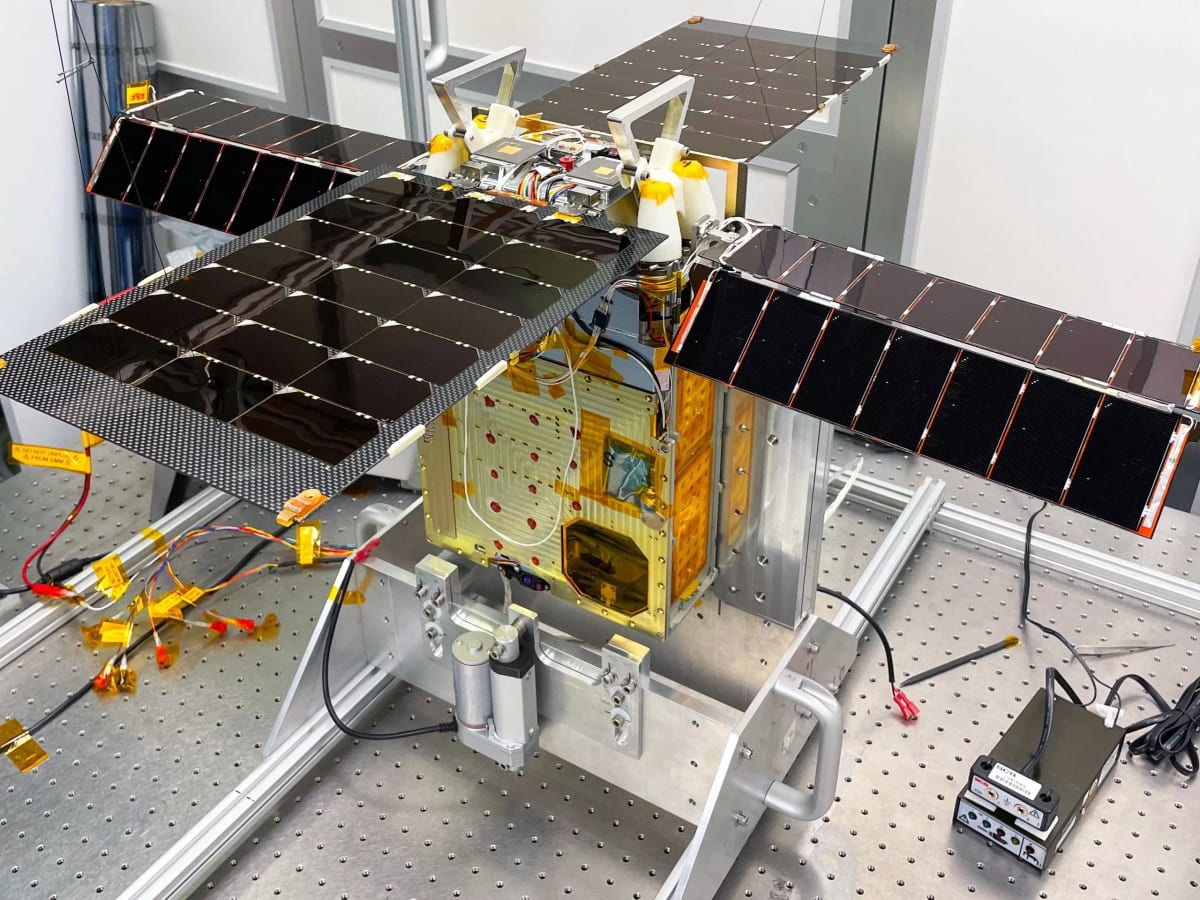
For years, tiny satellites called CubeSats have been stuck in Earth's orbit because they faced an impossible choice. Chemical thrusters could change direction quickly but guzzled fuel. Electric thrusters sipped fuel efficiently for long journeys but delivered turtle-paced thrust. Fitting both systems into a shoebox-sized satellite was like trying to pack two engines into a bicycle.
The breakthrough came when MIT's team discovered something hiding in plain sight. The Air Force had developed a greener rocket fuel called ASCENT to replace toxic hydrazine, but nobody realized it had a secret superpower: it's an ionic liquid that stays stable even in the vacuum of space.
Professor Paulo Lozano's lab at MIT has spent over a decade perfecting electrospray thrusters that work perfectly with ionic liquids. When researcher Amelia Bruno saw ASCENT's properties, the connection clicked instantly. "We said, hey, that's the stuff we typically use," Bruno explains. "Theoretically, this should work."
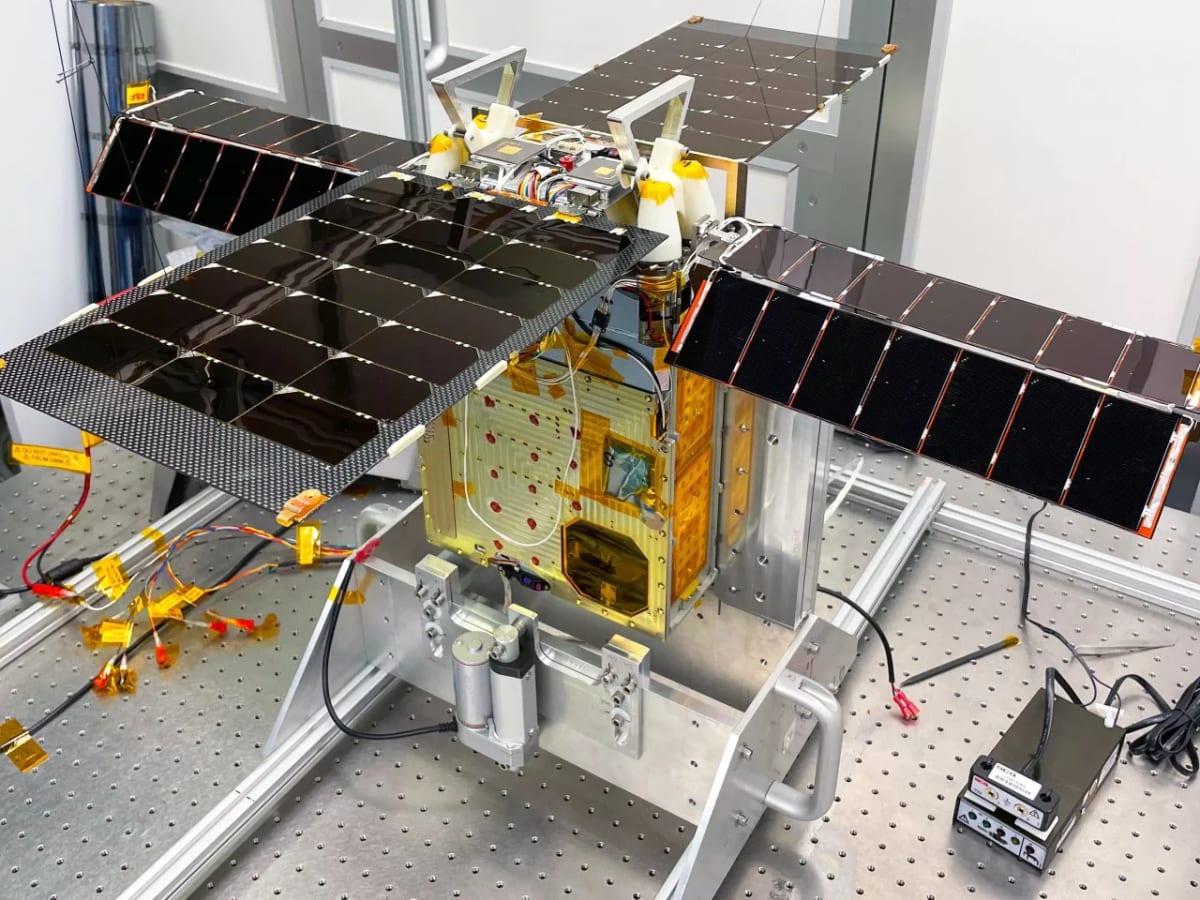
The team loaded just one gram of ASCENT into a CubeSat and fired up the thumbnail-sized thrusters on a magnetic levitation platform that mimics weightlessness. The satellite spun smoothly for 167 continuous hours with zero degradation, proving both chemical and electric thrusters could share the same fuel tank.
This isn't just a lab experiment. NASA is launching the Green Propulsion Dual Mode mission later this year, featuring one chemical thruster and four electrospray thrusters all drinking from the same ASCENT tank. It will be the first satellite ever to use a shared propulsion system.
The Ripple Effect
The applications stretch from the practical to the revolutionary. Emergency responders could deploy satellite constellations in hours to track hurricanes in real time. Scientists could send affordable CubeSats on slow, fuel-efficient journeys to Mars or the asteroid belt, then use quick chemical bursts to zip around and study interesting features up close.
By making deep space accessible to shoebox-sized satellites, this technology democratizes exploration in ways previously unimaginable. Universities, smaller nations, and research teams without billion-dollar budgets can now dream of sending their own missions to distant worlds.
The future of space exploration just got a whole lot smaller, cleaner, and more accessible.
More Images



Based on reporting by New Atlas
This story was written by BrightWire based on verified news reports.
Spread the positivity!
Share this good news with someone who needs it