Montreal Team Cuts AI Energy Use With New Photonic Chip
Researchers at Polytechnique Montréal have developed a breakthrough material that processes light directly on silicon chips, potentially slashing the growing energy demands of AI data centers. The innovation could help sustain artificial intelligence growth without draining the power grid.
A research team in Montreal just figured out how to make AI smarter without burning through so much electricity.
Scientists at Polytechnique Montréal have created a new type of photonic chip that processes light signals directly, eliminating energy-hungry conversion steps that currently power data centers. Their breakthrough, published in Science Advances, could arrive just in time to address AI's exploding energy appetite.
Every time you send an email or ask ChatGPT a question, that information travels the world as pulses of light through fiber-optic cables. Today's photonic chips can carry these light signals, but they struggle with certain processing tasks like amplification and signal conversion.
Those limitations force data centers to use bulky additional components that consume energy and generate heat. For now, these components account for just a few percent of a data center's electricity use, but generative AI is rapidly changing that equation.
Unlike a simple Google search, AI systems like ChatGPT require constant back-and-forth exchanges between processors. Each exchange means more signal conversions, more energy consumption, and more heat generation.
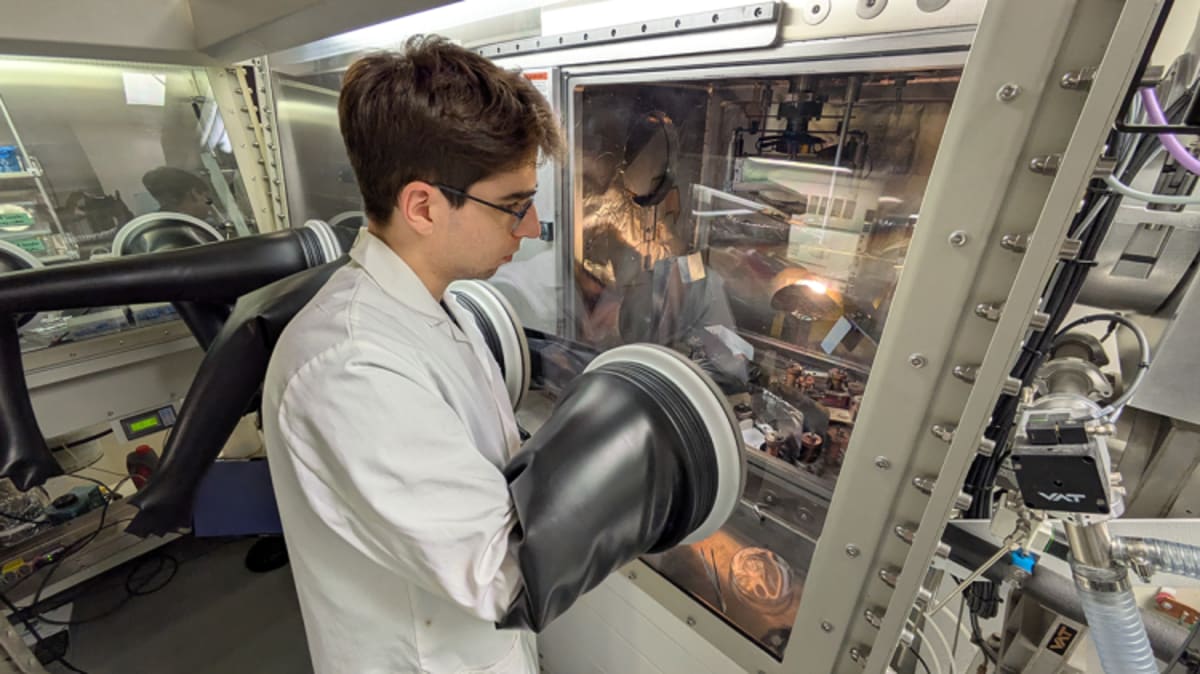
Professor Stéphane Kéna-Cohen and his team found a solution in an organic molecule with the scientific name TPA-QCN. When deposited as a thin film on silicon, the molecules spontaneously align in a way that lets them manipulate light directly on the chip.
"This spontaneous alignment may sound like a small detail, but physically it makes all the difference," says Kéna-Cohen. The material enables functions that simply aren't possible with today's silicon chips.
The real game changer? The material works with existing manufacturing processes used in the photonics industry. PhD student Pierre-Luc Thériault, the study's lead author, explains they can now integrate new functions directly onto chips at low temperature and low cost.
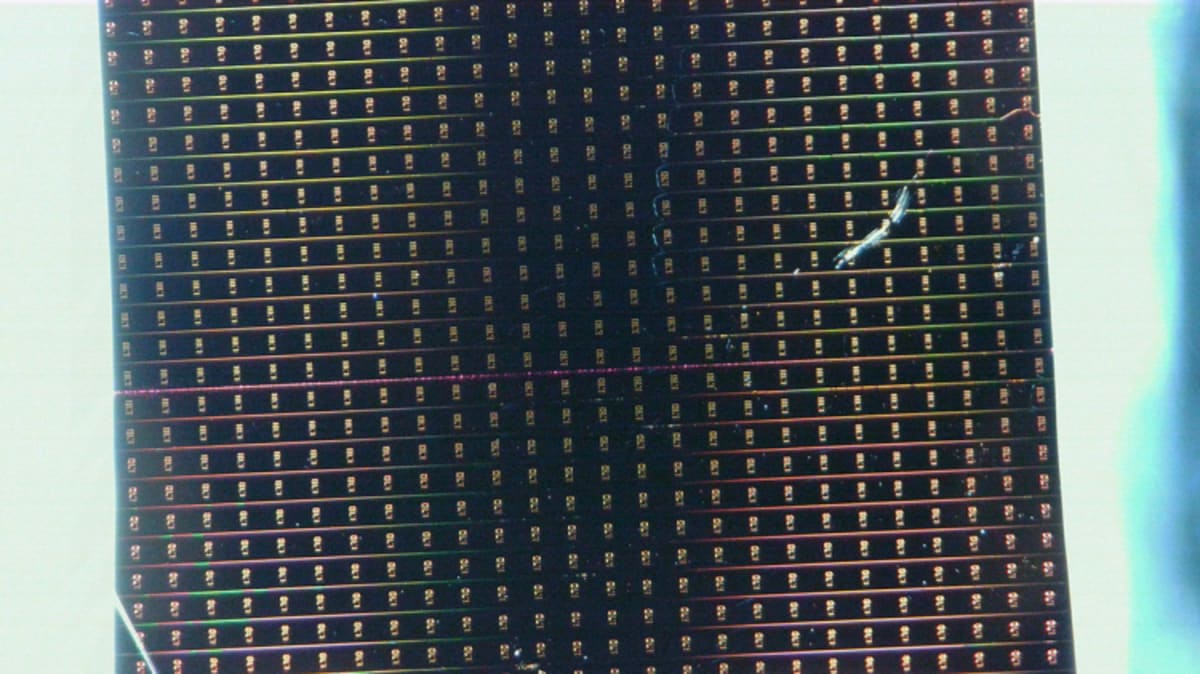
To prove the concept works, the team built a device that converts infrared telecommunications light into visible red light right on the chip. It's an early demonstration, but the researchers are already seeing improved performance with newer versions of these self-aligning molecules.
The Ripple Effect
The timing couldn't be better. Digital infrastructure already consumes about 2% of global electricity, and AI is pushing that number higher. Recent advances like Google's TPU chips show how modern AI systems are making data movement a growing energy bottleneck.
This photonic breakthrough won't replace electronics, but it gives light a bigger role in data processing. Fewer conversion steps mean less wasted energy, less heat, and systems better equipped to handle AI's demands.
The approach opens doors to new optical components including modulators, amplifiers, and specialized light sources for quantum technologies. "If we can combine these functions on a single chip, we simplify everything," says Kéna-Cohen.
The innovation represents exactly the kind of smart engineering needed to keep AI sustainable as it grows, proving that progress doesn't have to come with an impossible energy bill.
More Images

Based on reporting by Google News - AI Breakthrough
This story was written by BrightWire based on verified news reports.
Spread the positivity!
Share this good news with someone who needs it