Mumbai Family Turns Last Year's Idol Into This Year's Ganpati
A Mumbai family has spent 19 years perfecting eco-friendly Ganesh idols, now creating each year's 25-foot sculpture from the recycled pulp of the previous year's celebration. Their latest innovation completes a full circle of reuse that leaves nothing behind.
When Sunil Mayekar watched chalky sludge coat the lakes near his Mumbai home after every Ganeshotsav, he knew his family's celebration had to change.
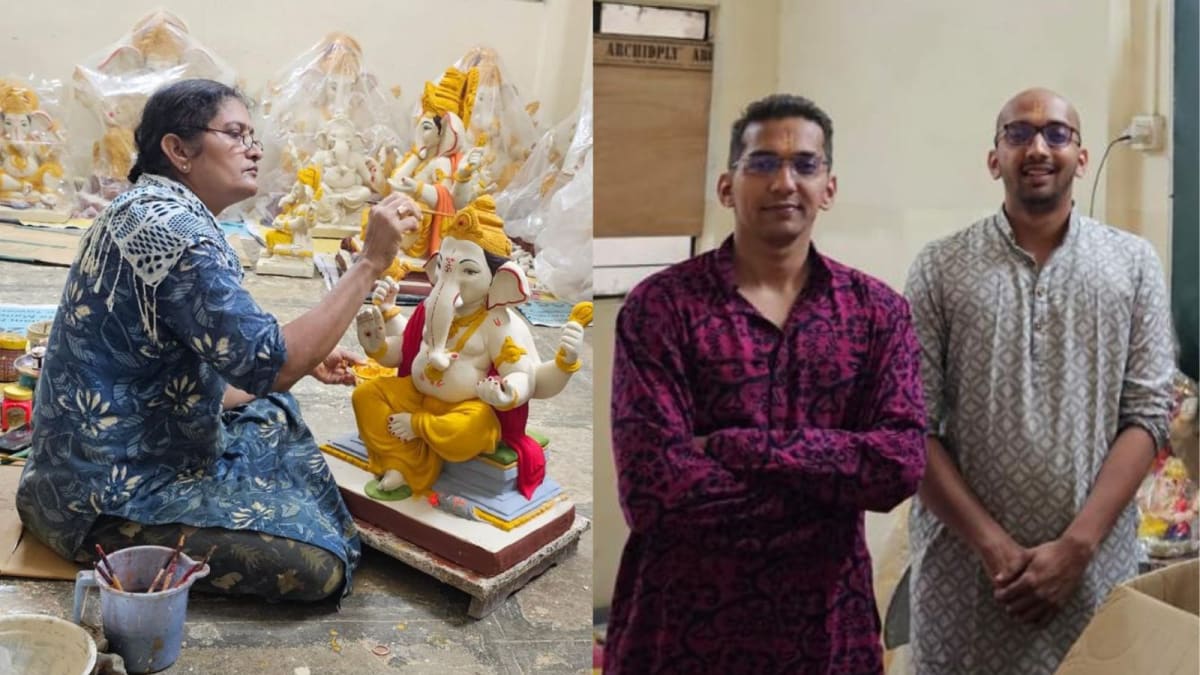
Since 2008, the Mayekar family and their Bal Gopal Mitra Mandal in Vile Parle have been building giant Ganesh idols without plaster of Paris. What started as an experiment with tissue paper has become something more remarkable: a complete cycle of reuse.
Sculptor Digambar Mayekar and his sons Sunil and Rajesh began by stretching tissue paper over bamboo frames. The method worked beautifully, but they kept pushing further.
In 2015, they built a 22-foot idol from 30,000 tissue papers that weighed just 150 kg and dissolved quickly after immersion. The next year, they scaled up to produce 11 such idols for mandals across Mumbai, priced between Rs 30,000 and Rs 70,000.
Then they started adding used flowers collected after festivals for texture and color. In 2022, they experimented with banana fiber gathered from wedding halls since January, mixed with tissue paper to prevent cracking.
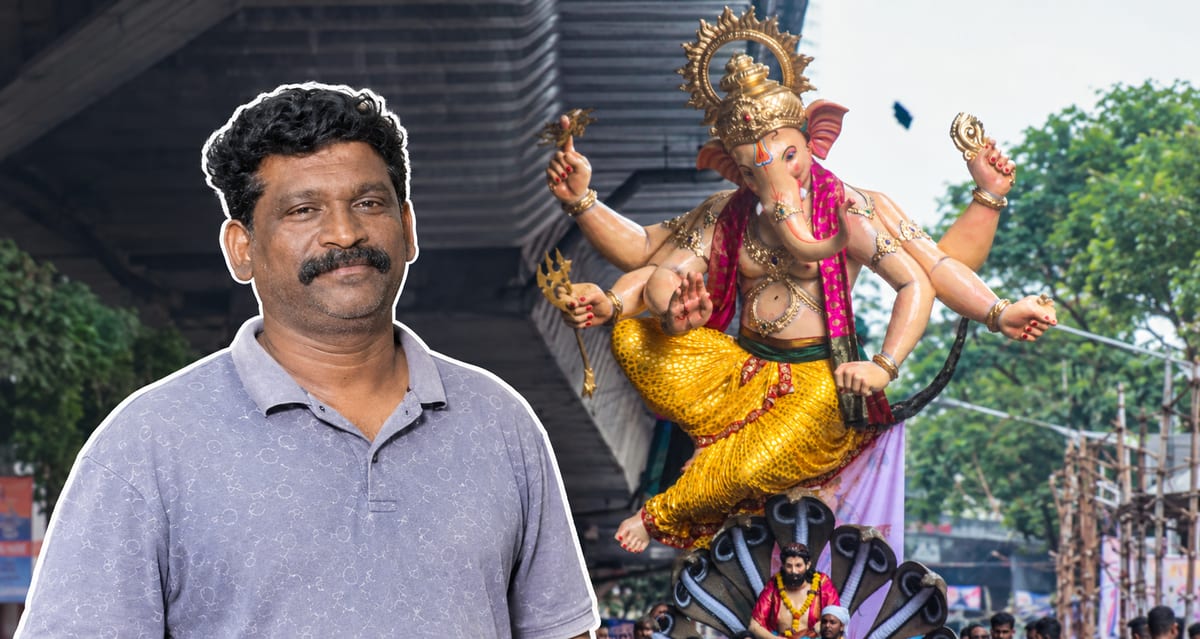
This year's 25-foot Mumbaicha Peshwa idol represents their biggest breakthrough yet. It's made from tissue paper and paper pulp recovered after last year's immersion.
The mandal now immerses its paper idols in artificial tanks using only the water needed to break them down. Once the immersion is complete, they collect and store the paper pulp to use again the following year.
The work takes months of patient effort. Building can't begin until December because monsoon rains ruin the paper. Bamboo sticks get lashed together with natural gum to form the skeleton, then layers of soaked tissue paper are molded by hand and dried in the sun.
The Ripple Effect
Marine biologists consulted during earlier experiments confirmed that paper pulp idols are comparatively safe because of their cellulose content. While metallic paints remain a concern across the industry, the Mayekars' approach tackles the core problem of waste.
Other organizations have tried different solutions, from doorstep clay idol delivery and collection services to seed-embedded idols that sprout into saplings. But the Mayekars have stayed devoted to perfecting their paper-based method.
Over the past five years alone, their experiments have included banana fiber, alum, cocopeat, vegetables, tissue paper and flowers. Each year brings a new question: how can this idol return to the earth with less waste?
What began as a search for alternatives has transformed into something deeper: a celebration that thinks about what happens after visarjan and what from one Ganpati can return in the next.
More Images
%2Fenglish-betterindia%2Fmedia%2Fmedia_files%2F2026%2F09%2F17%2F1-2026-09-17-16-11-42.png)

%2Ffilters%3Aformat(webp)%2Fenglish-betterindia%2Fmedia%2Fmedia_files%2F2026%2F09%2F17%2F2-2026-09-17-16-16-30.png)
%2Ffilters%3Aformat(webp)%2Fenglish-betterindia%2Fmedia%2Fmedia_files%2F2026%2F09%2F17%2F3-2026-09-17-16-19-39.png)
Based on reporting by The Better India
This story was written by BrightWire based on verified news reports.
Spread the positivity!
Share this good news with someone who needs it