Mumbai Man Builds Rainwater System for Just $30
While cities like Bengaluru face water crises, Mumbai resident Subhajit Mukherjee designed a rainwater harvesting system costing just Rs 2,500 that's now saving thousands of liters across schools and housing societies. His simple solution using PVC pipes and barrels is helping recharge groundwater throughout the city.
Every monsoon, Mumbai watches millions of liters of precious rainwater flow into drains and out to sea. While water-starved cities struggle, one Malad resident decided to capture what nature provides.
Subhajit Mukherjee looked at his city's monsoon abundance and saw opportunity. Inspired by retired IPS officer Kiran Bedi's ideas, he teamed up with engineers from IIT-Bombay to design something remarkably simple.
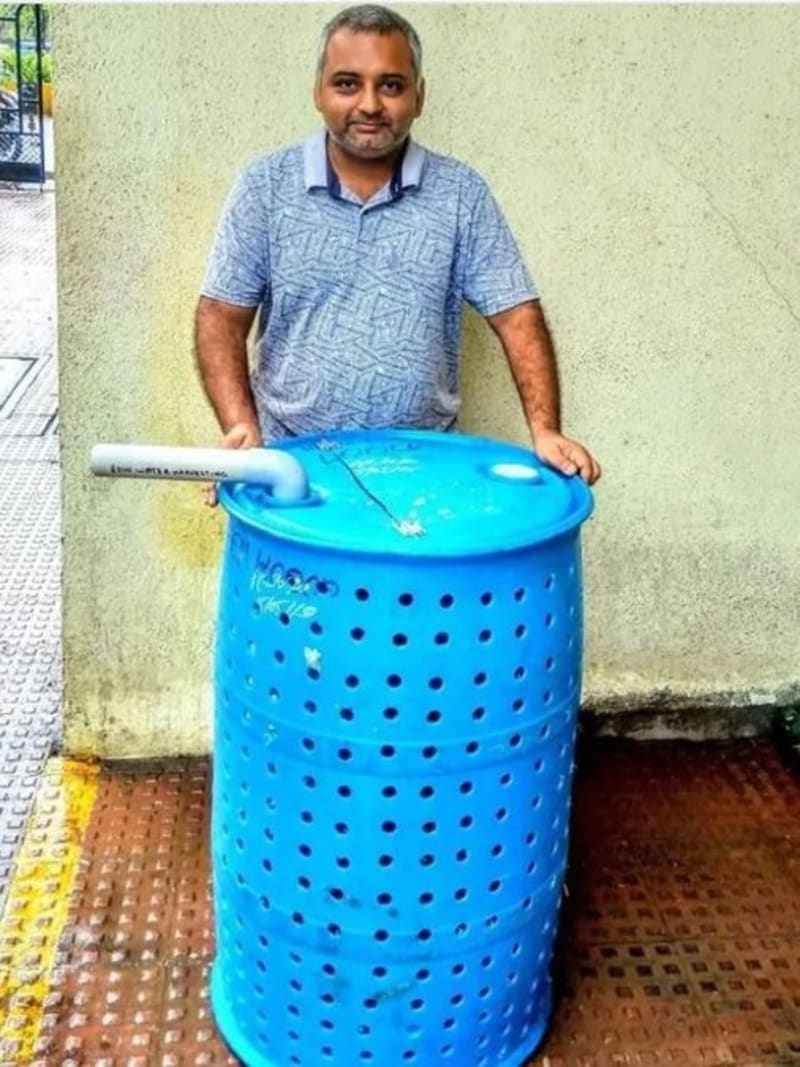
His solution costs between Rs 2,500 and Rs 5,000 (roughly $30 to $60). The system uses basic materials: a water barrel, PVC pipes, and pebbles.
The installation process is straightforward. Residents drill holes across a barrel's surface, dig a small pit, and place the drum inside. A PVC pipe connects the terrace to the underground drum, while pebbles fill the surrounding space to filter out mud.
Rainwater flows from rooftops through the pipes into the barrel. From there, it seeps into the ground, recharging wells, ponds, and underground water tables. The system works silently in the background, doing its job every time it rains.
Subhajit also created a storage version that holds water for up to 10 days. Families can use this stored rainwater for washing, gardening, and other non-drinking purposes.
The timing couldn't be better. As Bengaluru and other Indian cities face severe water shortages, simple solutions like this show how urban areas can become more self-sufficient. Mumbai receives generous rainfall during monsoon season, enough to make a real difference if captured properly.
The Ripple Effect
Schools, parks, and housing societies across Mumbai have already installed Subhajit's system. Each installation saves thousands of liters that would otherwise disappear into storm drains. Multiply that by dozens of locations, and the impact grows exponentially.
The beauty lies in its accessibility. Anyone with basic tools and a few thousand rupees can set up their own system. No special skills required, no ongoing maintenance costs, just practical water conservation.
Communities that once watched helplessly as rainwater rushed past now actively participate in solving their water challenges. Neighbors compare notes on installation, share tips, and inspire others to join in.
One city's overlooked resource is becoming its strength, one barrel at a time.
Based on reporting by The Better India
This story was written by BrightWire based on verified news reports.
Spread the positivity!
Share this good news with someone who needs it