Mumbai Teen Helps 750 Domestic Workers Get Benefits
A 17-year-old turned a wake-up call in his own home into five workshops that registered 750 domestic workers for government benefits they never knew existed. Ayaan Wadhwa spent his summer translating complex welfare schemes into Hindi and Marathi, then sat with workers one by one to navigate the registration portal.
When his family's cook asked for a loan because her mother was sick, Ayaan Wadhwa couldn't shake one thought: what if they had said no?
Most 15-year-olds would have moved on. Ayaan went to his room and started researching.
What he found shocked him. The Indian government had created the e-Shram card specifically for unorganized workers, offering accident insurance, housing grants, and even pension access. But when he asked the woman who had worked in his home for years if she'd heard of it, she hadn't heard of a single scheme.
"That was the moment," says Ayaan, now 17. "Not anger exactly. More like, how is this possible? And then: how do I fix it?"
He built a booklet from scratch, breaking down complex government welfare schemes into simple language. Then he translated everything into Hindi and Marathi. Speaking Hindi fluently was a challenge, so he practiced until he could comfortably lead workshops himself.
His mother, Pinky Panjwani, helped with logistics while Ayaan pitched building managements across Mumbai. Some were skeptical. He persisted anyway.
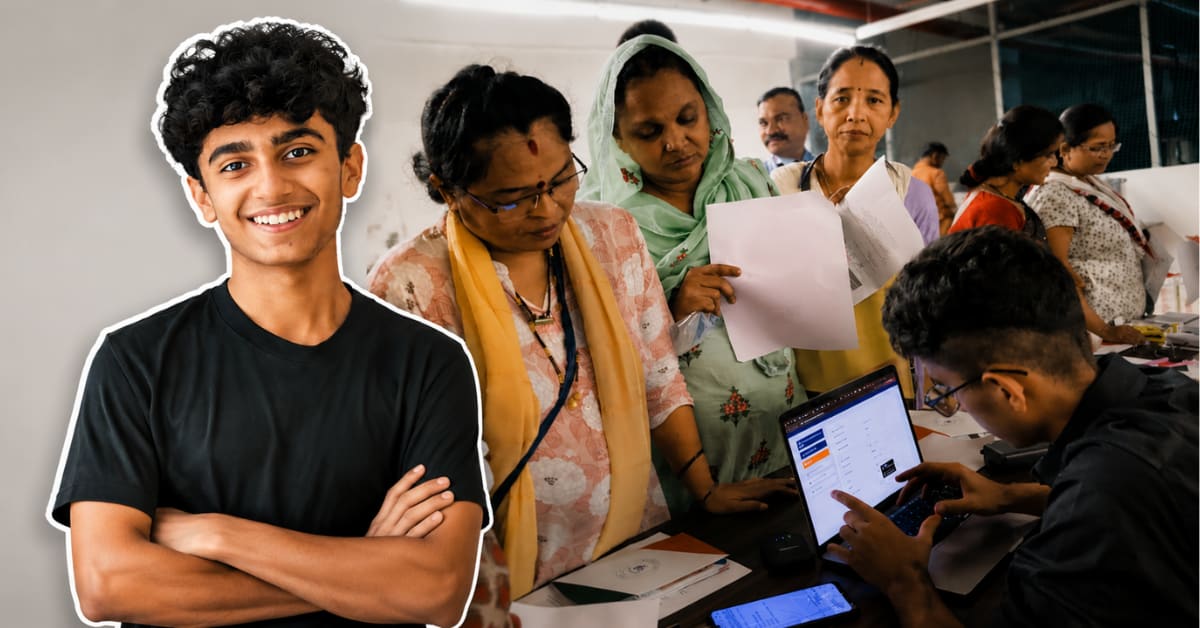
That first workshop in summer 2025 was held in their own apartment complex. He had no idea how many people would show up. 80 to 90 workers came.
Armed with his laptop, Ayaan sat with each person and walked them through the government portal in real time. Name, Aadhaar details, phone number, bank account. By the end of the evening, he had registered nearly half the room.
The Ripple Effect
The work isn't glamorous. Sometimes workers can't remember which phone number is linked to their Aadhaar. Sometimes it's their husband's number, and Ayaan has to call him for the OTP. Sometimes the website crashes completely.
"Sometimes details from another state don't match what the system expects," Ayaan says matter-of-factly. This is what last-mile implementation actually looks like.
Since that first workshop, he's conducted five more across Mumbai. Over 750 domestic workers now have e-Shram cards, which means they have registered digital identities and access to benefits that were always legally theirs but practically invisible.
These aren't just numbers. Each registration represents someone who now has accident insurance. Someone who can access housing grants. Someone who won't have to ask for a loan the next time their mother gets sick.
Ayaan is still in high school, and he's just getting started.
More Images
%2Fenglish-betterindia%2Fmedia%2Fmedia_files%2F2026%2F07%2F03%2F12-2026-07-03-17-25-41.png)

%2Ffilters%3Aformat(webp)%2Fenglish-betterindia%2Fmedia%2Fmedia_files%2F2026%2F07%2F03%2F8-2026-07-03-17-28-16.png)
%2Ffilters%3Aformat(webp)%2Fenglish-betterindia%2Fmedia%2Fmedia_files%2F2026%2F07%2F03%2F11-2026-07-03-17-28-38.png)
Based on reporting by The Better India
This story was written by BrightWire based on verified news reports.
Spread the positivity!
Share this good news with someone who needs it