Mystery Violin From 1700s Gifted to Youth Orchestra
A Canberra youth orchestra received a surprise donation that could be a priceless 18th-century Spanish masterpiece. The mystery violin is now being restored to launch young musicians' careers.
A family who had never met Music for Canberra sent them an email that would spark a fascinating musical mystery.
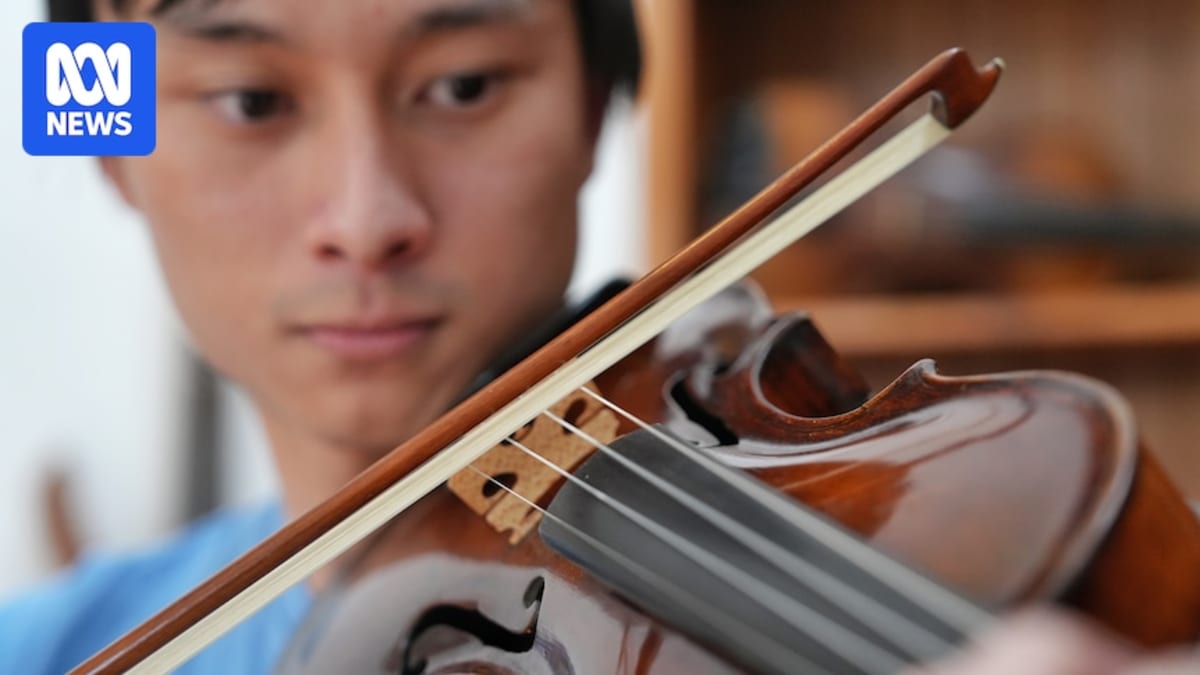
They were donating an old violin to the organization's youth orchestra. But this wasn't just any instrument.
A worn label inside reads "Contreras Anno 1752," possibly pointing to José Contreras, the greatest Spanish violin maker of his era. He studied under masters influenced by Antonio Stradivari himself and worked in Madrid's royal court.
The violin could be worth anywhere from $5,000 to $50,000, depending on whether it's authentic or a skilled copy. Either way, it's heading into the hands of young musicians as a scholarship instrument.
Canberra luthier Michael Hargreaves is restoring the mysterious violin and warns that labels inside old instruments are "notoriously unreliable." Over centuries, some dealers even removed Contreras labels to replace them with fake Italian ones, since Italian violins commanded higher prices.
But this label's presence gives Hargreaves hope. "The fact that it's his label in there is kind of assuring because it hasn't been ripped off or emulated," he said.
What really caught his eye was the craftsmanship. Initial impressions suggested amateur work, but closer inspection revealed fine details showing expert skill. The proportions and carving style echo a particular lineage of European instrument making running through the legendary Amati family, who trained Stradivari.
The restoration work touched every part of the violin, from scroll to end pin. Both bows needed straightening, new silverwork, and fresh horsehair sourced from Siberian and Mongolian winter horses, where the cold climate produces the thickest, strongest hair.
Hargreaves discovered notes inside from Lloyd Adams, a luthier who left Australia in 1957. He added his own restoration notes, creating a service history for future craftspeople centuries from now.
The Ripple Effect
Confirming the violin's true origins would require dendrochronology, a forensic technique that maps wood grain growth rings against regional databases to identify which forest and year the tree was cut. High-resolution photography could definitively date the instrument.
But Music for Canberra hasn't decided whether to pursue that expensive analysis. The mystery might remain unsolved.
What matters most is the instrument's next chapter. Regardless of its exact provenance, this violin will soon sing in the hands of talented young musicians who might not otherwise access such a quality instrument.
"Instruments need work. They will last forever and they always need servicing," Hargreaves said. "I'm just the next person to work on it over its life span."
A gift from strangers is becoming a launching pad for the next generation of musicians.
More Images


Based on reporting by ABC Australia
This story was written by BrightWire based on verified news reports.
Spread the positivity!
Share this good news with someone who needs it