%2Ffile%2Fattachments%2F2995%2Fgroundupelephant1_259587.jpeg)
Namibia Leads Wildlife Conservation Without Fences
A desert elephant's 600km journey through Namibia is reshaping how Africa protects wildlife in a changing climate. By combining ancient animal knowledge with community partnerships, conservationists are proving that freedom of movement works better than walls.
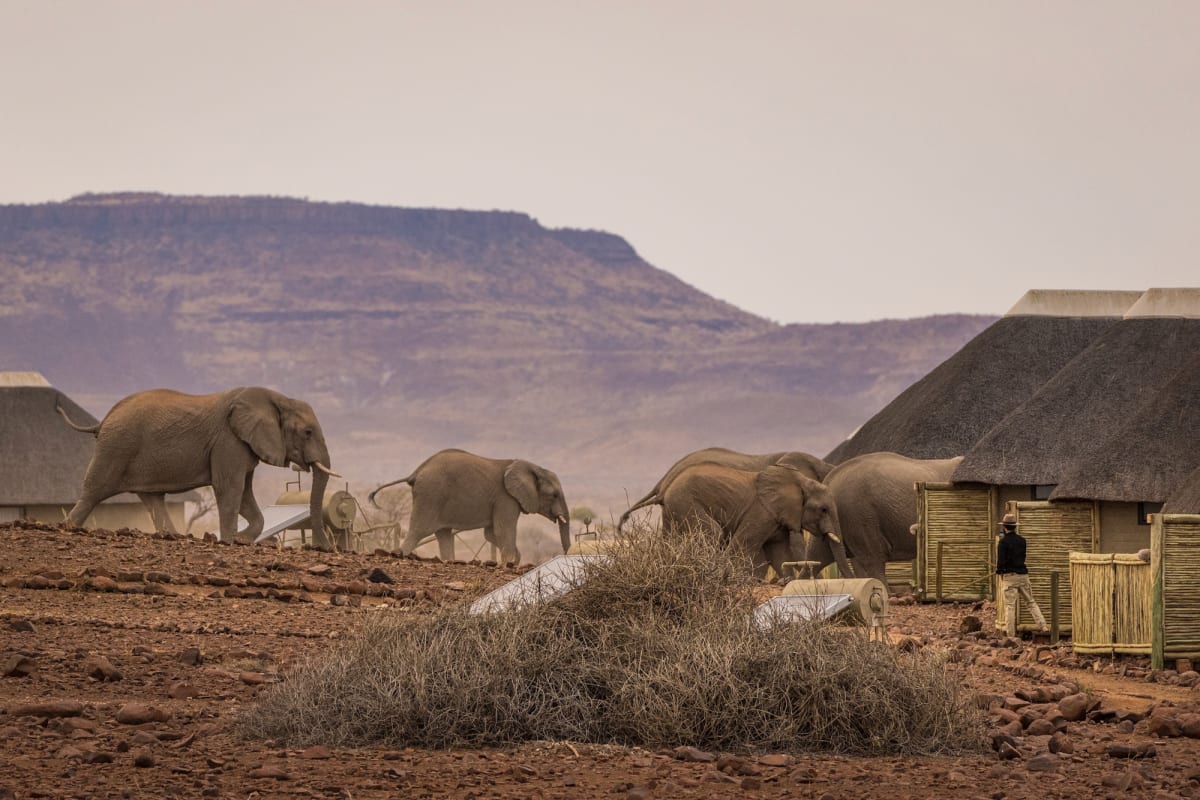
When a collared desert elephant in Namibia bulldozed through fence after fence on a two-week, 600km sprint northward, he wasn't wandering randomly. He was following an ancient map encoded in elephant memory, searching for resources his ancestors knew would be there.
"Perhaps there's a memory, an old memory of a certain plant that fruits at a time, where there's been a particular type of rainfall," says Morgan Hauptfleisch, a conservation scientist tracking the bull's remarkable journey. The elephant moved through commercial farms and into Etosha National Park with laser focus, revealing something crucial about survival in a warming world.
In arid places like Namibia, rain doesn't fall evenly. Wildlife has survived for millennia by moving across vast distances, chasing temporary pockets of water and food that appear and disappear with unpredictable storms.
Then humans built fences. Originally meant to protect both wildlife and farms, these barriers turned migratory species into prisoners within fixed boundaries.
The unintended consequences were severe. Confined animals over-browsed vegetation, broke trees, and crashed biodiversity in areas that once thrived precisely because herds moved through seasonally rather than staying put.
The Ripple Effect
Hauptfleisch and his team at the Namibia Nature Foundation are working across a 3 million-hectare landscape to restore natural movement patterns. Their secret weapon isn't just GPS collars and research papers but something more powerful: local knowledge.
The Damara community in Kunene Highlands tracked a high-altitude elephant population for generations before scientists arrived. "If you sit down with some of the Damara and Herero people at their homesteads, and you talk to them about nature, they know much more about nature than what I do," Hauptfleisch admits.
His colleague enlisted community members as para-scientists, generating rigorous ecological data through daily observations. This partnership recognizes that indigenous knowledge isn't folklore but science accumulated over centuries of close attention.
Jeremiah Amutenya, a former ranger now pursuing his PhD, emphasizes that conservation only succeeds when communities benefit directly. "The cost of living with wildlife needs to be less than the benefits that they are getting out from it," he says.
Namibia's Black Rhino Custodianship Programme proves this model works at scale. Launched in the 1990s, the program places state-owned rhinos on private properties where landowners protect and monitor them under government agreements.
By sharing responsibility across connected landscapes rather than locking animals in parks, Namibia now maintains the world's largest population of southwestern black rhinos. The program turned potential adversaries into conservation partners while giving endangered animals room to roam.
As climate change makes rainfall even more erratic, this freedom of movement isn't optional anymore. Camera traps capture the grim alternative: zebras dead in fence wire, unable to reach water during drought.
The solution emerging from Namibia's drylands combines cutting-edge science with ancient wisdom and community investment. Animals need space to follow their inherited knowledge, and people need reasons to welcome them.
More Images
%2Ffile%2Fattachments%2F2995%2Fgroundupelephant2_413947.jpeg)
%2Ffile%2Fattachments%2F2995%2Fgroundupelephant3_522182.jpeg)
%2Ffile%2Fattachments%2F2995%2Fgroundupelephant4_325229.jpeg)
Based on reporting by Daily Maverick
This story was written by BrightWire based on verified news reports.
Spread the positivity!
Share this good news with someone who needs it