Nanjing Team Unlocks Promising Parkinson's Target
Millions facing Parkinson's disease may soon have a powerful new ally thanks to a breakthrough discovery in brain chemistry. Researchers at Nanjing Medical University have pinpointed a specific protein driving nerve damage, unlocking a clear pathway toward therapies that could slow the condition down.
A future free from the progressive grip of Parkinson's disease feels closer today than ever before. Scientists have uncovered a hidden molecular mechanism in the brain that could finally halt nerve damage before it starts.
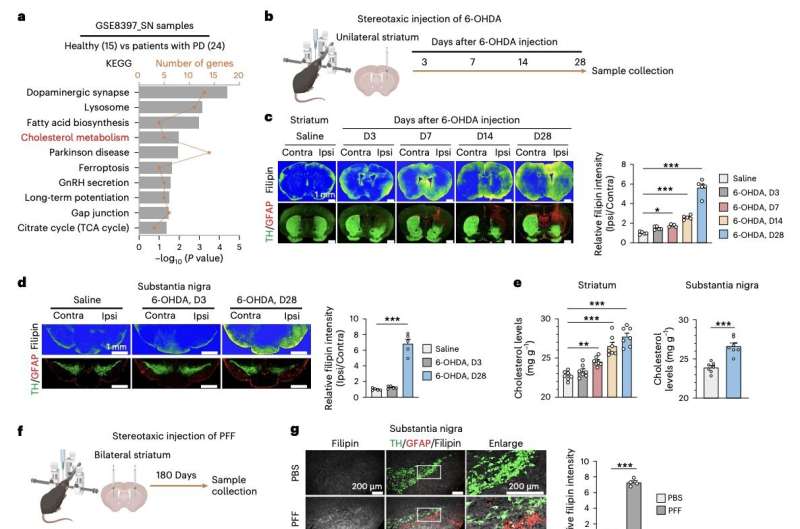
For decades, researchers knew that abnormal cholesterol buildups accompanied the loss of precious dopamine neurons in Parkinson's patients. Earlier attempts to simply lower overall brain cholesterol repeatedly hit dead ends because the body needs cholesterol to function properly.
Now, a dedicated research team led by scientists Feng-xia Ma and Xin-xin Zhao at Nanjing Medical University has cracked the case. Their groundbreaking study, published in Nature Neuroscience, reveals that the true culprit is not cholesterol creation, but how cells transport it.
The team discovered that a specific transport protein called ABCA1 works in overdrive within affected brain regions. Astrocytes, the brain cells responsible for nourishing neurons, use ABCA1 to dump excessive cholesterol directly into neighboring nerve cells.
Inside those neurons, the extra cholesterol enters lysosomes, the tiny recycling centers designed to clear out toxic cellular trash. The overflow overwhelms these recycling centers, causing harmful clumps of alpha-synuclein proteins to accumulate and kill vital dopamine-producing cells.
Instead of letting the cycle continue, the Nanjing scientists tested an ingenious genetic fix in animal models. By dialing down the Abca1 gene, they successfully prevented the cellular traffic jam, preserving vital brain cells and relieving motor symptoms.
Even more exciting, the researchers screened potential compounds to find an immediate way to block the rogue protein. They discovered that magnesium citrate effectively inhibits ABCA1, safeguarding vulnerable neurons from destruction.
The Bright Side
This discovery shifts Parkinson's research from merely masking symptoms with daily medication to actively defending the brain against physical decay. Because scientists now possess a precise molecular target, drug developers can design specific therapies that protect delicate dopamine pathways without disrupting essential brain functions.
While human clinical trials still lie ahead, having a clear molecular blueprint turns an elusive medical mystery into a solvable puzzle. Every laboratory milestone like this brings families around the world one step closer to durable, life-changing relief.
With brilliant minds illuminating the inner workings of brain health, the path toward a cure grows brighter every single day.
More Images
Based on reporting by Medical Xpress
Reset Your Focus With Today’s Daily Affirmations & Mood Check
Take a 60-second mindful pause with curated daily affirmations and our private positivity mood tracker.
Spread the positivity!
Share this good news with someone who needs it