Nanoparticles Reverse Alzheimer's in Mice Without Drugs
University of Alberta researchers discovered that tiny biodegradable molecules already approved for medical use can stop and reverse Alzheimer's disease in mice without any additional medication. After 30 years studying the disease, the lead scientist says he's never been more excited about a potential breakthrough.
A researcher who has spent three decades fighting Alzheimer's disease just found hope in an unexpected place: tiny molecules that were originally designed as dissolvable stitches.
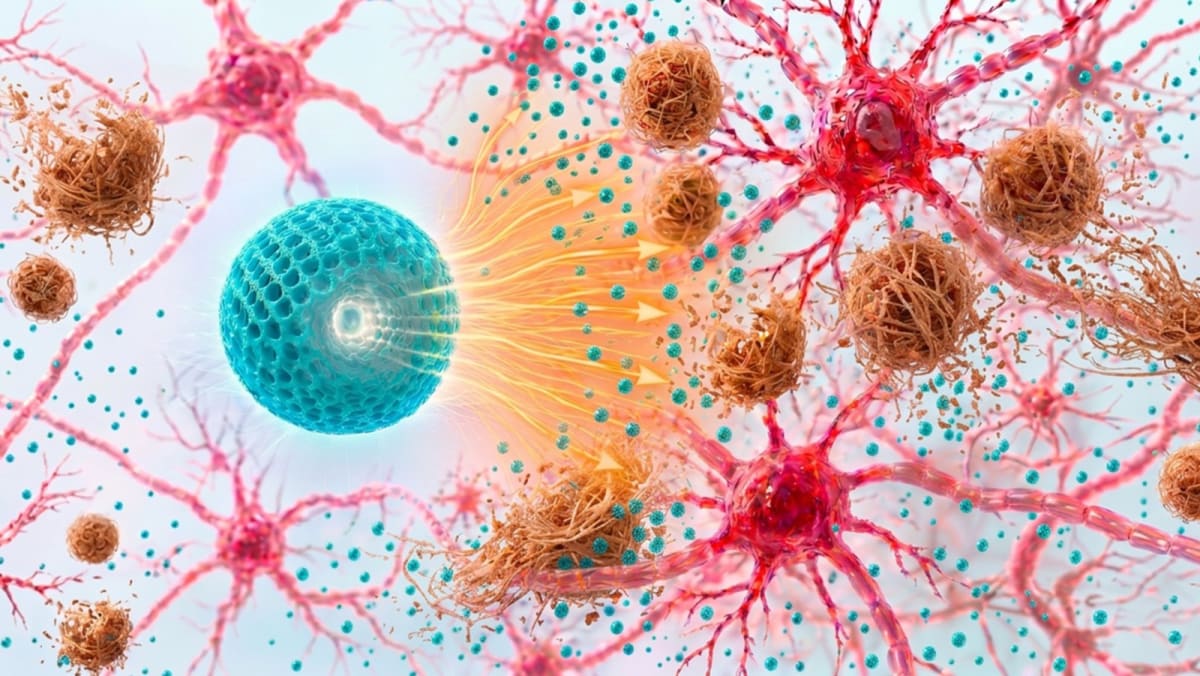
Dr. Satyabrata Kar and his team at the University of Alberta discovered that nanoparticles called PLGA can actually reverse Alzheimer's symptoms in mice without using any drugs at all. The molecules themselves do the healing work.
"I've been working on Alzheimer's for 30 years and I've never been so excited," says Kar, a professor in the Department of Medicine.
The breakthrough matters because current Alzheimer's treatments only mask symptoms without stopping the disease. Two recently approved medications that do target the disease itself have been reported to cause severe side effects.
PLGA nanoparticles have a proven safety record stretching back to the 1980s. Doctors already use them to deliver more than 20 different medications in the United States, Europe, and Canada. They're biodegradable and break down naturally in the body.
When Kar's team delivered the nanoparticles directly into the brains of mice with Alzheimer's, something remarkable happened. The treatment prevented the dangerous buildup of beta-amyloid proteins that form toxic plaques in Alzheimer's patients' brains. The mice showed improvements in both memory and cognitive function.
The Ripple Effect
About 750,000 Canadians currently live with Alzheimer's or another form of dementia. Alzheimer's ranks as the ninth leading cause of death in Canada and remains the most common form of dementia worldwide.
Kar's discovery could eventually benefit millions of patients who have few good options today. Another research lab in the United States has already reproduced some of his results, suggesting the findings are solid.
The team is now working to make the treatment even better. One collaboration focuses on helping the nanoparticles cross the blood-brain barrier more easily. Another group is exploring whether labeled versions could bind to brain plaques, potentially allowing doctors to diagnose Alzheimer's much faster than current methods allow.
Kar admits he doesn't fully understand why the nanoparticles work so well, but notes they seem to impact several disease-causing factors at once.
The research appears in Alzheimer's & Dementia, the journal of the Alzheimer's Association. Funding came from the Canadian Institutes for Health Research, the Alzheimer Society of Alberta and Northwest Territories, and the National Institute on Aging.
Kar is currently seeking resources to speed up the project and move it closer to helping actual patients.
Based on reporting by Google: new treatment approved
This story was written by BrightWire based on verified news reports.
Spread the positivity!
Share this good news with someone who needs it